

Last updated: October 2026.
Off-page SEO is everything you do away from your own website to earn trust and visibility, including citations, reviews, backlinks and brand mentions. For a local business it decides whether you appear in the map pack and in AI answers. DigiFix builds off-page SEO for Australian businesses so search engines and AI tools treat you as the obvious local choice.
Key takeaways
- Google states that businesses with complete and accurate information are more likely to show up in local search results (Google Business Profile Help, Tips to improve your local ranking).
- BrightLocal’s Local Consumer Review Survey 2026, published 11 February 2026 on a panel of 1,002 US adult consumers, found that 47% of consumers will not use a business with fewer than 20 reviews.
- The same survey found 89% of consumers expect business owners to respond to their reviews.
- StatCounter Global Stats recorded Google at 87.9% of Australian search engine market share in September 2026.
- Google’s spam policies define link spam as creating links primarily to manipulate search rankings, and name buying links, exchanging goods for links and excessive link exchanges as examples (Google Search Central, Spam policies for Google web search).
What is off-page SEO?
Off-page SEO is the work you do on other people’s websites to improve how your own site is judged. Search engines read the web as a network of references. A citation in a directory, a review on your Google Business Profile, a mention in a local news story and a link from a supplier all count as outside opinions about your business. Off-page SEO is the deliberate practice of earning those opinions and keeping them accurate.
It is not a single tactic. It is a set of signals that, taken together, tell Google and the AI systems built on top of it three things: that your business exists, that it is where you say it is, and that other people vouch for it. Those three things are what a local business is really competing on.
Off-page, on-page and technical SEO compared
The three branches of SEO are usually described separately, but they only work together. Off-page signals cannot rescue a page that Google cannot index, and a technically perfect page with no external references struggles to outrank an established competitor.
| Branch | What it covers | Where it happens | Typical work |
|---|---|---|---|
| On-page SEO | Content quality, titles, headings, internal links | On your own pages | Writing service pages, fixing headings, adding internal links |
| Technical SEO | Crawling, indexing, speed, mobile experience, structured data | In your site’s code and hosting | Fixing 5xx errors, sitemaps, Core Web Vitals, schema markup |
| Off-page SEO | Citations, reviews, backlinks, brand mentions, community presence | On other sites and platforms | Claiming directories, earning links, managing reviews, digital PR |
If on-page work is what you say about yourself, off-page work is what everyone else says about you. Google weights the second one heavily for local queries, because it is much harder to fake at scale.
Not sure what your off-page profile looks like right now? We audit your citations, reviews and backlinks against your local competitors and show you the gaps in plain English.
Why does off-page SEO matter for local businesses?
The Australian Bureau of Statistics counted 2,814,778 actively trading businesses in Australia at 30 June 2026, including 996,203 that employ staff (ABS, Counts of Australian Businesses, released 18 August 2026). Almost every one of them is fighting for the same handful of map pack positions in its suburb. Off-page signals are what separates them.
Three things make off-page work matter more now than it did a few years ago.
The map pack rewards prominence. Google’s own local ranking guidance describes relevance, distance and prominence as the factors behind local results, and tells business owners that complete and accurate profile information makes a business more likely to appear. Prominence is built off your site: reviews, citations, links and coverage.
Trust signals now feed AI answers. Google’s guidance on generative AI search states that its AI features can show what is being said about products and services across the web, including in blogs, videos and forum discussions (Google Search Central, guidance on generative AI search). If you are not mentioned anywhere, there is nothing for those systems to summarise.
Reviews are the decision point. BrightLocal’s 2026 Local Consumer Review Survey reports that 41% of consumers now always read reviews when browsing for a business, up from 29% the year before, and that 74% only care about reviews written in the last three months. A profile that went quiet in 2024 reads as a business that may no longer be trading.
Which off-page SEO techniques actually work?
These are the eight tactics we run for clients, in the order we usually sequence them. Each one has a clear job, and none of them requires you to buy links.
1. Optimise and manage your Google Business Profile
What it is: claiming, verifying and completing your Google Business Profile with accurate categories, service areas, opening hours, photos and services.
Why it helps: Google says complete and accurate information makes a business more likely to appear in local results, and profile data also feeds AI responses about local businesses. It is the single highest value off-page task available to a local business.
How to start: audit your profile against your five nearest competitors, fix your primary category first, then add every service, product and photo you have. Our guide to optimising your Google profile walks through the settings that matter, and if your listing has been taken down, read what to do when a Google Business Profile is suspended.
2. Earn and respond to Google reviews
What it is: asking happy customers for reviews, replying to every one of them, and never offering anything in return.
Why it helps: BrightLocal’s 2026 survey found 47% of consumers will not use a business with fewer than 20 reviews, and 89% expect the owner to respond. Google’s own review guidance also warns that offering incentives in exchange for reviews is treated as fake and misleading content.
How to start: create a Google review link or QR code, ask at the moment the job is finished, and reply to every review within a week. Reply to the good ones and the bad ones, in your own words rather than a template.
Reviews slipping, or a bad one sitting unanswered? Our online reputation management service monitors your reviews, drafts replies and keeps your profile active every month.
3. Build consistent local citations
What it is: a citation is any listing of your business name, address and phone number on another site. Consistent means the name, address and phone number match your Google Business Profile exactly, character for character.
Why it helps: citations confirm that your business is real and located where you claim. Inconsistent details, such as a suite number on one directory and not another, or a mobile number left over from an old campaign, dilute the signal and cost you map pack visibility.
How to start: claim the core Australian directories in the table below, then fix every inconsistency you find. Do the top five first; a complete set of five clean listings beats fifty messy ones.
Which Australian directories should you be listed in?
We checked every one of these sites in October 2026. Start with the first three, because they feed the map results directly, then work through the general directories.
| Directory | Why it matters | Cost | Priority |
|---|---|---|---|
| Google Business Profile | Drives Maps and local search results directly | Free | First |
| Bing Places | Feeds Bing Maps and Microsoft Copilot answers | Free | First |
| Apple Business Connect | Powers Apple Maps, which many iPhone users search from | Free | First |
| Yellow Pages Australia | Long-established Australian directory with strong domain trust | Free basic listing | Second |
| True Local | Widely used Australian business directory and review site | Free basic listing | Second |
| StartLocal | Australian directory with suburb-level category pages | Free basic listing | Second |
| Hotfrog Australia | Large free directory, useful for citation volume | Free basic listing | Third |
| Oneflare | Quote-matching site used heavily by trades and home services | Free to list, paid leads | Third, trades only |
Two more sources worth claiming for most businesses: your industry association’s member directory, and your local council or chamber of commerce business listing. Both are Australian, both are usually free, and both are links a competitor is unlikely to have.
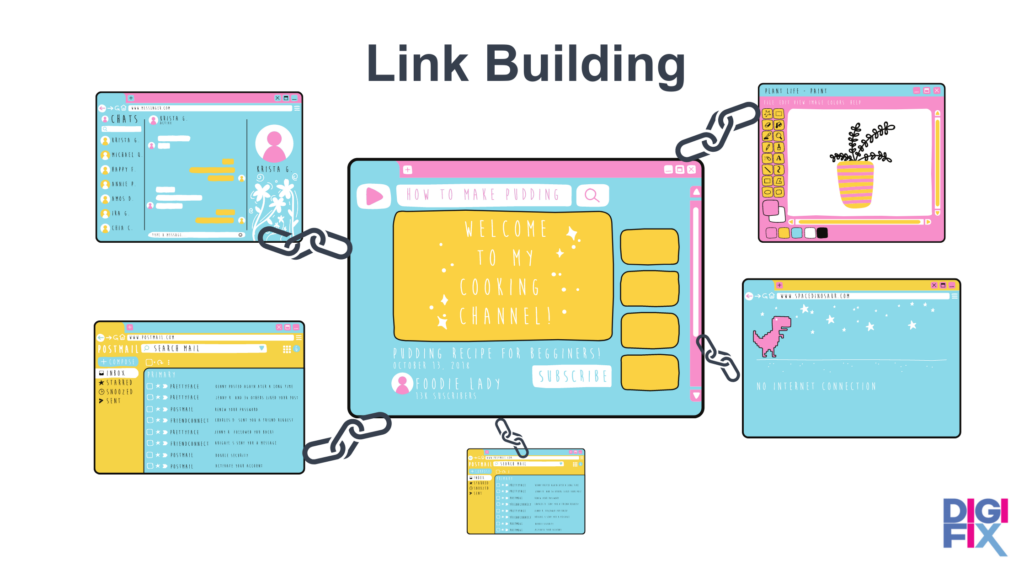
4. Earn local backlinks
What it is: links from other websites to yours. The links worth having come from real organisations: suppliers, manufacturers, sporting clubs you sponsor, industry associations, local media and community groups.
Why it helps: links are still one of the strongest authority signals in search, and local links carry local relevance. A link from a Melbourne supplier tells Google your business operates in Melbourne, which a generic directory link does not.
How to start: list every organisation you already pay money to, including suppliers, insurers, sponsorships and memberships, then ask each one for a supplier or partner page listing. Most say yes, because it costs them nothing. Our link building tools guide covers the prospecting side.
5. Run digital PR and answer journalist requests
What it is: giving journalists and publishers a reason to quote you, usually a local data point, a professional opinion or a story only your business can tell.
Why it helps: a mention in a newspaper or trade publication earns a high-authority link and a brand mention at the same time, which is exactly the combination that feeds AI summaries. It also gives you something to talk about on social media for the rest of the month.
How to start: register with the Australian journalist request services, watch for local angle calls, and reply with two sentences of usable comment plus your title and business name. Journalists work to deadlines, so speed matters more than polish.
6. Monitor unlinked brand mentions
What it is: finding places where someone named your business without linking to your site, then asking them to add the link.
Why it helps: the mention already exists, so you are only asking for a small edit. An unlinked mention is also a sign that a publisher considers you worth naming, which makes the request easy to justify.
How to start: set a Google Alert for your business name and check the results monthly. When you find a mention without a link, email the author, thank them for the coverage and ask if they would add a link to the relevant page. Keep the ask to one sentence.
7. Build a community and forum presence
What it is: answering questions where your customers already are, such as industry Facebook groups, local community groups, Reddit threads and trade forums.
Why it helps: Google’s generative AI guidance names forum discussions as one of the places its AI features look when summarising what is said about a product or service. Being the person who answers the question properly puts your name in front of both readers and AI systems.
How to start: pick two communities your customers actually use and answer questions for a month without promoting anything. Add your business to your profile rather than your replies. Read each group’s rules first, because self-promotion gets accounts removed.
8. Keep social profiles and video active
What it is: maintaining accurate social profiles and publishing video that answers the questions customers ask.
Why it helps: social signals are not a direct ranking factor, and any guide claiming otherwise is out of date. They still help indirectly: they create brand searches, give publishers and journalists something to link to, and generate the mentions that AI summaries draw on. Video adds a second surface where people can find you.
How to start: make sure your name, address and phone number match your Google profile on every platform, then commit to one short video a month answering a real customer question.
We also made a short video explaining the basics of off-page SEO for local businesses.
How do brand mentions influence AI answers?
AI assistants answer local questions by summarising what they can find about you across the open web. They do not read your homepage and stop there. They look at directories, review platforms, news coverage, forums and video, then write a short answer that names a business or two.
Google’s guidance is explicit that its AI features can show what is being said about products and services across the web, including in blogs, videos and forum discussions. The same guidance warns against chasing inauthentic mentions, because the systems behind those answers are built on the same quality signals as regular search. The practical takeaway is that AI visibility is a byproduct of doing off-page work properly, not a separate tactic you can buy.
Three things make a business more likely to be named in an AI answer:
- A consistent business name, address and phone number across every platform, so the systems can tell it is one business and not three.
- A body of third-party descriptions: reviews, directory listings, news mentions and forum answers that all describe what you do in similar words.
- Recent activity. Reviews and content from the last few months carry more weight than material from three years ago.
For a deeper look at how AI search surfaces businesses, see our guide to generative engine optimisation.
Want to know whether AI tools recommend your business? We check how ChatGPT, Google AI Overviews and Perplexity describe your business against your competitors, then fix what they get wrong.
What does off-page SEO look like in practice?
Here is a real sequence from our own client work, followed by how we would run the same program for a small local business starting from nothing.
The situation. Melbourne Refrigeration and Catering Equipment came to us with decades of trading history and a website that was failing to load. Hospitality buyers were landing on error pages, cart abandonment was driven by unclear freight costs, and organic visibility was falling behind newer competitors.
What we did, in order. We fixed the infrastructure first, because no marketing works on a site that returns 5xx errors. Then we rebuilt the product pages and their metadata, automated enquiries, and ran ongoing search work alongside the site changes. The off-page layer came next: consistent product and business data across the platforms buyers search, plus a continuous review and reputation program.
The numbers. DigiFix’s published case study records a 20.15% increase in online visibility across a fifteen month period ending October 2024, a 46.74% gain in collective ranking keywords, a 5.67 point improvement in average keyword positions, a doubling of revenue and a lift in lead conversion of more than 50% (DigiFix portfolio, MRCE case study).
The same program for a local business. Months one to two: claim and complete Google Business Profile, Bing Places and Apple Business Connect, then clean the top five Australian citations so the name, address and phone number match everywhere. Months two to three: launch a review request routine and reply to every review inside a week. Months three to six: earn local links from suppliers, sponsorships and your association, and pitch one local media story a quarter. By month six you have a citation profile, a review history and a handful of local links, which is the base every other channel builds on.
What waiting costs. Citations and reviews compound, so the business that starts today is a year ahead next year. Competitors keep collecting reviews and links while you decide, and the gap widens in a market where the ABS counted 460,461 new business entries in 2025-26 alone.
What mistakes should you avoid with off-page SEO?
Most off-page damage is self-inflicted. These are the errors we fix most often.
| Mistake | Why it hurts | Do this instead |
|---|---|---|
| Buying links or link packages | Google’s spam policies class buying links for ranking as link spam | Earn links from suppliers, sponsorships and local media |
| Inconsistent name, address or phone number | Splits one business into several weak entities in Google’s view | Copy the exact Google profile details into every directory |
| Offering discounts for reviews | Google treats incentivised reviews as fake and misleading content | Ask for a review with no incentive, and make it easy |
| Expecting Search Console to delete bad links | The disavow tool only tells Google to ignore links; it removes nothing | Ask the site to remove the link first, then disavow if you must |
| Chasing social followers as a ranking tactic | Social signals are not a direct ranking factor | Use social to create brand searches and mentions, not rankings |
On that fourth row: Google’s disavow guidance is clear that most sites never need the tool, and that it should only be used when you have a considerable number of spammy links and a manual action, or likely action, against you (Search Console Help, Disavow links to your site). Search Console cannot remove a link from someone else’s website, and any agency claiming otherwise is worth avoiding.
How do you measure off-page SEO results?
Measure off-page work with a small set of numbers, reviewed monthly. Chasing dozens of vanity metrics hides the two that matter: whether you are showing up in the map pack, and whether people are contacting you.
| Metric | Where to track it | What progress looks like |
|---|---|---|
| Profile calls, direction requests and website clicks | Google Business Profile performance | Steady month on month growth after profile changes |
| Map pack ranking for your money keywords | Local rank tracking from multiple suburb points | Moving into the top three from your own suburb |
| Review count, average rating and response rate | Google Business Profile reviews | New reviews every month, 100% replied to |
| Citation accuracy across the core directories | A manual check each quarter | Every listing matching your Google profile exactly |
| Referring domains and unlinked mentions | A backlink tool plus Google Alerts for your brand | New relevant local domains each quarter |
Keep the reporting simple enough that you actually read it. If a metric does not change a decision, drop it from the dashboard.
Off-page work also depends on the foundations being right. If your pages themselves are not in order, start with our on-page SEO checklist and our SEO basics guide before spending money on links.
Want this done for you? We build citations, earn local links and manage your reviews. Book a free local SEO audit and we will show you exactly what your competitors have that you do not.
What do local businesses ask about off-page SEO?
How long does off-page SEO take to show results?
Citations usually show up within four to eight weeks, because directories take time to publish and Google takes time to trust them. Review programs affect click-through almost immediately once your rating and recency improve. Links and digital PR take three to six months to influence rankings. Plan for a ninety day review of citations and reviews, and a six month review of links and visibility, before judging whether the program is working.
Do social media signals directly improve rankings?
No. Social signals are not a direct ranking factor, and any guide telling you to chase followers for rankings is repeating a claim that has never been confirmed by Google. Social profiles still earn their place in an off-page program because they create brand searches, give publishers something to link to and generate the mentions that AI summaries draw on. Treat social as a supporting channel, not a ranking lever, and spend your effort on citations and reviews first.
Can you remove a bad backlink from Google?
No. Google’s disavow tool does not delete anything; it tells Google to ignore links when assessing your site, and it should only be used when a considerable number of spammy links are pointing at you and you have a manual action, or likely action, against you. Start by asking the site owner to remove the link, then disavow the domain only if that fails. Search Console cannot remove a link from someone else’s website.
Is off-page SEO worth it for a small local business?
Yes, and it is usually the highest return work available to a local business. Google’s local ranking guidance says businesses with complete and accurate information are more likely to appear in local results, and reviews decide whether customers call. A plumber who cleans five citations and collects twenty recent reviews will outrank a competitor with a prettier website but no reviews. Start with the profile and reviews, then add links when those are running well.
How many citations does a local business need?
Quality beats volume. For most Australian local businesses, five to ten accurate, complete listings cover the platforms customers actually use, including Google Business Profile, Bing Places, Apple Business Connect and the main Australian directories. Beyond that, add industry and local council listings rather than paying for hundreds of low-quality directory submissions. An inconsistent listing is worse than no listing, because it splits your business details into conflicting records that search engines have to reconcile.
Does off-page SEO help you appear in AI answers?
Yes, indirectly. Google’s generative AI guidance states that its AI features can show what is being said about products and services across the web, including blogs, videos and forum discussions. That means AI systems need third-party material about your business to summarise. The same guidance warns that chasing inauthentic mentions does not help, so the reliable path is genuine reviews, accurate citations, real local links and useful contributions in forums your customers read.
Ready to get found locally? DigiFix has built off-page SEO programs for Australian businesses since 2015. See our portfolio of results, learn more about our digital marketing services, or read about the team behind the work.
For more guides like this one, browse the DigiFix blog, and if you want a quick look at the tools we use in-house, start with our SEO tools roundup.
Do you want more traffic?
—————
Hi, we are an Australian digital agency doing groundbreaking work to help a business like yours reach its full potential. My only question is will you qualify for our services?
Do you want more traffic?
—————
Hi, we are an Australian digital agency doing groundbreaking work to help a business like yours reach its full potential. My only question is will you qualify for our services?