
Last updated: September 2026.
The qualities of a good SEO agency in Australia are industry knowledge, transparency about the work, experienced people, ethical methods, current tools, regular reporting that names results, and a clear understanding of how people search now, including AI answers. DigiFix has run SEO for Australian businesses for more than seven years, and the nine qualities below are the ones that separate the agencies clients stay with from the ones they leave.

What a good SEO agency is looking at: search results, page content, and the traffic trend behind both.
In text, the three figures are these. Only 67.2% of mobile pages have a meta description at all, half of all pages carry structured data, and just 2.1% of mobile sites publish an llms.txt file, according to the HTTP Archive Web Almanac 2025 SEO chapter. Each of those is a basic task, and most of the market has not finished them. That gap is the first thing to test an agency against.
Vetting agencies right now? Bring your website and Search Console access to a free 30 minute call and DigiFix will tell you what the eight checks below show about your current provider.
Book a free consultation.
What are the qualities of a good SEO agency?
Nine qualities, each written so you can test it in one conversation. Where a quality has a red flag, the flag is stated beside it, because the absence of a bad habit is easier to verify than the presence of a good one.
1. Knows your industry, not just SEO
A good SEO agency knows how your customers buy before it knows your keywords. Search behaviour differs by industry: a Melbourne law firm competes on suburb and practice-area terms, a trade business on emergency intent, an online store on product pages. Ask which searches they would target first, and why. Green flag: they name a topic cluster or a commercial term with a reason. Red flag: they list broad head terms like “SEO Melbourne” with no explanation of what that would actually earn you.
2. Tailors the plan instead of selling a package
The plan should follow the diagnosis. A site with thin content needs different work from one Google cannot crawl. Ask what they would do in month one and month three. Green flag: the answer changes depending on what they found in your data, and it names the order. Red flag: every client gets the same monthly list, which usually reads like content, links, and reporting, with no reference to your site at all.
3. Is transparent about what the money buys
Transparency means you can see the work, not just the invoice. DigiFix documents the deliverables for each month before work starts, keeps your website, Google Analytics and Search Console in your own accounts, and reports against the numbers you began with. A worked example is the MRCE digital marketing case study, which sets out what was done and what changed. Red flag: accounts held in the agency’s name, or a report with no list of completed work.
4. Employs experienced people who do the work
Ask who will actually do the work, and how long they have done it. In many agencies the person who wins the pitch is not the person who touches your site, and the work is handed to a junior or to a freelancer on a marketplace. Green flag: named people, with their specialisation stated, and a defined contact for questions. Red flag: the words “our team” with no names, or an account manager who cannot answer a technical question and has to ask someone else.
Reading this and wondering about your own site?
DigiFix runs SEO, content and paid search as one service, so a fix on the website and a campaign around it do not sit with two different businesses.
5. Has a track record you can check
Longevity matters, but only when the results behind it are visible. Ask for two clients in a market like yours, and ask what those campaigns produced. DigiFix has worked with Australian small and medium businesses for more than seven years, and the outcomes are published rather than described, including the PF Advisors website case study. Green flag: results stated with a starting point. Red flag: “we have helped hundreds of businesses grow” with nothing you can inspect.
6. Uses ethical methods, explained plainly
Ethical SEO means the work follows the search engine’s own published guidance, which Google documents for anyone to read (Google Search Central SEO starter guide). Practically, it means no bought link networks, no doorway pages and no keyword-stuffed copy. Ask what they do when a client wants faster results than the method allows. Red flag: guaranteed rankings, which no agency can promise, or links sold by the hundred.
7. Uses current tools and reads the data properly
Tools are not the point, but the data behind a decision should be identifiable. Expect Google Search Console and Analytics as the baseline, with a rank tracker, a crawler for technical work, and keyword data with a stated source. The useful test is a single question: which page would you fix first, and what did the data show you? Green flag: they name a page, a query and a position. Red flag: a score out of 100 with no explanation of what it changes for your business.
8. Reports on results, not activity
A monthly report should show enquiries by page, named keywords against their starting positions, the fixes shipped, and the short list for next month. Activity reporting hides all four. Reporting is also where the fundamentals show up: with only 67.2% of mobile pages carrying a meta description, a report that never mentions titles, descriptions or structured data is not describing a finished job. DigiFix writes client findings as a plain list of problems and priorities, and how to read an SEO audit report shows what each section should tell you.
9. Understands AEO and GEO, not just traditional SEO
Search no longer ends at ten blue links. Google documents AI Overviews and AI Mode as features of Search itself, which means the same page has to be readable by a person and quotable by a system (Google Search Central on AI features). AEO is structuring each section so it can be lifted out as a direct answer. GEO is everything that makes a model choose your business as the source, including consistency across reviews, listings and mentions. The market has barely started: just 2.1% of mobile sites publish an llms.txt file, and fewer than 4% of sites name any AI crawler in their robots file. Green flag: the agency can explain how a passage becomes an answer. Red flag: they dismiss AI search as a fad. DigiFix wrote the ultimate guide to generative engine optimisation if you want the method in full.
What are the red flags when vetting an SEO agency?
Use the table below on the next agency call. Every line is something you can ask for, and every red flag is something you can check yourself inside an hour.
| What to check | Green flag | Red flag |
|---|---|---|
| Account ownership | Website, Analytics and Search Console in your name | Agency holds the domain and the analytics logins |
| Scope | Written deliverables for each month | Hours billed with no list of work |
| Timing | Commits to work and reporting dates | Guarantees a number one ranking by a date |
| Reporting | Enquiries and keywords, against a stated baseline | Impressions only, or a single site-wide average position |
| Fundamentals | Titles, descriptions, structured data and speed handled | No mention of any of them |
| AI search | Can explain how a page gets quoted in an AI answer | Treats AI search as a passing fad |
In short, the green flags are ownership of your accounts, a written scope, commitments to work rather than to rankings, reporting against a baseline, the on-page fundamentals finished, and an agency that can explain AI search. The red flags are the mirror image, and any one of them is enough to keep looking.
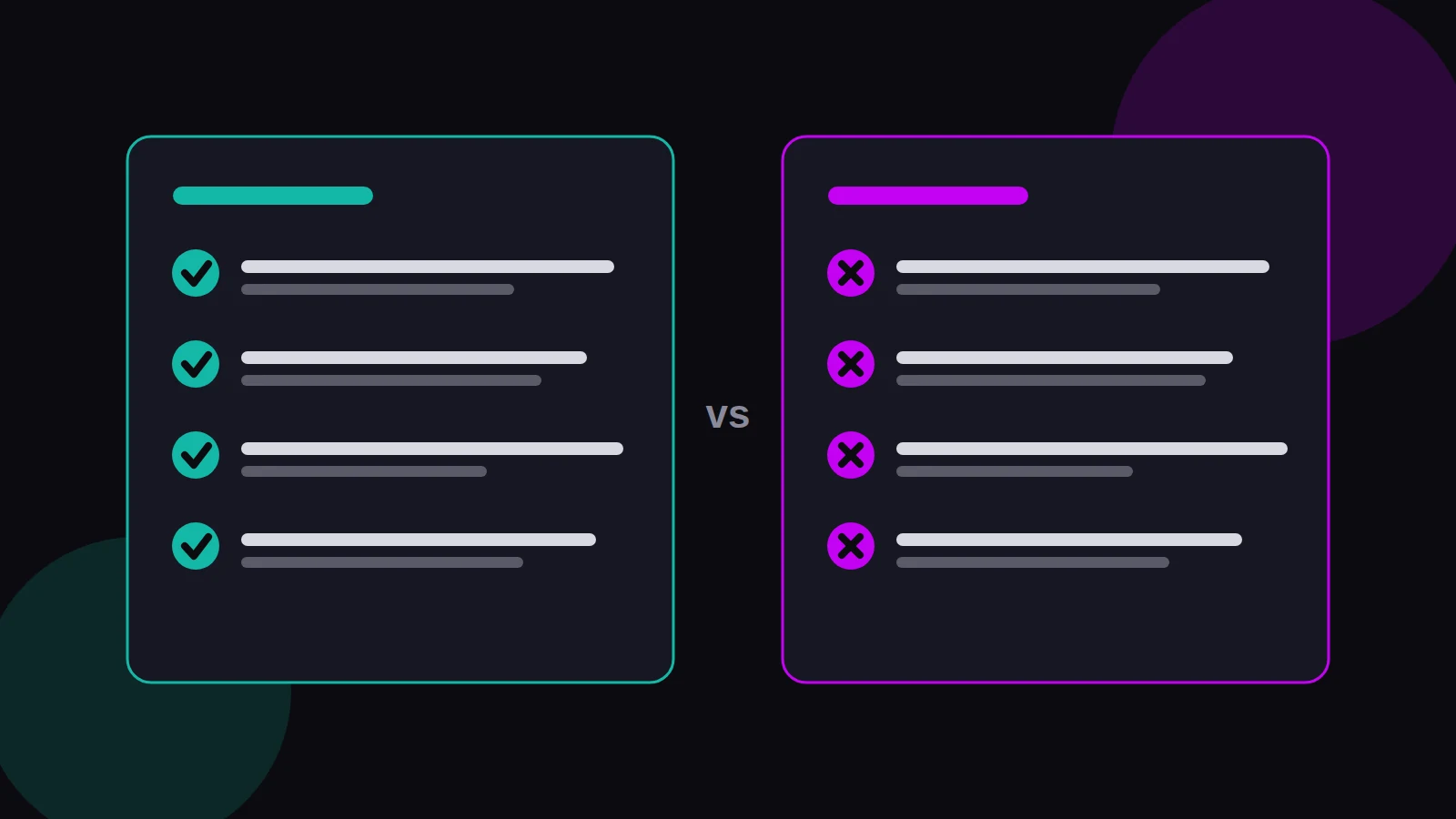
Green flags to look for and red flags to walk away from when vetting an SEO agency.
Judge the work, not the wording
The DigiFix portfolio shows the websites and campaigns we have delivered for Melbourne businesses, including MRCE and PF Advisors, with the problem each project started with.
What do Australian businesses ask about choosing an SEO agency?
How much does a good SEO agency cost in Australia?
Cost is set by scope, not by agency size. The variables are how competitive your market is, how much technical work the site needs before content can help, how many pages or locations you are targeting, and whether content is written for you. DigiFix quotes after reading the site and the Search Console data, and the quote names the work for each month. Compare quotes by cost per enquiry over a quarter, not by monthly fee.
How long until I see results from SEO?
Technical and on-page fixes on an existing site often move rankings within four to eight weeks, because Google has to recrawl and reassess the pages. New pages targeting competitive terms take longer. No agency controls the timing, so treat a specific date as a warning.
Should I hire an SEO agency if I already run Google Ads?
Not always, and for some businesses advertising alone is the faster path to revenue. Paid search buys visibility that stops when payment stops, while organic search builds pages and reputation that keep producing enquiries. Many DigiFix clients run both, with ads covering the terms the site does not rank for yet while SEO work catches up.
What should I ask before signing with an SEO agency?
Ask who owns the website, domain and analytics, what is delivered each month in writing, which searches they will target and why, how they will report against a baseline, and what happens to the content and links if you leave. If you cannot get straight answers to those five, the contract will not fix it later.
How do I know if my current SEO agency is working?
Ask for three things covering the last ninety days: the pages that were changed, your agreed keywords with their starting and current positions, and enquiries by page. Those three tell you almost everything, and you can confirm them yourself in Search Console.
Who wrote this guide?
This guide was written by the DigiFix team in Clayton, Melbourne. DigiFix has run SEO, content and digital marketing for Australian small and medium businesses for more than seven years, working across trades, professional services, health, hospitality and ecommerce. The outcomes behind the advice are published as case studies, including the campaigns that doubled revenue for MRCE and the website rebuild for PF Advisors. More about the DigiFix team and how we work is on our about page.
Which of the nine qualities matters most?
If you only test one, test transparency, because every other quality is verifiable through it. An agency that will not show you the work cannot demonstrate industry knowledge, experience, ethics or results. Ask to see the last month of work on an account like yours before you sign anything, and walk away if the answer is a case study instead. More worked examples on search, content and AI visibility are on the DigiFix blog.
Test your current agency against the nine qualities
Book a free consultation with DigiFix. Bring your website and your Search Console access, and we will show you which of the nine checks your site passes, which searches you are missing, and what the first month of work would involve. No lock-in contract, and your accounts stay in your name.
DigiFix, Unit A11/2A Westall Rd, Clayton VIC 3168. Serving businesses across Melbourne.
Do you want more traffic?
—————
Hi, we are an Australian digital agency doing groundbreaking work to help a business like yours reach its full potential. My only question is will you qualify for our services?
Do you want more traffic?
—————
Hi, we are an Australian digital agency doing groundbreaking work to help a business like yours reach its full potential. My only question is will you qualify for our services?