

Is your website getting lots of visitors but no calls or emails? You’re not alone. Many Australian businesses have lots of website visitors but not enough qualified leads to make money.
We get it. You’ve worked hard on your website, but it’s hard to turn visitors into customers. The issue isn’t just getting more visitors. It’s about getting the right visitors and turning them into leads.
Changing your focus from just getting visitors to getting conversions is key. It’s about tracking what really matters: phone calls, quote requests, and form submissions. At our Melbourne-based agency, we help businesses turn website visits into a steady pipeline of qualified leads.
Good lead gen SEO links your website to your business goals. It means using the right keywords, creating helpful content, and making your website easy to use. We’ve made this work for local businesses, from tracking phone calls to seeing the real value of your marketing.
Key Takeaways
- Move beyond just website traffic and focus on attracting and converting the right visitors.
- True SEO for lead generation is about creating a system that nurtures visitors into qualified leads.
- Tracking the right metrics—like phone calls and form fills—is key for measuring real ROI.
- A strategic, localised approach is key for Australian businesses to connect with their community.
- Connecting your SEO efforts to actual business enquiries is the ultimate measure of success.
Understanding SEO and Its Importance for Lead Generation
Many see SEO as a way to get more website visitors. But its real power is in attracting and converting the right people. It’s not just about ranking on Google; it’s about getting the right leads.
This section explains what modern SEO is. It shows why it’s key for a good lead generation strategy.
What is SEO?
SEO is not just about technical tweaks. It’s a strategic marketing function. It’s about making your online content match what your audience wants and what search engines look for.
It’s not just about keywords. It’s about being the best answer to your clients’ online questions.
Why SEO Matters for Businesses?
SEO is an investment in growth for businesses. It’s not just a marketing expense. Unlike ads, SEO keeps bringing visitors even when you’re not paying.
It builds a foundation of organic visibility. This means a steady flow of visitors looking for what you offer. It makes your brand a leader in your field.
The Role of SEO in Lead Generation
SEO is more than just getting traffic. It’s a lead generation engine. Our approach focuses on converting visitors into leads from the start.
We create content and tools that attract and engage visitors. This includes interactive calculators and guides. It’s a 10-Step System for turning visitors into qualified leads.
At our core, we help businesses build a lead generation system. If you want a predictable system, let’s talk strategy. Call us at 03 8669 1773 or visit our office at Unit A11/2A Westall Rd, Clayton VIC 3168.
Key Elements of an Effective SEO Strategy
A good SEO strategy mixes technical skills with content that people and search engines love. It’s not just about keeping up with algorithm changes. It’s about making a system that search engines get and users find useful. We focus on three main areas to build authority and attract the right visitors.
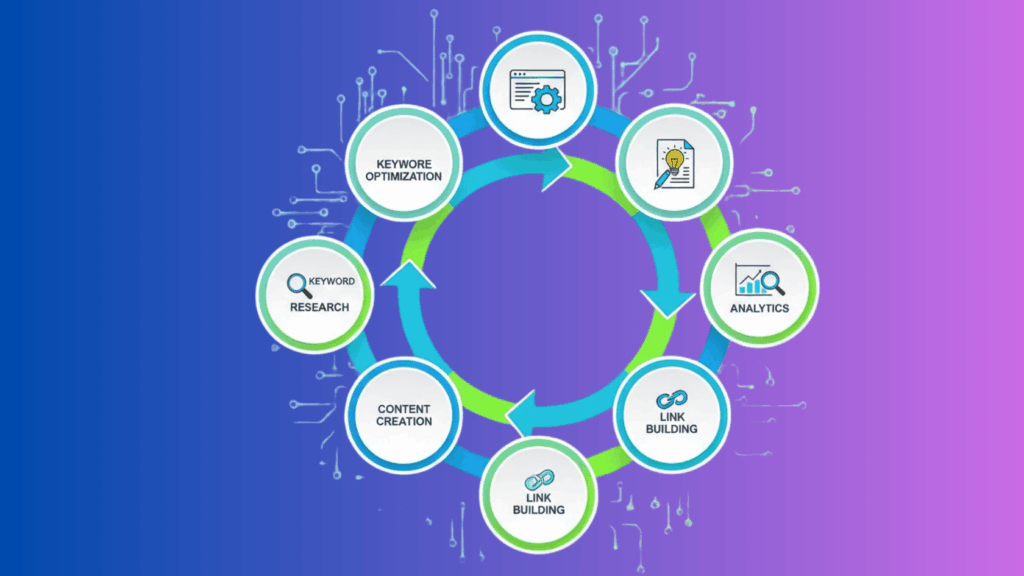
In Australia, knowing what your audience wants is key. It’s about matching your content with what they’re looking for. This approach turns casual visitors into real leads.
Keyword Research and Analysis:
Today’s keyword research is more than just finding popular words. It’s about understanding what people want and need. We start by finding out what your customers are asking and what problems they face. This means looking at topics, not just single words.
For example, “best coffee machine” shows someone is ready to buy. But “how to descale a coffee machine” shows they need help. Your content and technical SEO foundations must match this intent. AI search now values content that really answers the user’s question, not just keywords.
On-Page SEO Optimisation:
On-page SEO makes your content and technical parts work together. This includes using the right keywords in title tags, meta descriptions, and header tags. But it’s more than that; it’s about making your site easy for everyone to use.
Using on-page SEO best practices is key. This means each page has a clear purpose and is easy to find. A well-optimised page ranks better and gives a better user experience. This is important for getting more conversions.
Off-Page SEO Techniques:
Off-page factors, like backlinks from other sites, boost your website’s authority. This is about building your site’s reputation. A link from a trusted local business is a big plus.
For local businesses, local SEO is important. Make sure your business info is the same everywhere online. For example, having your business listed consistently helps build trust locally. Working with local businesses and getting good reviews are great ways to show you’re a trusted local business.
A successful strategy is ongoing. It needs constant checking, adapting to changes, and always focusing on adding value. This approach turns a simple website into a powerful lead generator.
How to Identify Your Target Audience
The key to a great lead gen SEO plan is knowing who you want to reach. You need to know who you’re trying to attract before you can get them to visit your site. Knowing your audience well turns random visitors into real leads.
This means creating detailed buyer personas and understanding why people search for things. It’s all about knowing who you’re talking to and what they’re looking for.
Defining Buyer Personas
A buyer persona is like a character based on real people. It’s made from market research and data about your customers. It shows who your ideal customer is, beyond just basic info.
It helps you make content that speaks to the right people. This way, more people are likely to become customers.
When making a buyer persona, think about:
- Demographics: Age, location, job title, industry.
- Professional Background: Their role, company size, and industry.
- Goals & Challenges: What they want to achieve and what stops them.
- Information Sources: Where they find info, like blogs or forums.
- Decision-Making Process: How they decide to buy something.
For example, a B2B software company might have a persona named “IT Director Ian.” Ian cares about security, scalability, and integration. All your targeted lead generation content can then be made to help Ian at each stage of his journey.
Understanding User Intent
While personas tell you who to target, knowing user intent shows why they search. Search intent is why someone looks for something online. Making content that matches this intent is key to good lead gen SEO.
There are four main types of search intent:
- Informational Intent: They want to learn something (e.g., “what is lead generation”).
- Navigational Intent: They’re looking for a specific website (e.g., “Artisan Digital Marketing SEO services”).
- Commercial Investigation: They’re researching and comparing options (e.g., “best SEO agency Melbourne”).
- Transactional Intent: They’re ready to buy (e.g., “hire SEO consultant”).
Your content should match the intent of your visitors. A blog post about “The Ultimate Guide to SEO” is for informational intent. A page about “SEO Services & Pricing” is for commercial intent. This way, you attract people who are more likely to buy.
By knowing your audience well and matching your content to their needs, you make your SEO work better. It’s about getting the right message to the right people at the right time.
Ready to improve your target audience strategy? For a custom plan on buyer personas and search intent, call our Melbourne team at 03 8669 1773. Or visit us at Unit A11/2A Westall Rd, Clayton VIC 3168.
Crafting High-Quality Content for Engagement
In the world of B2B lead generation, content is key. It connects your business with customers. It turns visitors into leads. Great content engages, builds trust, and captures client info.
But how do you make content that does more than just fill space? Let’s look at how to create content that generates B2B lead generation.
The Importance of Valuable Content
Why is content quality so important for B2B lead generation? In a world full of info, great content stands out. It speaks directly to your ideal customer’s needs.
Think of your content as your first salesperson. It works all the time, teaching and helping clients. Interactive tools like quizzes give immediate value and get you important info.
When you offer a lot of value, you gain trust. You’re not just selling; you’re solving problems. This makes your business a trusted expert, not just another vendor.
Types of Content That Generate Leads
Not all content is the same when you want to capture leads. We need to create assets that convert. Here are the best content types for B2B lead generation:
- Interactive Tools & Calculators: These are very effective. A “ROI Calculator” or a “Business Health Check” quiz gives great value. In return, you get an email address.
- In-Depth Gated Guides & E-books: A detailed guide on a complex topic is a classic choice. It requires an email sign-up, turning it into a lead generation tool.
- Case Studies & Detailed Whitepapers: For B2B, proof is key. Detailed case studies show how you solved a problem. They build credibility and attract similar businesses.
- Webinars & Expert Panels: Live or recorded webinars offer great value. They make you a thought leader and capture leads from all who register.
The goal is to move from passive content to interactive, valuable assets. Each piece should have a clear lead generation path. For example, a financial services firm might offer a “Retirement Savings Calculator.”
Ready to turn your content into a lead generation engine? Our team creates strategic content. Call us at 03 8669 1773 or visit our office at Unit A11/2A Westall Rd, Clayton to discuss how we can build a content strategy that drives qualified B2B leads for your business.
Technical SEO: The Backbone of Lead Generation
Your website’s technical side is like its engine. Good content and keywords are important, but they need a strong technical base. Technical SEO makes sure search engines can find and understand your site. It also makes sure users have a great experience.
Ignoring technical SEO is like building a house on shaky ground. It might look nice, but it won’t last. A good site turns visitors into leads by making their journey easy.
Site Speed and Performance:
Page speed is very important for conversion rate optimisation. A slow site can hurt your business. Every second delay can lose you leads.
We make your site fast by optimising images and code. A one-second delay can make customers unhappy by 16%.
Mobile Optimisation
Most people use mobiles to visit websites. Your site needs to work well on all devices. Google looks at your mobile site first for ranking.
A site that works well on mobile is key for getting leads. A bad mobile experience can stop people from converting.
“A slow, clunky website is a leaky bucket for leads. You can pour all the traffic you want into the top, but if the technical foundation is unsound, you’ll never fill the bucket.”
Ensuring Crawlability
Search engines need to be able to crawl your site. This means making it easy for them to find and index your content. A clean site structure and a good sitemap help a lot.
We check for problems like broken links and crawl errors. These can hide your content from users and search engines.
Technical SEO is key for getting leads. A technical audit should check:
- Core Web Vitals: Loading, interactivity, and visual stability.
- Mobile Responsiveness: Working well on all devices.
- Site Architecture: Easy for users and bots to navigate.
- Structured Data: Helping search engines understand your content.
- HTTPS Security: Important for trust and a small ranking boost.
Ignoring technical SEO is like having a beautiful store with a locked door. Focus on site speed, mobile experience, and crawlability. This makes your site fast, accessible, and trustworthy.
If your site is slow or hard to use on phones, this is important. For a technical audit and to improve your site, call us at 03 8669 1773. Or visit us at Unit A11/2A Westall Rd, Clayton VIC 3168.
Local SEO Strategies for Australian Businesses
In today’s world, showing up in local searches is key for Aussie businesses. Local SEO makes your business stand out online. It’s vital for businesses in Clayton to Cairns to be seen by customers.
This section will show you how to boost your online presence. We’ll help you get found by people searching “near me.” This will bring more customers to your door.
The Importance of Local SEO for Australian Businesses
Ever searched for a service on your phone? You probably typed “plumber near me” or “best café open now.” That’s local SEO at work. For Aussie businesses, being found in these searches is essential.
The Google Business Profile (formerly Google My Business) is key. When you optimise it, it acts as your digital store. It shows up in Google Maps and the local ‘3-pack’ for searches.
For more info, check out our guide on local SEO.
Google My Business Optimisation
Your Google Business Profile is your digital handshake with customers. A bad profile is a missed chance. Here’s how to make it great:
- Claim and Verify: Claim your business on Google. Verification proves you own it.
- Complete Every Section: Fill out every field. A complete profile attracts more engagement.
- Manage Reviews: Encourage and respond to all reviews. This shows you value feedback.
- Use the Q&A Feature: Add common questions and answers. This builds trust and saves time.
Keep your profile up to date. Regular updates with new offers or services improve your ranking.
Local Keywords and Content
Use global keywords but rank locally. Target phrases like “emergency plumber Sydney CBD” or “blocked drain Bondi.” This attracts local customers.
Create content that answers local questions. For example, a Melbourne bakery could write about sourdough in Fitzroy. This targets locals and improves your ranking.
Here’s a table with key local SEO strategies:
| Strategy Pillar | Key Actions | Impact on Local Ranking |
|---|---|---|
| Google Business Profile | Complete every field, post regularly, respond to reviews, add photos. | Directly influences the “local pack” and map results. |
| Local Keywords | Use geo-modifiers (e.g., “café in Paddington,” “electrician near me”). | Targets high-intent users at the “I-want-to-go” stage. |
| Local Content | Blog about local events, news, or neighbourhood guides. | Builds local authority and relevance for area-specific searches. |
| Online Reviews | Encourage and manage reviews on Google, Facebook, and other local directories. | Builds trust and is a confirmed ranking factor for local SEO. |
Good lead gen SEO means your name, address, and phone number (NAP) are the same everywhere. Inconsistent listings confuse customers and search engines. For more local SEO tips, check our guide.
Want to see how your business looks in local searches? We can help. Call us at 03 8669 1773 or visit our office at Unit A11/2A Westall Rd, Clayton VIC 3168 for a free local SEO audit. Let’s make your Australian business stand out.
SEO Tools to Aid Lead Generation
SEO tools make your website work hard to get leads. For B2B, knowing your data is key. It helps turn your site into a lead factory.
Without the right tools, SEO is just a guess. These tools are smart investments. They help you see what works and get more leads.
Google Analytics and SEO
Google Analytics is like your website’s control room. It’s key for B2B lead generation. It shows how visitors turn into leads.
It tracks more than just visits. It shows what pages lead to contact forms. This helps you see what content gets the most leads.

Google Analytics and Google Search Console together are powerful. Search Console shows which searches find your site. Analytics shows what happens next. This combo finds your best content and keywords for B2B leads.
SEMrush and Ahrefs Overview
SEMrush and Ahrefs are like your advanced spy tools. They help you see what your competitors are doing. This is important for B2B, where keywords are specific.
These tools help you:
- Check your competitors’ backlinks for ideas.
- Find keywords your competitors use but you don’t.
- See how your keywords rank for business searches.
This info is gold for B2B companies. It helps you attract the right businesses looking for your solutions.
Other Helpful SEO Tools
There are more tools to help you:
- Technical SEO: Tools like Screaming Frog check your site for errors. They make sure search engines can find your lead pages.
- On-Page & Content: Tools like SurferSEO help make your content better. They ensure your landing pages are perfect for search engines and users.
- Local SEO (for Australian Businesses): Tools like BrightLocal manage your Google Business Profile. This is key for local businesses.
Here’s a quick guide to the main tools:
| Tool | Primary Use for Lead Gen | Best For |
|---|---|---|
| Google Analytics 4 (GA4) | Tracking user journeys, conversion paths, and lead source attribution. | Understanding which channels and content drive form fills and enquiries. |
| Google Search Console | Monitoring search performance, indexing, and technical health. | Identifying high-potential keywords you rank for but could rank higher. |
| SEMrush | Competitor analysis, keyword gap analysis, and backlink research. | Businesses wanting to outmanoeuvre competitors in search. |
| Ahrefs | In-depth backlink analysis and complete keyword research. | Building a powerful, authoritative link profile for lead-gen content. |
Don’t use every tool. Choose the ones that give you a clear view of your lead generation. It’s about making smart decisions with data. Ready to boost your website’s lead generation? Call us at 03 8669 1773 or visit our office at Unit A11/2A Westall Rd, Clayton VIC 3168. Let’s create a data-driven plan that works.
Measuring SEO Success for Lead Generation
Are you using SEO and getting results? Or are you just watching page views? Many businesses focus on traffic and rankings. But, true success is about making money.
We’ll show you how to measure what really matters. This includes conversion rate optimisation. It’s about turning clicks into customers and money.

Key Metrics to Track for SEO Success
Don’t just look at rankings. To measure SEO success, connect organic traffic to business results. We focus on metrics that show real growth.
Key Performance Indicators (KPIs) for SEO should include:
- Organic Goal Completions: This is the most direct measure. How many form fills, phone calls, or content downloads came from organic search?
- Lead Quality & Conversion Rate: Not all leads are equal. Track the quality of leads from organic search. Are they filling out contact forms, or are they just browsing? A high conversion rate optimisation strategy is key here.
- Organic Traffic to Key Pages: Is your content on high-intent service or product pages attracting the right visitors?
- Bounce Rate & Dwell Time: High bounce rates on landing pages from organic search signal a mismatch between the user’s search intent and your page’s content.
We recommend tracking these metrics in a consolidated dashboard. A simple table to start could look like this:
| Metric | What It Measures | Your Target (Example) |
|---|---|---|
| Organic Goal Completions | Number of form fills, calls, or downloads from organic search. | 10+ per month |
| Organic Conversion Rate | Percentage of organic visitors who complete a goal. | 2-5% |
| Cost per Organic Lead | Total SEO investment / Organic Leads Generated. | Track for ROI calculation |
| Keyword Rankings for High-Intent Terms | Positions for terms that indicate a user is ready to buy. | Top 3 positions |
Setting Up Conversion Tracking: Connecting Clicks to Customers
To move from data to action, you must connect user actions to their source. Here’s a simple 5-step process we use to track the full lead generation journey:
- Track the Lead Source: Use UTM parameters and analytics to tag all organic traffic.
- Connect Your Tools: Integrate Google Analytics 4 and Google Search Console. Use call tracking numbers on your site to capture phone leads.
- Tag Your Leads: In your CRM, tag or note which leads came from organic search. This is important for tracking the lead’s journey from first click to closed deal.
- Calculate Your SEO ROI: Monthly, review the number of qualified leads and their value against your SEO investment. The formula is simple: (Value of Leads from SEO – Cost of SEO) / Cost of SEO.
By linking your Google Analytics to your CRM, you can see the entire path a lead takes. This data is gold. It tells you not just if SEO is bringing traffic, but if it’s bringing the right traffic that turns into phone calls and emails to your team at 03 8669 1773 or visits to your office at Unit A11/2A Westall Rd, Clayton.
Ultimately, measuring SEO success for lead generation is about proving value. It’s about showing that the clicks you’re earning are turning into conversations, and those conversations are turning into customers. It’s not about ranking for the most keywords; it’s about ranking for the right keywords and converting that intent into business growth.
Integrating SEO with Other Marketing Channels
Your marketing strategy is like an orchestra. Each part—SEO, PPC, social media—can shine on its own. But the magic happens when they work together.
In today’s world, marketing alone is not enough. We think SEO should be part of a bigger plan. It helps get more leads for your business.
This section will show you how to mix SEO, PPC, and social media. Together, they make a powerful team that brings in more leads.
SEO vs. PPC Marketing: A Synergistic Duo, Not a Competition
Many think SEO and PPC are choices. But they’re not. They work best together.
SEO is like building a strong base. PPC is like adding quick, targeted ads. Together, they’re unstoppable.
PPC is great for testing new ideas. You can try out keywords and ads before they’re live on SEO. This helps you know what works best.
“The most successful businesses don’t see SEO and PPC as competitors. They see PPC as the scout, and SEO as the army that occupies and holds the ground. One explores, the other secures and builds.” — Excerpt from our internal strategy guide.
Here’s how they work together:
| Aspect | SEO (Organic) | PPC (Paid Search) |
|---|---|---|
| Primary Goal | Long-term, sustainable growth and authority. | Immediate visibility and lead generation for specific campaigns. |
| Time to Results | Months of consistent effort. | Instant visibility (once campaign is live). |
| Cost Model | Effort and time investment. | Cost-per-click (CPC) or cost-per-lead model. |
| Best For | Building brand authority, evergreen content, and long-term trust. | Promoting time-sensitive offers, product launches, and testing new markets. |

The Role of Social Media in SEO
Social media isn’t just for likes and shares. It’s key to a strong lead gen SEO strategy. It’s like a megaphone for your content and a community builder for your brand.
A strong social media presence helps SEO in many ways:
- Content Amplification: Share your blog posts and guides on social media. This brings in traffic and shows search engines your content is fresh.
- Brand Building & Trust: Being active and helpful on social media builds trust. When people search for you, they’re more likely to click on a name they know.
- Local SEO Boost: For Australian businesses, positive reviews and social media engagement can improve local search visibility. It’s like a thumbs up from the community.
- Content Ideas & Audience Insight: Listen to what people are talking about on social media. It can give you ideas for your SEO content.
The goal is a cycle of success. Your SEO creates valuable content. Social media shares that content, bringing in traffic and engagement. This helps your SEO even more.
By using all marketing channels together, you create a powerful team. This team doesn’t just get more leads. It gets better-qualified leads by reaching people in different ways.
Ready to integrate your marketing channels and create a lead generation engine? Our team can help Australian businesses. Call us at 03 8669 1773 or visit our Clayton office at Unit A11/2A Westall Rd, Clayton VIC 3168.
The Evolution of SEO and Future Trends
SEO is always changing. It’s shaped by new tech and how people search. For Aussie businesses, staying ahead means knowing what’s coming. SEO is now about understanding what users want, being seen as an expert, and building trust.
Today, we focus on more than just keywords. We need to think about what users really want. For B2B lead generation, this means making content that’s not just helpful but also shows you know your stuff.

Voice Search Optimisation
How we search is changing. Smart speakers and virtual assistants are making voice search common. This means our SEO strategies need to change too.
Voice searches are longer and more like questions. Instead of typing “B2B marketing consultant Melbourne,” people might say “Hey Google, find a B2B marketing consultant in Melbourne.”
To get better at voice search, we need to make our content sound natural. This means:
- Focusing on Question-Based Content: Make content that answers questions like “who, what, where, when, why, and how.”
- Prioritising Local SEO: A lot of voice searches are local. Make sure your Google My Business profile is great and answers “near me” questions.
- Structured Data: Use schema markup to help search engines understand your content better.
The table below shows how voice searches differ from typed searches:
| Feature | Traditional (Typed) Search | Voice Search |
|---|---|---|
| Query Length | Short, 1-3 word phrases (e.g., “B2B SEO agency”) | Longer, full-sentence questions (e.g., “Hey Siri, what’s the best B2B SEO agency in Sydney?”) |
| Intent | Informational, navigational, transactional. | Overwhelmingly informational or local. |
| Local Focus | May or may not include location. | Extremely high intent; “near me” or “near [location]” is common. |
| Result Expectation | A list of links to explore. | A single, spoken answer (often the featured snippet). |
As AI changes SEO, optimising for voice search is key. It’s not just about ranking well anymore. It’s about being the go-to answer for users.
“The future of search is not about matching keywords, but about understanding the question behind the query. Voice search is the ultimate test of a brand’s ability to provide a direct, conversational, and helpful answer.”
E-A-T: Expertise, Authoritativeness, Trustworthiness
In today’s world, search engines value E-A-T a lot. This means being seen as an expert, authoritative, and trustworthy. For B2B services, this is key for getting leads.
Building E-A-T takes time. It means:
- Demonstrating Expertise: Create detailed, researched content that solves big industry problems. Use sources, data, and expert insights.
- Building Authoritativeness: This comes from consistent, quality content and backlinks from respected sites.
- Establishing Trustworthiness: Be open. Show your credentials, client testimonials, and have a secure, fast site with clear “About Us” and “Contact” pages.
Google’s algorithms are getting better at spotting these signs. A good SEO plan must include E-A-T. Businesses that are seen as the top experts in their field will win.
The future of SEO is about understanding what people want. Voice search needs natural, conversational content. E-A-T requires quality and trust. For Aussie B2B businesses, mastering these trends means more than just ranking well. It’s about building trust and getting the right leads.
Common SEO Mistakes to Avoid
In today’s digital world, some SEO mistakes can hurt your lead generation. Businesses spend a lot on quality content and backlinks. But, technical errors can ruin all their hard work.
These mistakes are hard to spot until you check your analytics. Then, you might wonder why your traffic doesn’t turn into sales.
Knowing these common mistakes is the first step to fixing them. We’ve listed the most common and costly errors. These are often seen in Australian businesses trying to get more online visibility.
Ignoring Mobile Users
One big mistake is ignoring mobile users. Now, over 60% of web traffic comes from mobile devices. If you ignore mobile users, you ignore most of your customers.
A mobile-friendly site is more than just a smaller version of your desktop site. It’s about giving a good user experience on mobile.
Google now uses the mobile version of your site for ranking. If your site isn’t mobile-friendly, it harms your search rankings and conversion rate optimisation.
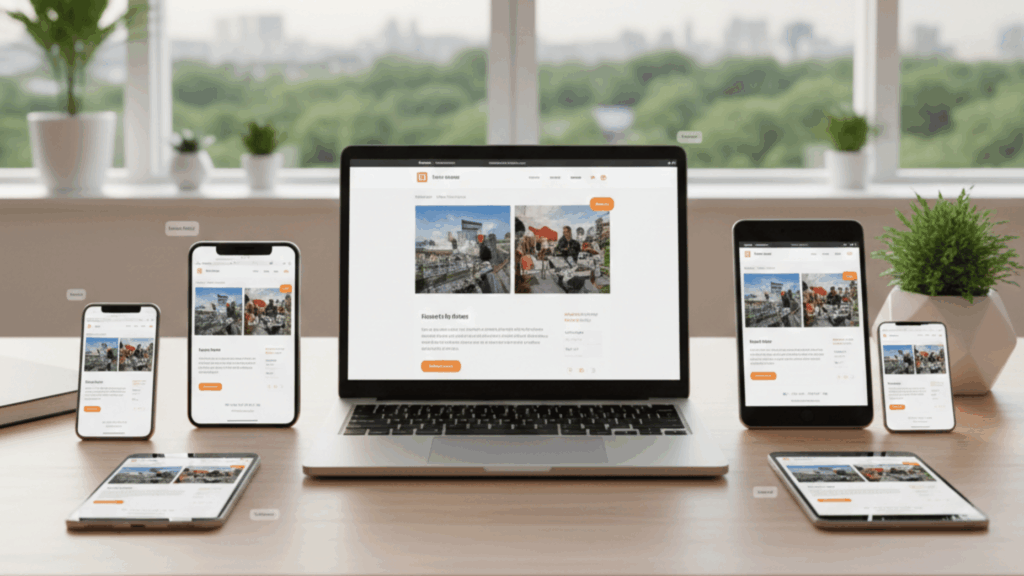
We often see beautiful desktop sites that are hard to use on mobile. Tiny text, unclickable buttons, and slow images make users leave quickly.
Overlooking Page Speed
A slow website kills conversions. Pages that take more than three seconds to load have higher bounce rates. A loading spinner can make users leave your site.
Even a one-second delay in page load time can reduce conversions by up to 7%. Page speed is now a ranking factor for Google. A slow site hurts your conversion rate optimisation and search rankings.
If your site takes more than 3 seconds to load, you’ve lost many visitors. Each extra second can decrease mobile conversions by 4.42%.
Actionable Checklist to Fix These Mistakes
Here’s a simple audit checklist to find and fix these issues:
- Mobile Responsiveness: Test your site on different devices and screen sizes. Make sure buttons are tappable, text is easy to read, and navigation is simple on all devices.
- Page Speed Analysis: Use Google’s PageSpeed Insights or GTmetrix to find what slows your site. Common problems include unoptimised images, render-blocking resources, and too much JavaScript.
- Mobile-First Indexing Check: Make sure Google can see and render your mobile content. Use Google’s Mobile-Friendly Test tool.
- Core Web Vitals: Check your Largest Contentful Paint (LCP), First Input Delay (FID), and Cumulative Layout Shift (CLS) through Google Search Console.
- Technical Audit: Regularly check for broken links, 404 errors, and crawl errors that might hurt your site’s performance.
Many businesses focus too much on content and keywords. They forget about the technical basics. A great website with good content won’t convert if it’s hard to access or slow.
High bounce rates or poor conversion rates often hide technical issues. These problems can be fixed. We’ve helped many Australian businesses, from Clayton to Perth, improve their conversion rates by 30-50% with our technical SEO checklist.
Your website is often the first thing people see of your business. Don’t let simple technical errors ruin your SEO and content efforts. If you’re in Clayton or anywhere in Australia, we can help. Call us at 03 8669 1773 or visit our office at Unit A11/2A Westall Rd, Clayton VIC 3168 to discuss fixing these common SEO mistakes.
The Importance of SEO Audits
Your website is like a car. You wouldn’t drive it without checking the engine and tires. An SEO audit is like this check-up for your website. It looks at more than just technical stuff.
It finds problems and chances to get more visitors. These visitors can become real customers for your business.
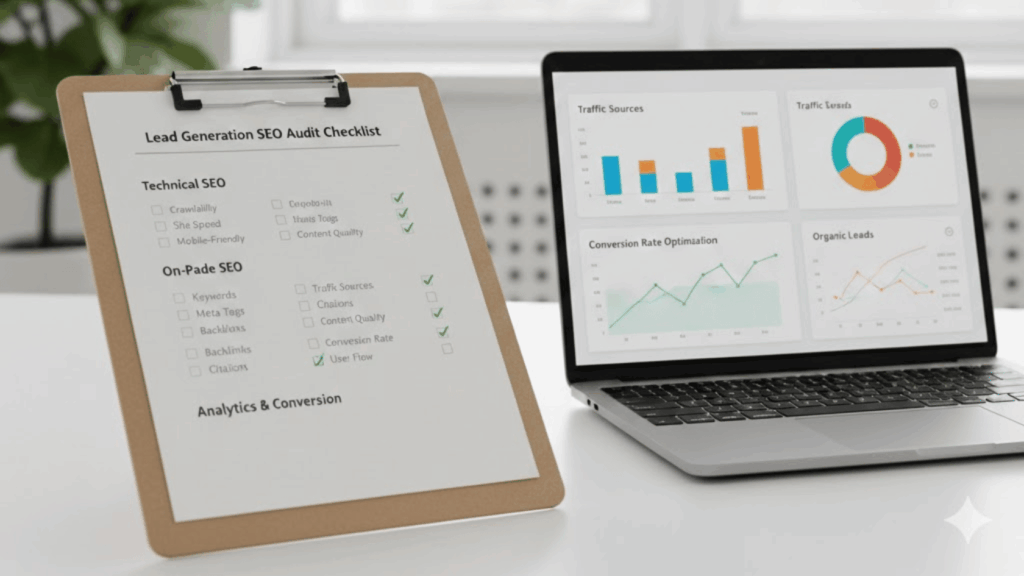
What is an SEO Audit?
An SEO audit checks how well your website works. It looks at how well your site meets search engine rules. It’s not just about fixing broken links.
It’s like a health check for your business. It sees if your site is good for users and search engines. It helps your site reach the right people.
A good audit for lead gen SEO looks at more than just tech. It checks if your content meets user needs. It also looks at how easy it is for users to take action.
How to Conduct an Effective SEO Audit
To do a good audit for lead gen SEO, follow a three-step plan. You need to check the tech, content, and how easy it is to take action.
1. The Technical & Performance Check: This first step is all about the basics. It checks if search engines can find and show your site.
- Site Speed and Core Web Vitals: Your site must load fast on all devices.
- Mobile-Friendliness: Your site needs to work well on phones.
- Site Structure & Crawlability: Search engines should be able to find all important pages easily.
- Security (HTTPS): Having HTTPS is important for both ranking and trust.
2. The Content & Intent Alignment: This step is about matching your content with what users want.
- Does your content answer what users are searching for?
- Are you using the right keywords for the right content?
- Is your content focused on what users want, not just keywords?
3. The Conversion Pathway Analysis: This is key for lead gen SEO. It looks at how users move from searching to becoming a lead.
- Landing Page Optimisation: Are your landing pages good at converting visitors?
- Form & Contact Optimisation: Is it easy to find and use your contact form?
- Content for Conversion: Does your content build trust and guide users to take action?
An SEO audit is like a roadmap for your online presence. It finds problems that cost you leads. By fixing these, you make your site better at getting visitors to become customers. Need help? Our team at Clayton can do a detailed audit. Call us at 03 8669 1773 or visit us at Unit A11/2A Westall Rd, Clayton VIC 3168 to talk about how to grow your business with lead gen SEO.
Building Links to Boost SEO
Getting good backlinks is not about cheating. It’s about making your site trusted by users and search engines. For B2B lead generation, a strong backlink profile shows Google your site is reliable and useful. Focus on getting links from trusted sources, as one good link is worth more than many bad ones.

Types of Backlinks: Not All Links Are Created Equal
First, know the types of backlinks. A good backlink profile has many types of links. This shows search engines your site is respected and useful.
| Backlink Type | Description | Key Advantage | Potential Drawback |
|---|---|---|---|
| Editorial Link | Earned naturally when another site links to you as a reference or resource. | Highest authority. Signals strong trust and relevance. | Difficult to earn; requires outstanding content. |
| Guest Post Link | A link from an article you’ve written for another website. | Good for brand exposure and targeted traffic. | Context is key; must be relevant to your niche. |
| Resource/Directory Link | A link from a business directory or resource list. | Can drive local traffic and improve local SEO. | Low-authority directories offer little to no SEO value. |
| Niche Edits | Adding a relevant link to an existing, high-authority article. | High-ROI; places your link in a high-trust context. | Requires outreach and relationship building. |
The goal is to get the right kinds of links. A link from a respected industry publication is much more valuable than many low-quality links. Our effective link building strategies can help you get these valuable links.
Strategies for Effective Link Building
Modern link building is about earning, not building. It’s about quality over quantity. The best links are earned, not built. This means creating content so valuable that other sites naturally want to link to it.
Start by making cornerstone content—definitive guides, original research, or unique tools that serve your audience. This becomes your “linkable asset.” Then, instead of a mass email blast, focus on building relationships with relevant site owners and content managers. A personalised outreach email that shows you’ve engaged with their site can work wonders.
Another powerful strategy is the broken link building method. You can find broken links on high-authority sites in your niche and offer your own, relevant content as a replacement. This provides value to the site owner (fixing a broken resource) and earns you a valuable link.
Remember, a few high-quality, contextually relevant links from authoritative sites are infinitely more valuable than hundreds of low-quality ones. For a step-by-step process, our comprehensive guide on building backlinks is an excellent next step.
Ready to build a link profile that drives B2B lead generation? A strong backlink profile is a long-term asset. If you’re looking for expert guidance to build authority and trust for your local business, our team is ready to help. Call us at 03 8669 1773 or visit our office at Unit A11/2A Westall Rd, Clayton VIC 3168 to discuss a custom link-building strategy.
Case Studies: Successful SEO for Lead Generation
What does good SEO and conversion rate optimisation look like in real life? Let’s look at real examples. We’ve kept the details secret, but the results are real. These Australian businesses faced common problems and solved them with the strategies we’ve talked about. Their stories are about more than just getting more visitors—they’re about turning those visitors into real leads.
Analysis of Australian Businesses
A boutique financial advisory firm in Sydney was our first case. They had a professional website and lots of organic traffic from their blog. But, their contact form was quiet. They had lots of visitors, but not enough leads.
We helped them with a targeted conversion rate optimisation plan. We added a phone number and made their service pages clearer. We also added trust-building social proof and simplified their contact form. And we made special landing pages for their services. This led to a 140% increase in lead form submissions in just three months. The key was making the most of their existing traffic.
Our second case was an e-commerce store in Melbourne selling eco-friendly products. They ranked well for many products but had a high cart abandonment rate. They had lots of visitors, but not enough sales.
We did a big CRO overhaul for them. We tested different versions of their product pages and added live stock indicators. We also made the checkout process easier. This led to a 65% increase in conversion rate. It showed that CRO is key to making the most of SEO.
Lessons Learned and Best Practices
These case studies show a clear pattern. Success in SEO today is not just one thing. It’s about driving the right traffic and then making the most of it with CRO. Here are the main lessons and strategies from our experience.
| Business Type | Core SEO Challenge | Primary CRO Strategy Applied | Measurable Outcome |
|---|---|---|---|
| Financial Advisory (B2B Service) | High traffic, low conversion | Service page optimisation, trust signals, form simplification | 140% increase in qualified leads |
| E-commerce Retailer (B2C) | Cart abandonment, high traffic, low conversion | Streamlined checkout, A/B testing, urgency tactics | 65% increase in conversion rate |
| B2B SaaS Platform | Generating high-value MQLs | Gated premium content & lead-nurturing workflow | 150+ MQLs/month consistently |
“The best SEO strategy in the world is just expensive traffic if your website can’t convert visitors into leads. True growth happens at the intersection of visibility and conversion.”
We’ve learned a lot about conversion rate optimisation that works with SEO:
- Map the Journey: Know the path from visitor to lead. Find and fix any problems.
- Quality Over Quantity: It’s better to have fewer, but more qualified leads. Use special content and offers to attract the right people.
- Test and Iterate: CRO is ongoing. Keep testing different things like headlines and CTAs.
- Align SEO & CRO Goals: The keywords you use should match the pages designed to convert.
- Track Everything: Use analytics to see the whole journey and where people drop off.
The goal is a smooth system. Your SEO brings in the right people, and your website turns them into clients. It’s a strong combination that goes beyond just numbers.
Want to see what a data-driven SEO and CRO strategy can do for your business? For a plan that works for Australian businesses, get in touch. Let’s talk about building a system that gets you real leads. Call us at 03 8669 1773, or visit our Clayton office at Unit A11/2A Westall Rd, Clayton VIC 3168.
Conclusion: Maximising Lead Generation Through SEO
SEO is key for getting good leads. It makes your site match what people are looking for. This turns searches into real chances for your business.
A good lead gen SEO plan is smart and creative. It uses the right words, makes your site easy to use, and builds trust online. It’s all about getting the right people to your site and keeping them there.
Taking Action on Your SEO Strategy
Knowing is great, but doing is better. A good lead gen SEO plan starts with action. Check your site, know who you’re talking to, and make content that answers their questions.
For more on SEO basics, check out our SEO questions page.
Contact Us for Expert SEO Assistance
Want more leads from your site? Our team creates SEO for lead generation plans for Aussie businesses. We focus on leads and sales, not just rankings. Let’s make a plan for you.
Phone: 03 8669 1773
Address: Unit A11/2A Westall Rd, Clayton VIC 3168
Start growing your business now. Contact us for a chat and site check.
FAQ
How is SEO for lead generation different from just getting more website traffic?
SEO for lead generation is all about getting the right visitors. We want people who are looking for what we offer. This means using specific keywords and creating content that solves problems.
It’s about focusing on quality over quantity. This approach turns visitors into valuable leads.
We have a Google Business Profile. Isn’t that enough for local SEO?
A Google Business Profile is key for local SEO. It’s like your digital storefront. But, it’s just the beginning.
We need to make sure it’s filled with accurate info and great photos. We also need to link it to a mobile-friendly website and local content.
Being in the “local 3-pack” and “near me” searches is important. It helps drive more in-store visits and calls.
We’ve created great content, but it’s not generating leads. What are we missing?
Great content is just the start. Without a clear path to conversion, it’s like having an engine without a steering wheel.
We need to look at our conversion funnel. Are our calls-to-action clear? Do we offer something valuable to capture contact info?
The content must guide users to a conversion point. This turns anonymous visitors into known leads.
Our website traffic is growing, but leads aren’t increasing. What’s the disconnect?
This might mean your content doesn’t match what users are searching for. Or, there might be a problem with the user journey. Maybe you’re ranking for the wrong keywords. A full SEO audit can help. We also need to check the user journey for any issues.
How do we create content that actually generates B2B leads?
For B2B SEO, we need to know our buyer personas well. We create cornerstone content that shows our expertise.
This includes guides, case studies, and content that solves specific problems. We also use top and bottom funnel content to attract and convert visitors.
Gated assets like reports or webinars are great for capturing leads.
How long does it take for SEO to generate leads?
SEO is a long-term strategy. It can take 4 to 12 months to see results. But, we focus on building a strong foundation.
We start with quick wins like fixing technical issues. This can improve things in a few months. The goal is a consistent strategy that keeps delivering leads.
How do we know if our SEO is working for lead generation?
We track more than just rankings and traffic. We focus on conversion rate optimisation. This includes lead numbers, cost per lead, and lead quality.
We use tools like Google Analytics 4 to see how SEO drives sales. This shows the true value of our efforts.