

Do you know what’s stopping your Australian business from being seen online? Many owners work hard but their sites stay hidden. The problem is often hidden technical issues that slow down growth.
Our comprehensive SEO audit services find these hidden problems. We give you a clear plan for growth, not just a report. We start with a technical SEO audit to check your site’s health. This includes site speed and mobile use.
This deep check is the first step in our comprehensive SEO audit process. It makes your site stand out.
We look at both the visible and technical parts of your site. We find growth chances you might not have seen. It’s not just fixing problems; it’s about growing your business.
For big businesses, our enterprise SEO audits offer a detailed analysis. We build a strong base for your site. It becomes a magnet for your ideal customers.
Key Takeaways
- A technical SEO audit reveals hidden technical issues that can cripple your website’s performance in search results.
- A thorough audit goes beyond a simple checklist; it provides a strategic roadmap for sustainable growth.
- Uncovering and fixing technical errors can lead to immediate improvements in search engine visibility.
- A professional audit provides a clear, prioritised action plan tailored to your business goals.
- Regular audits are essential for maintaining a healthy, competitive website.
Introduction to SEO Audit Services
Knowing your website’s health is key to online success. An SEO audit is like a detailed check-up. It shows what’s good, what’s not, and where you can get better.
It helps improve your search rankings, get more visitors, and make your site easier to use. It all starts with knowing where you stand now.
What is an SEO Audit?
An SEO audit is like a health check for your website. It looks at how well your site does in search engines. It finds problems and spots chances to get better.
It checks things like how fast your site loads and if it works on phones. It also looks at your site’s links and how good your content is.
We do SEO audits to find out what’s holding your site back. It’s not just about finding problems. It’s about finding ways to get better. A good audit looks at your site’s structure, speed, and content.
Regular checks are important because search engines and what people want change often. What worked before might not work now. An audit gives you a plan to improve, whether you want a free or paid check.
The Importance of Regular SEO Audits
Search engines like Google change their rules a lot. What’s good today might not be tomorrow. Regular audits help you stay ahead.
Without regular checks, small problems can grow big. A slow site, broken links, or duplicate content can hurt your rankings. Audits find these issues early, so they don’t hurt your traffic and sales.
| Without Regular Audits | With Regular SEO Audits |
|---|---|
| Technical issues go unnoticed | Technical problems identified and fixed quickly |
| Content gaps remain unfilled | Content strategy evolves with user intent |
| Competitors gain advantage | Maintain competitive edge |
| Missed opportunities for growth | Proactive identification of opportunities |
| Declining organic traffic | Consistent or improved organic performance |
Regular audits do more than just check your site’s health. They start a cycle of getting better. Each audit builds on the last, helping your site grow more and more.
This way of doing things is better than just reacting to problems. It’s proactive and helps your site grow steadily.
Who Needs an SEO Audit?
Most websites can benefit from an SEO audit. But some are more likely to need one:
- New websites that need to establish a strong SEO foundation
- Established businesses experiencing traffic plateaus or declines
- E-commerce sites looking to improve product visibility
- Local businesses targeting specific geographic areas
- Content-heavy sites that need better content structure
- Websites that have never been audited or haven’t been audited in the last 12 months
Regular checks are very important for businesses that have changed their site a lot. Even if you’ve done everything right, audits keep your site strong.
Think of an SEO audit as keeping your website in top shape. Just like cars need regular checks, websites do too. Audits find small problems before they get big, saving you time, money, and lost sales.
Key Components of an Effective SEO Audit
An effective SEO audit is more than one action. It’s a detailed check of three key areas. It’s like a full health check for your website, looking at everything, not just simple fixes.
This deep analysis helps find hidden problems and missed chances. The best audits also look at how you compare to your competitors. They check your SEO competitor analysis to see how you rank.
These audits focus on three main parts: on-page elements, technical foundations, and off-page authority.
On-Page SEO Elements
On-page SEO is about the content and code your visitors and search engines see. It’s about making your website’s content and code match what users and search engines want. We check every page to make sure everything works well for ranking and user experience.

Let’s look at the typical on-page elements we check and what we look for:
| Element | What We Check | Common Issues Found |
|---|---|---|
| Title Tags & Meta Descriptions | Length, keyword usage, click-through appeal. | Duplicate titles, missing or truncated descriptions. |
| Content Quality | Relevance, depth, keyword usage, and user intent alignment. | Thin content, keyword stuffing, or content that doesn’t answer the user’s query. |
| Header Tags (H1, H2, etc.) | Proper hierarchy and keyword use for structure. | Missing H1 tags, multiple H1s, or illogical heading structures. |
| Image Optimization | Use of descriptive alt text and file size optimization. | Missing alt text, very large images slowing down the site. |
| Internal Linking | Structure and flow of links between your own pages. | Orphaned pages, broken internal links, poor anchor text. |
Technical SEO Analysis
Technical SEO is like the engine room of your website. It’s about how search engines find, crawl, and index your site. A strong technical foundation is essential for your site’s health.
| Technical Factor | What We Analyse | Why It Matters |
|---|---|---|
| Site Speed & Core Web Vitals | Largest Contentful Paint (LCP), First Input Delay (FID), Cumulative Layout Shift (CLS). | Direct ranking factor and a major user experience signal. Slow sites are penalised. |
| Mobile-Friendliness | Responsive design, tap targets, and mobile page speed. | With mobile-first indexing, a poor mobile experience can crush rankings. |
| Site Architecture & Indexability | XML sitemaps, robots.txt, and proper use of noindex tags. | Ensures search engines can find and correctly catalogue your pages. |
| URL Structure | Clean, logical, and user-friendly URLs. | Messy, parameter-heavy URLs can confuse both users and search engines. |
Off-Page SEO Factors
Your website doesn’t exist alone. Off-page SEO is about your site’s reputation and authority online. It’s about trust. The key here is your backlink profile.
By looking at your competitors’ backlinks, we can find opportunities and gaps. We compare your site to others to create a focused strategy. A strong off-page profile shows search engines your content is credible.
If you need a detailed audit, including a deep SEO competitor analysis, a professional SEO company in Australia can help.
| Off-Page Factor | Our Audit Focus | Impact on Rankings |
|---|---|---|
| Backlink Profile | Quality, relevance, and diversity of inbound links. | High. Quality backlinks are a top 3 ranking factor. |
| Local SEO Signals | Citations, Google My Business listing, local reviews. | Critical for local businesses and “near me” searches. |
| Brand Mentions & Social Signals | Unlinked brand mentions and social media traction. | Builds brand awareness and can indirectly influence authority. |
Understanding On-Page SEO for Better Rankings
On-page SEO is key to your website’s success. It’s about the parts of your site you can control. A technical SEO audit can spot easy fixes that boost your site’s visibility.
Think of it like making your shop look great and easy to explore. It’s all about making a good first impression and guiding visitors well.
Mastering on-page elements helps Google understand your page better. This can improve your ranking. Let’s look at the main parts.
Optimising Title Tags and Meta Descriptions
Your title tag and meta description are your digital handshake. They’re what people see first in search results. A good title tag and meta description can make people click.
We often find mistakes in technical SEO audits. Like title tags that are too long or stuffed with keywords. Your title tag should be short and clear. Your meta description should be a mini-advertisement that encourages a click.
Here are some tips for on-page elements:
- Keep titles under 60 characters to avoid being cut off in search results.
- Include your primary keyword near the front of the title tag.
- Write a meta description (under 160 characters) that acts as a mini-advertisement, including a clear call to action.
The Non-Negotiable Role of Quality Content
Search engines aim to give the best answer to a user’s question. If your content isn’t good, your efforts won’t matter. Quality content is essential.
Quality means more than keywords. It means content that is:
- Authoritative: It shows you know your stuff and answers questions well.
- Engaging: It’s easy to read, with clear language and visuals.
- Fresh: Regular updates show your site is active and relevant.
In a technical SEO audit, we often find bad content. Good content is your best tool for keeping users engaged and earning their trust.
URL Structure and Internal Linking
Your website’s URL structure and internal linking are like a building’s floor plan. A clear URL is better for users and search engines.
A clean URL, like yoursite.com/services/seo-audit, is better than a messy one. This helps with user experience and search engine indexing.
Internal linking is like your site’s circulatory system. It helps distribute authority to important pages. This tactic is often overlooked but very powerful.
In a technical SEO audit, we check your URL structure and internal links. We make sure every page is easy to find and connected well. It’s about making your site easy for users and search engines to navigate.
The Role of Technical SEO in Site Performance
Many business owners are surprised to learn that their website’s technical health is key to success. Technical SEO is the hidden framework that helps your site get found and used. It’s like the engine you don’t see, but without it, your site won’t work.
A technical SEO audit is like a full website health check. It finds issues that harm your search rankings and user experience. It’s like a full check-up for your site’s backend.
We check your website’s technical parts, like site speed and mobile-friendliness. It’s not just for search engines; it makes your site fast and easy to use. A good site ensures your content and user experience are top-notch.
Site Speed and Performance Analysis
Site speed is now a must, not a nice-to-have. Slow sites upset users and search engines, like Google. Our website health check looks at Core Web Vitals to find slow spots.
We check for things like slow images and server delays. A fast site keeps users happy and search engines favour it.
Mobile-Friendliness Assessments
With mobile-first indexing, Google looks at your site’s mobile version first. A mobile-friendly site is now essential. Our audits test if your site works well on mobile.
We check for things like good font sizes and touch targets. A site that fails these tests will have trouble ranking.
Crawlability and Indexability
If search engines can’t find or understand your pages, they can’t rank them. We check your site’s setup to make sure search engines can crawl your content. We look for issues like ‘noindex’ tags and wrong redirects.
A good technical SEO services audit makes sure your site is easy for search engines to follow. It helps manage your site’s crawl budget.
In short, a website health check through technical SEO is ongoing. It makes sure your site is visible, fast, and solid. It’s the first step to better site performance and user experience.
Off-Page SEO: Building Authority and Trust
On-page and technical SEO make your website better. Off-page SEO makes your site look good to users and search engines. It’s like your digital reputation.
It’s the good words from other sites that say your content is true and reliable.
This part talks about three key parts of off-page SEO. It helps you become more trusted online.
The Importance of Backlinks
A backlink is like a vote of confidence from one site to another. When a big, trusted site links to you, Google sees your content as valuable. A good backlink profile is key to beating your competitors.
We look at your competitors’ backlinks to find good ones for you. But, not all links are good. We check your links to find the bad ones.
We then work on getting quality links. This means making great content and asking for links in a smart way. A good backlink strategy helps you grow.
Social Signals and Their Impact
Social signals aren’t a direct ranking factor. But, they help a lot. When people share your content, it shows search engines your stuff is interesting.
We see social media as a way to make your content more visible. When your content gets shared a lot, it helps your brand and gets more people to visit your site.
Local SEO Considerations
In Australia, off-page SEO is very local. Local SEO is super important for businesses that serve a local area.
We make your business look good locally by:
- Keeping your Name, Address, and Phone Number (NAP) the same everywhere.
- Getting links from local sites, news, and business groups.
- Helping customers leave good reviews on Google and Facebook.
For a local café in Melbourne or a plumbing service in Brisbane, this strategy is key. It tells Google you’re a real, trusted business for locals.
Common SEO Issues Identified in Audits
An SEO audit is more than just a quick check. It’s a deep dive into what’s not working right. A good technical SEO audit shows you exactly what’s wrong. It helps fix your site’s health.
Many Aussie businesses face similar problems. These issues are easy to fix once you know what they are. The goal is to grow your site in a smart way, not to blame anyone.
We find the same problems over and over. Fixing these problems makes your site better for search engines and users.
Duplicate Content Problems
Duplicate content messes with search engines and weakens your site’s power. This can happen in many ways, like having the same page with and without ‘www’. A good technical SEO audit finds these duplicates.
Fixing it isn’t just about using canonical tags. It’s about making sure search engines know which page to follow. We help you make your site’s authority stronger by focusing on the right page.
Poorly Structured Navigation
Your site’s navigation is key for users and search engines. Bad navigation makes it hard for search engines to find your content. It also hurts your site’s user experience.
We check your site’s structure to make it easy for everyone to find what they need. This makes your site better for both users and search engines.
Lack of SSL Security (HTTPS)
Not having an SSL certificate is a big problem today. Browsers warn users if a site is not secure. Google also uses HTTPS as a ranking factor.
A technical SEO audit will spot this issue right away. Switching to HTTPS is now essential for keeping your customers safe and improving your site’s ranking.
“An audit is a diagnostic tool, not a report card. Finding issues isn’t a failure; it’s the first, most critical step toward a stronger, more resilient website.”
Here’s a quick look at common problems and how to fix them:
| Common Issue | Primary Impact | Primary Solution |
|---|---|---|
| Duplicate Content | Dilutes page authority, confuses search engines, and splits ranking signals. | Implement 301 redirects, use canonical tags, and set up a clear URL structure. |
| Poor Navigation | Hampers user experience, increases bounce rate, and prevents deep page indexing. | Restructure sitemap, improve internal linking, and create a logical content hierarchy. |
| Lack of SSL (HTTPS) | Security warnings for users, loss of trust, and negative ranking signal. | Purchase and install an SSL certificate, then implement a 301 redirect from HTTP to HTTPS. |
Our technical SEO audit approach is positive. Finding problems is the first step to getting better. It’s not about past mistakes, but about moving forward.
The real value of an audit is turning common problems into a clear plan for growth. This makes your site stronger and more successful online.
Tools Used in Conducting SEO Audits
An SEO audit needs good data. We look for deep insights. We use top tools for a full website health check.
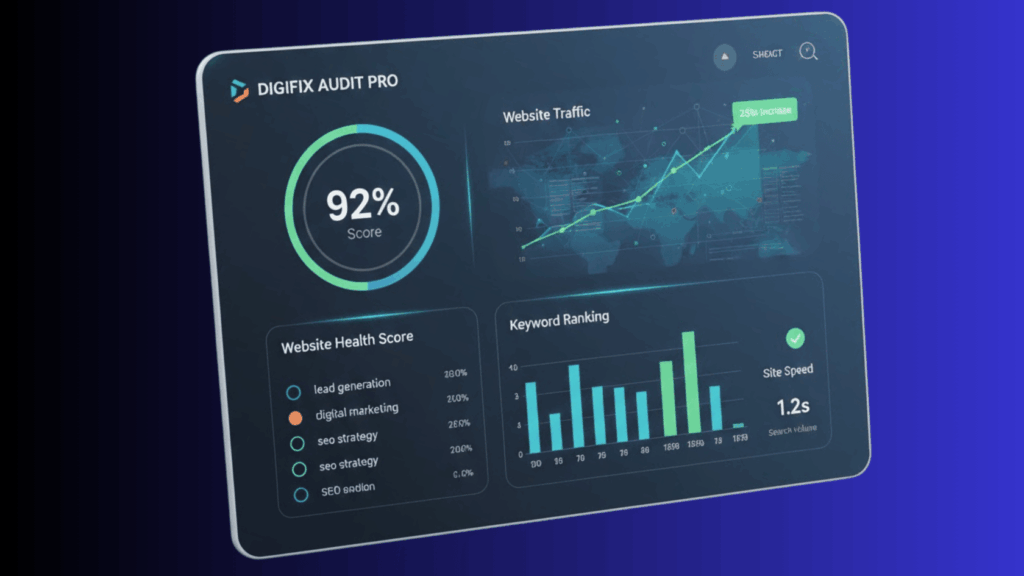
This way, we give you a detailed plan. The right tools turn complex data into a clear strategy.
Google Analytics and Search Console: The Foundational Diagnostics
Google’s tools are key for a good website health check. They show how your site is doing.
Google Analytics helps us understand user behaviour. It shows why people act certain ways on your site. Google Search Console gives us Google’s view of your site. It finds technical issues you might miss.
These tools are like your site’s medical chart. They show problems like high bounce rates and slow page speed.
SEO Software: Ahrefs vs. SEMrush
We use advanced SEO platforms for a deep analysis. Ahrefs and SEMrush are our go-to tools for a complete website health check.
These platforms help us compare your site with competitors. Here’s how we use each tool:
| Feature | Primary Use in Our Audits | Key Insight for Your Business |
|---|---|---|
| Backlink Profile Analysis | We use Ahrefs to check your backlinks and those of your competitors. We find good link opportunities and bad links. | Shows your online authority and link-building chances your competitors use. |
| Keyword & Content Gap Analysis | SEMrush helps us look at keywords. We find terms you rank for and should rank for, and content gaps. | Finds keywords with less competition but high opportunity. |
| Site-Wide Technical Health | Both tools check your site’s technical health. They find issues like broken links and slow pages. | Gives a list of things to fix for your developer. |
We don’t just give a report. We explain the data to help your site grow.
Custom Reporting and Dashboard Tools
Raw data needs context. We use special reports and dashboards for clear insights.
Our reports are easy to understand:
- Executive Summaries: A quick overview of your site’s health and key issues.
- Prioritised Action Plans: We list problems by priority and give steps to fix them.
- Custom Dashboards: We set up dashboards to show your site’s performance in real-time.
This makes your website health check a long-term plan. We give you tools and insights for growth. Our goal is to give you a clear path to better performance.
Customised SEO Audit Packages
No two businesses are the same. Your SEO audit should fit your unique needs. We create custom SEO audit packages for your business goals and challenges.
Whether you’re a Melbourne cafe or an e-commerce store, your SEO needs are special. We focus on real growth for your business, not just reports.
Tailored Strategies for Different Industries
An e-commerce store needs different SEO than a local cafe or B2B company. We start by understanding your industry. For a cafe, we focus on local SEO and Google My Business.
For an online store, we work on product page optimisation and technical SEO. This helps search engines find your site better.
Our comprehensive SEO audit also includes competitor analysis. We look at your top competitors to find what you’re missing. This helps us see what’s working for others.
Monthly vs. One-Time Audits
We offer one-time audits and monthly packages. A one-time audit gives you a full SEO health check with a plan. Monthly audits keep your site up to date with the digital world.
For competitive industries, our monthly packages include SEO competitor analysis. This helps you stay ahead in a changing market.
Budget Considerations
We make quality SEO auditing affordable for growing businesses. Our packages offer clear ROI and fit your budget. Whether you’re starting up or scaling, we have options for you.
Our audits are an investment in your online presence. We focus on the biggest impact first. For serious growth, we offer advanced enterprise SEO tracking.
Every package includes a competitor gap analysis. This SEO competitor analysis helps you understand what’s working for others but not for you.
Ready to see what a custom SEO audit can do for you? Let’s find the right package for your business goals and budget.
The Process of Conducting an SEO Audit
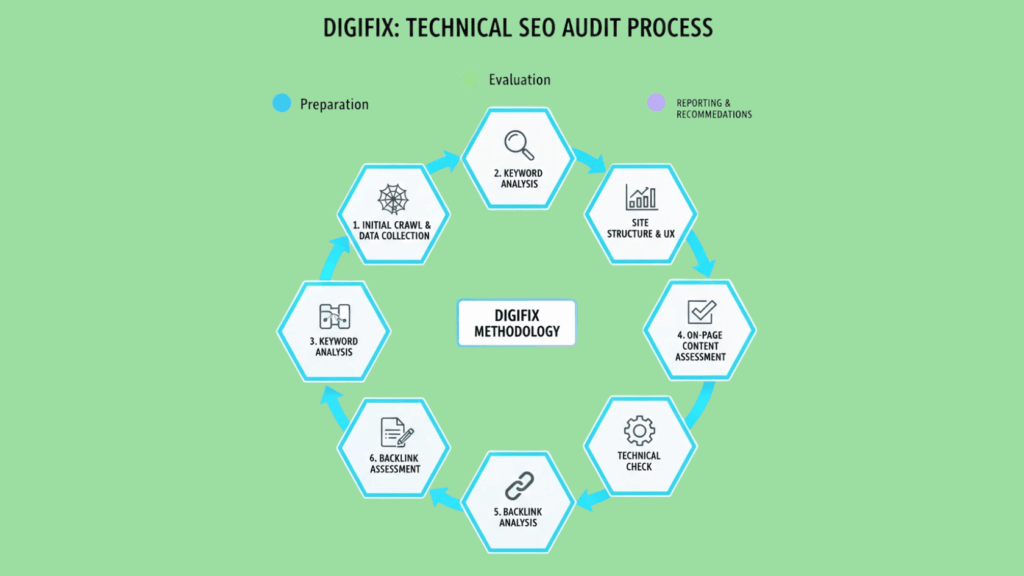
We have a three-step plan for a technical SEO audit. It’s clear and gives you useful tips. We want you to know how we check and improve your website.
Initial Consultation and Assessment
We start with a talk. We learn about your business, who you want to reach, and what’s hard for you. This helps us make the audit fit your needs.
We talk about how you’re doing now, your rivals, and what makes you special. This makes sure the audit is just right for you.
Detailed Reporting and Analysis
Then, we really look at your website. We check things like how fast it loads and if it works on phones. We find problems and give you a list of things to do.
Our report shows you what’s wrong and how it affects your website. It also tells you how to fix it.
Implementation and Follow-Up
Our work doesn’t stop after the report. We help you start fixing things. We make a plan and give you support.
We want to work with you for a long time. We check in to see how you’re doing and help you keep improving.
| Audit Phase | Key Activities | Key Deliverables |
|---|---|---|
| 1. Discovery & Scoping | Goal alignment, site access, analytics review | Project charter & audit scope document |
| 2. Technical & On-Page Analysis | Crawl analysis, performance audit, mobile review | Detailed technical report with priority issues |
| 3. Reporting & Strategy | Data synthesis, KPI identification, roadmap creation | Comprehensive audit report & action plan |
We make sure we check everything important. Our technical SEO audit helps you be seen more online. It makes your business stronger online.
Understanding SEO Audit Reports
You’ve got your website health check report. But what does it mean? A good SEO audit report is more than just numbers. It’s a guide that helps your business grow online.
It tells you what to do next, not just what’s wrong. A great report gives you a clear plan for online success.
Interpreting Key Metrics
First, you need to understand the data. Key metrics are important for your business. Our reports focus on what matters most.
They highlight three key areas:
- Technical Health: We check site speed, mobile-friendliness, and crawl errors. A slow or hard-to-crawl site can’t rank well, no matter your content.
- Content & Keywords: We look at what you rank for and what you should. It’s about being relevant and meeting user needs.
- Authority & Trust: We check your backlinks and site security. Good backlinks and a secure site are important for trust.
We show these metrics in a clear, easy-to-understand way. We explain how a slow site affects your sales and how technical issues block Google from seeing your best pages.
Recommendations for Improvement
Our reports don’t just list problems. They give you a plan to fix them. We sort recommendations by how important they are and how hard they are to do.
For example, fixing a security issue is quick. But a big site change for better user experience is a bigger task.
We explain how fixing technical issues helps your business. Instead of just saying “fix canonical tags,” we explain how it helps Google find your important pages. This can boost your rankings.
We focus on actions that will really help your website health check and your profits.
Setting Realistic Goals
An audit is just the start. We set SMART goals based on what we find. We don’t just say “improve rankings.” We set specific targets.
For example, we might aim to increase organic traffic by 15% in three months. We focus on high-intent keywords.
SEO is a long-term effort, not a quick fix. Our reports have a 30-60-90 day plan. This breaks down big tasks into smaller, easier steps for growth.
How to Choose the Right SEO Audit Service Provider
Finding the right SEO audit provider is key to growing online. A top-notch audit gives you the insights to beat your rivals. This guide helps you pick a provider that adds real value.
Evaluating Experience and Expertise
First, check if the provider knows your industry well. A company familiar with your sector gets your unique challenges. For example, a SEO competitor analysis for plumbers is different from one for fashion brands.
Look for a team with certified experts in SEO, content, and algorithm updates. Ask about their qualifications and training. Do they have Google certifications or unique audit methods? A skilled provider gives you a detailed technical and strategic audit, not just a basic report.
Client Testimonials and Case Studies
Real results prove a provider’s worth. A good provider has case studies showing their success. Look for metrics like more organic traffic, better rankings, and higher conversions.
Ask for references or past project contacts. A confident provider is open. Our case studies show how we’ve helped businesses grow through SEO competitor analysis and strategy.
“A thorough SEO audit is not a cost, but an investment. It’s the diagnostic tool that reveals the health of your online presence and provides the roadmap for sustainable growth.”
Service Packages and Pricing Transparency
It’s important to know what you’re paying for. Good providers clearly explain their services. Be careful of providers who offer vague or generic solutions.
A good SEO competitor analysis is key in any audit package. It compares your site to rivals. Prices should be clear and match specific services. Watch out for hidden fees or long-term contracts.
| Provider | Years Experience | Key Services | Pricing Model | Client Rating (out of 5) |
|---|---|---|---|---|
| Provider A | 10+ years | Full technical audit, competitor analysis, penalty recovery | Project-based fee | 4.8 |
| Provider B | 5 years | On-page & technical audit, keyword strategy | Monthly retainer | 4.5 |
| Provider C | 15+ years | Comprehensive audit with SEO competitor analysis and content gap analysis | One-time project fee | 4.9 |
Choosing the right partner is more than just the price. It’s about finding someone whose expertise, openness, and results match your goals. A detailed SEO competitor analysis is essential for growing.
Benefits of Investing in SEO Audit Services
Many business owners think an SEO audit costs too much. But we see it as a smart investment. A good technical SEO audit helps your business grow in a smart way.
It’s like a health check for your website. Without it, you might waste money on things that don’t work. An audit shows you what to fix and where to spend your money wisely.
Long-Term Cost Savings & Resource Optimisation
A technical SEO audit helps save money. Many businesses spend a lot on ads without a plan. An technical SEO audit finds and fixes problems that stop your site from ranking well.
Fixing issues like slow pages and crawl errors saves your current traffic. This means you don’t waste money on ads for a bad site. It’s smarter to fix what you have.
Improved Online Visibility & Organic Growth
An audit’s main goal is to help you get found. A good technical SEO audit checks your site’s health. It looks at things like indexation and mobile use.
When your site is healthy, your content can rank better. Being seen in search results means more people find you. This is a great way to get more visitors without spending a lot.
Enhanced User Experience That Converts
Search engines like Google value sites that are easy to use. A technical SEO audit helps improve your site’s user experience. We check things like speed and how easy it is to navigate.
A fast, easy site keeps people interested and lowers bounce rates. Happy visitors are more likely to buy or contact you. An audit makes sure your site is good at turning visitors into customers.
In short, a technical SEO audit is an investment in your online success. It builds a strong base for all your marketing efforts. This way, every dollar and effort counts.
Frequently Asked Questions about SEO Audits
Australian business owners often ask the same questions about SEO audits. We’ve answered the most common ones. This will help you understand what a website health check involves.

How Often Should You Conduct an Audit?
Do a website health check at least once a year. If your industry moves fast, check every six months. It’s like a website doctor visit.
What is the Duration of an SEO Audit?
A typical audit takes 2 to 4 weeks. The time needed depends on your website’s size. Small sites might take a week, big ones longer.
We tell you how long it will take when we start. So, you know what to expect.
Can an SEO Audit Guarantee Rankings?
An SEO audit can’t promise top rankings. Anyone who says they can is not honest. What it does is find problems.
Fixing these problems helps your site rank better. For more info, see our full FAQ on SEO audits.
A good website health check is just the start. It gives you the tools to keep improving online. Make it a regular part of your digital plan.
Success Stories: ROI from SEO Audits
The best proof of our audit work isn’t in numbers. It’s in the success stories of our clients. Data is important, but real growth is what matters most. Here are examples of how our audits have helped businesses grow.
Case Study: E-commerce Success
An online store had lots of visitors but few sales. They had a high cart abandonment rate too. Our audit looked at their site and their competitors.
We found their product pages were good, but others were better at reviews and info. We fixed their site, made their content better, and planned for more content. This led to a 40% increase in visitors and a 22% better sales rate in six months.
Case Study: Local Business Growth
A plumbing service in Melbourne was hard to find online. They were overshadowed by big franchises. Our audit checked their site and local SEO.
We fixed their Google Business Profile and made sure their info was the same everywhere. We also helped them get more local mentions. This led to a 200% increase in local calls in just four months.
Case Study: SEO for Start-ups
A new tech start-up had a great product but was hard to find online. They had no backlinks and a new domain. Our audit showed them what to do.
We fixed their site and found ways to get more links. We looked at what competitors were doing and found ways to do better. This helped them get on the first page of search results in six months.
These stories show what a good audit can do. It finds problems and shows how to grow. What could an audit do for your business?
Best Practices After an SEO Audit
An SEO audit is like a check-up for your website. It shows what’s good and what needs work. After you get the report, it’s time to act. This is when you turn the findings into real changes for your site.
Think of the audit as a map. We help you follow the map and make changes. We keep helping you until your site is better.
Implementing Recommendations
The audit report can be a lot to handle. Fixing things step by step is best. Don’t try to do everything at once.
First, sort the findings into three groups. Fix the big problems first, then the important ones, and lastly the small ones. This way, you make the biggest impact first.
For big websites, technical SEO needs a team effort. Make a plan for what to do next:
| Priority Task | Action Required | Team Responsible | Timeline |
|---|---|---|---|
| Fix Critical Crawl Errors | Resolve 4xx/5xx errors, fix broken internal links. | Development Team | Week 1-2 |
| Optimise Core Page Titles/Meta | Rewrite title tags & meta descriptions for top 10 landing pages. | Content/SEO Team | Week 2-3 |
| Improve Core Web Vitals | Optimise and compress hero images, defer non-critical JavaScript. | Development Team | Week 3-4 |
| Build Strategic Backlinks | Secure 2-3 high-authority, relevant backlinks per month. | SEO/Outreach Team | Ongoing |
This way, you fix big problems first. It helps your team avoid burnout and keeps quality high.
Monitoring and Measuring Performance
After making changes, you need to check how they’re doing. This is how you know if your efforts are working.
We set up important goals for your site. It’s not just about being top in search results. It’s about what’s best for your business.
We focus on a few key things after the audit:
- Organic Traffic: Watch how many people visit your site.
- Keyword Rankings: See if your keywords are moving up or down.
- Technical Health: Keep an eye on site speed and other technical stuff.
- Conversion Rates: The most important one. Are more people doing what you want them to do?
We use tools to make it easy to see how your site is doing. Regular reports help you make smart decisions.
Continuous Review and Updates
SEO is not a one-time thing. The internet and search engines are always changing. The best thing to do is make SEO a regular part of your business.
This means planning your next technical SEO audit in 6-12 months. It also means being ready to change your plan when Google updates its rules.
We suggest checking your SEO every quarter. This meeting is not just about looking at numbers. It’s a chance to ask if you’re on the right track and if your site is doing well.
By making SEO a part of your daily business, you protect your investment. You build a strong online presence that attracts and keeps the right customers.
Contact Us for SEO Audit Services in Australia
Want a stronger online presence? Our team of local SEO experts is here to help. We’ll do a detailed website health check and show you how to get seen more online.
Get in Touch: Phone and Address
Ready to start? Contact our team today. We offer a free chat to talk about your website’s future.
Phone: 03 8669 1773
Address: Unit A11/2A Westall Road, Clayton VIC 3168
Get in touch for a free chat and plan to boost your website’s SEO.
Your Next Steps Towards SEO Success
Don’t let website problems or low visibility stop you. A website health check is the first step to growing. As local pros, we give you tips that fit your business needs.
Start with a full website health check to find new chances. Call us or visit our Clayton office for a free chat.
Frequently Asked Questions
What exactly is an SEO audit, and why does my business need one?
A: An SEO audit checks your website’s health. It finds what works, what doesn’t, and how to rank better. It’s key for a good SEO plan, helping you get more online visitors and customers.
How often should we conduct a technical SEO audit?
A: Do a comprehensive technical SEO audit yearly or after big website changes. If you’re growing fast, check your site every 6-12 months. This keeps up with Google’s updates and beats competitors.
What’s the difference between an SEO audit and a website health check?
A: An SEO audit is like a full medical exam. It checks everything deeply. A website health check is like a quick check-up. Our technical SEO audit finds complex issues a simple check might miss.
Can you guarantee that an audit will improve our rankings?
A: We give you the plan, you do the work. No one can promise a specific ranking. But, our audit will show what’s holding you back. We give you a clear plan to fix it.
How long does a full website audit take?
A: It depends on your website’s size and complexity. A small-to-medium business website audit takes 5-7 business days. We check your site’s tech, content, and backlinks, and compare you to competitors.
What’s included in your SEO audit reports?
A: Our reports are clear and actionable. You won’t get a long, technical report. Instead, you get a detailed plan. It includes what to fix first and why.
We’re a local business. Do we really need a technical SEO audit?
A: Yes, and it’s very important. Local businesses need to show up in “near me” searches. Our audit checks your Google Business Profile and local signals. It finds simple fixes to boost local visibility.
How does a website health check differ from a full SEO audit?
A: A basic website health check just checks if your site works. Our SEO audit is a technical SEO audit that finds deeper issues. It’s like the difference between checking your car’s oil and a full diagnostic.