

Content that ranks on page one rarely happens by accident. Most business blogs publish steadily for months and never move past page three, while a handful of competitors seem to land near the top every time. The difference usually comes down to process, not luck.
Key Takeaways
- Content that ranks on page one is built around real search intent, not just a topic idea.
- Older, well maintained pages often outrank brand new content for competitive terms.
- Structure, internal linking, and clear answers matter as much as word count.
- Updating existing content is often faster than writing something new from scratch.
- Consistency over months, not a single great article, is what actually moves rankings.
Plenty of businesses write well. Fewer write content that ranks on page one, because writing and SEO are treated as two separate jobs instead of one connected process. The gap between a nice sounding blog post and one that actually brings in traffic is usually structural, not stylistic.
This guide walks through how we approach content that ranks on page one, including the research, structure, and maintenance that most guides skip over. Full disclosure, this guide is published by DigiFix, though the process below applies to any team writing content with SEO in mind.
Not sure why your content isn’t ranking
A short, free consultation can show you exactly what is holding your current content back.
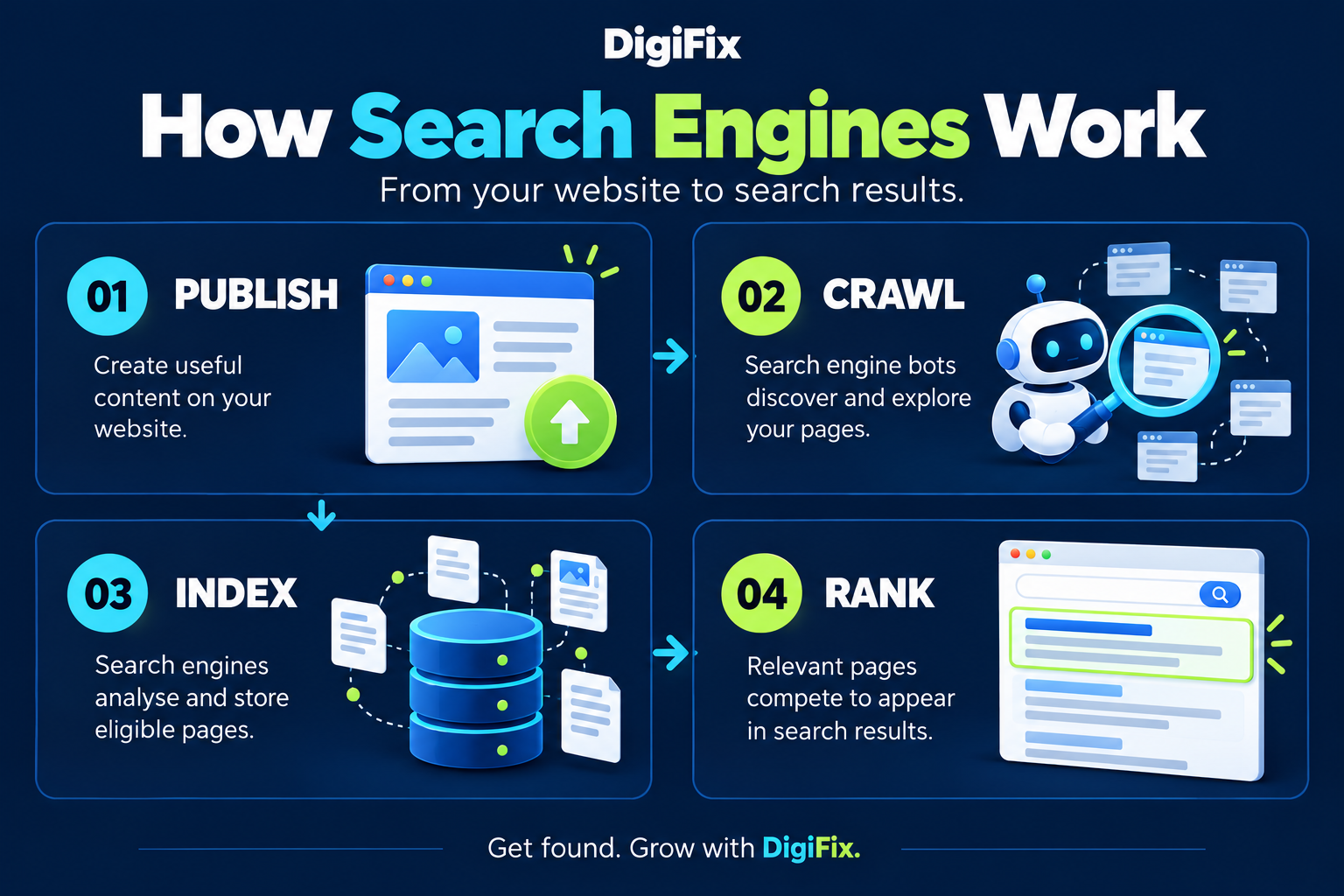
What Actually Makes Content Rank on Page One
Content that ranks on page one starts with matching what the searcher actually wants, not what the business wants to say. Those are not always the same thing, and the gap between them explains most underperforming blog posts.
Beyond intent, structure matters enormously. Clear headings, direct answers near the top, and a logical flow all help both readers and search engines understand what the page is actually about.
None of this replaces good writing. It simply gives good writing a fair chance of being found in the first place.
It is worth remembering that search engines are trying to match a reader’s question to the best available answer. Everything that helps a page look like the best answer, from structure to specific detail, works in its favour.
Matching Search Intent, Not Just Keywords
A page built around the right keyword but the wrong format rarely ranks. A buyer searching for a comparison wants a comparison, not a sales pitch disguised as one.
Structure That Search Engines Can Parse
Headings should describe what follows them, not just sound catchy. Search engines use that structure to understand which parts of a page answer which questions.
Internal Links That Guide the Reader
Linking to related pages on the same site helps readers find more of what they need, and helps search engines understand how a site’s content connects together.
Why Most New Content Struggles to Rank
New content is competing against pages that have had years to earn trust and links. About 72.9% of pages in Google’s top 10 results are more than three years old (Ahrefs, 2026), which means freshly published pages are often fighting an uphill battle from day one.
That same research shows only 1.74% of newly published pages reach the top 10 within a year (Ahrefs, 2026). It is a sobering number, but it also explains why patience and consistency beat chasing quick wins across a content calendar.
If your content has been live for a while with little movement, it is worth having a quick, free chat about what might be missing, rather than assuming the topic itself was a dead end.
Get a clear view of why your content stalls
We can review your existing pages and show you specifically what is holding rankings back.

New Content vs Updated Content: Where to Focus Effort
Writing something new is not always the best use of time. The table below compares when a fresh article makes sense against when updating an existing page is the smarter move.
| Situation | Better Approach | Why |
|---|---|---|
| Page ranks on page two or three | Update it | Already has some trust built up |
| No page exists on the topic | Write new | Nothing to build on yet |
| Old page with outdated facts | Update it | Faster than starting over |
| New product or service launch | Write new | No existing page to repurpose |
Swipe to scroll the table on mobile
Common Mistakes That Keep Content Off Page One
The most common mistake is publishing once and never returning to the page. Rankings shift over time, and a page left untouched for years eventually falls behind fresher, better maintained competitors.
Another mistake is writing for the business rather than the searcher. A page full of company achievements with no real answer to the reader’s question will not hold attention, no matter how well it ranks initially.
A third mistake is giving up too early. Since so few pages crack the top 10 within a year, abandoning a topic after three months rarely gives it a fair chance.
A fourth mistake is chasing every keyword trend instead of building depth on the topics that actually matter to the business. Scattered, shallow coverage rarely builds the kind of authority that competitive terms require.
What Happens to a Page After It Is Published
Publishing is the start of the process, not the end. A new page typically sits with little movement for the first few weeks while search engines work out where it fits.
From there, small ranking movements are normal. A page might appear on page four one week and page two the next, especially while it is still being assessed against established competitors.
Treating that early volatility as a final verdict is a mistake. The pages that eventually reach page one are usually the ones that got a genuine update once the first results came in, rather than being left untouched. Checking rankings weekly during this period, rather than daily, usually gives a clearer picture without the noise.
What a Genuinely Well Written SEO Page Looks Like
A page that earns page one results usually answers the main question within the first few sentences, then expands into detail for readers who want more. Nobody should have to scroll past three paragraphs of introduction to find the point.
It also tends to include specific, checkable details rather than vague claims. A reader should come away knowing something concrete, not just that the business is confident about its own expertise.
Finally, it links naturally to other relevant pages on the site, giving both readers and search engines a clear path to related information.
How DigiFix Writes Content That Ranks on Page One
DigiFix treats writing and SEO as one process, not two separate steps bolted together after the fact. The steps below outline how that usually works.
Research
Study what is already ranking and what the searcher actually wants.
Write
Draft content structured around real intent and clear answers.
Maintain
Revisit pages regularly and update anything that has gone stale.
A simple three step loop keeps content performing instead of fading after launch.

Is Your Content Built to Rank
Tick anything that applies to your current content right now.
Measuring Whether Your Content Is Actually Working
Rankings matter, but so does what happens once someone lands on the page. Organic search still drives most blog traffic, with 85.19% of all blog visits coming from organic search (Ahrefs, 2026), so a page that ranks but does not hold attention is still leaving value on the table.
We generally recommend a quarterly review of SEO services performance alongside time on page and enquiry data, so decisions are based on real behaviour rather than ranking position alone. More detail is available on our SEO blog.
DigiFix has applied this same research, write, and maintain process for other Melbourne clients, including the PF Advisors case study, where consistent content updates helped move key pages toward page one over several months.
It also helps to compare performance against the same period the previous year, since seasonal search behaviour can make a page look like it is improving or slipping when the real cause is simply the time of year and nothing to do with the content itself.
Ready to get your content moving
Get a free, no obligation consultation and find out exactly what is holding your pages back.
None of this requires a complete content overhaul overnight. A sensible starting point is picking your three or four most important pages and giving them a genuine update before writing anything new. Depth on the pages that matter most beats spreading thin effort everywhere.
From there, a steady rhythm of updates and new articles, reviewed every few months, tends to compound. It rarely feels dramatic in any single week, but the difference after a year is usually clear in both rankings and traffic.
Keeping a simple log of what was changed on each page, and when, also makes it far easier to work out which updates actually moved the needle. Without that record, it is easy to repeat the same mistakes on the next round of content.