
Last updated: September 2026
Eight proven ways to increase website traffic in Australia, what each one costs in time, how long it takes to work, and which traffic is not worth chasing.
You increase website traffic by ranking for the questions your buyers actually search, getting cited in AI answers, claiming your Google Business Profile, publishing content worth finding, fixing what slows your site down, emailing the people who already know you, distributing on social, and buying traffic deliberately. Most Australian small businesses need three of those eight done properly, not all eight done badly.
Key takeaways
- Search is where the opportunity is concentrated in Australia. The ACCC found Google holds nearly 94 per cent of Australian general search, with Bing at 4.7 per cent.
- Appearing in AI Overviews and AI Mode requires no special markup. Google states a page needs only to be indexed and eligible for a snippet.
- Your own site is often the bottleneck. HTTP Archive found the median mobile home page now weighs 2.56 MB, and images account for the largest share of it.
- Pick three channels and run them properly for six months. Eight channels run casually produces eight sets of nothing.
- Traffic is not the goal. Enquiries are. A page that brings 2,000 readers and no calls has a conversion problem, not a traffic problem.
Free traffic review
Not sure which three channels are worth your time?
The answer depends on what you sell and who buys it. DigiFix works that out for Melbourne businesses before anyone spends a dollar, from our office in Clayton.
See how our digital marketing services workNo obligation. No lock-in contract.
Where does website traffic actually come from?
Website traffic comes from five places: search engines, AI assistants, direct visits, referrals from other sites, and paid advertising. For most Australian small businesses, search is the largest of those by a wide margin.
The concentration is worth understanding before you plan anything. In its ninth Digital Platform Services Inquiry report, the ACCC found Google had maintained a market share of nearly 94 per cent of Australian general search as at August 2024, with its nearest rival Bing on 4.7 per cent. One company decides whether most Australians find you.
That sounds like bad news and is mostly the opposite. It means you have one system to understand rather than six, and the rules for that system are published.
The table below sets out the eight ways, what each costs in effort, and roughly when it starts working. Read it before you read the detail, because the sequencing decision matters more than any individual tactic.
| Way | Effort to start | When it starts working | Best suited to |
|---|---|---|---|
| 1. Search rankings | High and ongoing | 3 to 6 months | Almost every business, if the budget lasts long enough |
| 2. AI answers | Low, if your SEO is sound | Follows your rankings | Businesses answering researched, comparison-heavy questions |
| 3. Google Business Profile | Low, a few hours | 2 to 8 weeks | Any business with a location or a service area |
| 4. Content publishing | High and ongoing | 4 to 9 months | Businesses whose buyers research before they buy |
| 5. Site speed and structure | Medium, mostly one-off | Immediately for users, weeks for search | Any site that has never been audited |
| 6. Email | Medium to set up, low to run | First send | Businesses with existing customers and repeat purchases |
| 7. Social distribution | High and ongoing | Immediate but small | Visual, retail and hospitality businesses |
| 8. Paid search | Low effort, direct cost | Same day | Businesses that need enquiries before organic work matures |
How to Increase Your Website Traffic
1. Rank for the questions your buyers actually type
Ranking starts with matching pages to real queries, not with technical tweaks to pages nobody searches for.
Open Google Search Console and look at the queries already bringing impressions. Positions 5 to 20 are where the money is, because those pages are already understood by Google and need improvement rather than invention. A page moving from position 11 to position 5 usually doubles its clicks without a single new article being written.
Then check whether the page actually answers the query it ranks for. A page ranking for “how much does X cost in Melbourne” that never states a price will keep losing to one that does, regardless of how well optimised the rest of it is.
One caution on link building, which the old advice on this topic leans on heavily. Buying links is a violation of Google’s spam policies, and enforcement has become sharper. DigiFix covered what changed in the August 2026 spam update.
2. Get found in AI answers
Being cited in AI Overviews, AI Mode, ChatGPT and Perplexity is now a real traffic source, and the entry requirement is lower than most agencies suggest.
Google’s documentation is unusually blunt about this. To be shown as a supporting link in AI Overviews or AI Mode, a page must be indexed and eligible to be shown in Google Search with a snippet, and Google states there are no additional technical requirements. No special files, no extra markup.
Google goes further in its optimisation guide, telling site owners to prioritise effective SEO over “AEO/GEO hacks”, and to ignore tactics such as chunking content, creating llms.txt files and pursuing inauthentic mentions, updated in July 2026.
So what does help? Structure that makes an answer easy to lift. Headings phrased as the question a person would ask, the answer in the first two sentences under each heading, and content that is not a rewrite of what everyone else published. Google’s own word for what wins is non-commodity: something you know that a competitor cannot copy.
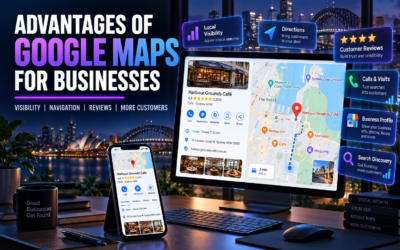
3. Claim and work your Google Business Profile
For any business with a physical location or a service area, the Google Business Profile is the highest-return hour of work available, and it was missing from the original version of this post entirely.
The profile feeds the map pack, which sits above organic results on local searches and takes a large share of the clicks. It also sends traffic directly, since the profile carries your website link.
Four things move it. Choose the most specific primary category rather than a broad one. Make your name, address and phone number match your website character for character. Collect reviews steadily rather than in bursts. And post photos, because profiles with recent, real photographs get engaged with more than profiles without them.
Stuck on page two and not sure why?
Most of the Melbourne sites DigiFix audits are ranking for the wrong queries rather than ranking badly. Those are different problems with different fixes.
Explore our SEO services4. Publish content that answers a real question
Publishing works when each article answers one question a buyer actually asks, and stops working when it becomes a word count exercise.
The test is simple and uncomfortable. If a paragraph would still be true after you swapped your business name for a competitor’s, it is saying nothing. Most published business blogging fails that test on every paragraph.
What passes it is the material only you have: what a job actually costs, what goes wrong most often, what you tell people on the phone that nobody puts in writing. That is also what Google’s guide means by non-commodity content.
Frequency matters less than most people think. Twelve genuinely useful articles a year beat fifty thin ones, and they keep earning long after publication. DigiFix covers the selection process in its guide to choosing a topic for your blog.
5. Fix what is slowing your site down
A slow site loses traffic twice, once when visitors leave and again when search ranks the page lower.
The scale of the problem is measurable. HTTP Archive’s 2025 Web Almanac found the median mobile home page now weighs 2,559 KB, with images the single largest component at 911 KB, more than JavaScript, fonts, CSS and HTML combined.
Images are the first thing to check because they are almost always the worst offender and the easiest to fix. DigiFix covers the process in its guide to optimising images for search engines.
Two structural fixes matter alongside speed. Make sure every important page is reachable within three clicks of the homepage, and make sure no page sits with zero internal links pointing at it, because orphan pages are invisible to both crawlers and customers.
6. Turn your email list into repeat traffic
Email is the only channel where you own the audience, and it is the fastest of the eight to show a result.
The mechanic is direct. You publish something, you tell your list, and traffic arrives the same hour. No algorithm decides whether the message is delivered, and no platform can change the rules on you overnight.
It is also the most neglected. Most Australian small businesses have hundreds of past customers sitting in a point of sale or booking system and have never emailed any of them. There are legal requirements around consent and unsubscribes in Australia, which DigiFix covers in its guide to email marketing.
7. Use social to distribute, not to broadcast
Social media sends less direct traffic than most businesses expect, because the platforms are built to keep people on the platform.
Treat it as distribution rather than a traffic channel in its own right. Post the useful part of the article, the table or the finding, as a standalone piece of value in the feed, and let the people who want the detail come looking. Posting a link with “check out our new blog post” is the version that does not work.
Choose one platform based on where your buyers are, not on where the audience is largest. A commercial refrigeration supplier does not need TikTok. A cafe does not need LinkedIn.
8. Buy traffic deliberately
Paid search is the only one of the eight that works the same day, which makes it the right answer when you need enquiries before organic work matures.
Three things separate campaigns that work from campaigns that burn money. Use exact and phrase match rather than leaving broad match on by default. Build a negative keyword list in the first week and keep adding to it. And send the traffic to a page built for that search, not to the homepage.
Set a budget you can sustain for three months before you judge it. DigiFix runs Google Ads management for Melbourne businesses, and the first month is usually spent finding out which half of the spend is working.
Which traffic should you ignore?
Ignore any traffic that cannot become an enquiry, even when it makes the graph go up.
This is the part most articles on this topic leave out, because rising numbers are easier to sell than useful ones. A page pulling 3,000 monthly readers who will never buy from you is a cost, not an asset: it consumes the time you could have spent on the page that brings eleven people who need what you sell.
| Signal | Traffic worth having | Vanity traffic |
|---|---|---|
| Query intent | Someone looking to hire, buy or book | Someone looking up a definition or doing homework |
| Location | Within the area you actually service | Overseas visitors who will never be customers |
| Landing page | A service page or a post with a relevant next step | A viral post unrelated to what you sell |
| What happens next | Visits another page, calls, or joins the list | Leaves within seconds and never returns |
| What it is worth | Measurable in enquiries and quotes | Measurable only in screenshots |
What does a traffic plan look like for a Melbourne business?
Picture a commercial electrician in Dandenong South. The website has six pages, has never ranked past position 20 for anything, and the enquiries all come from word of mouth. The owner wants more work in the first quarter of next year, not eventually.
Here is what DigiFix would do, and the order is the whole point.
Days 1 to 30: claim and complete the Google Business Profile, fix the site speed problems, and start a small Google Ads campaign on the three services with the best margin, because that produces enquiries while everything else is still warming up.
Days 30 to 60: rewrite the six existing pages around what buyers actually search, which for trades is usually a service plus a suburb, and set up review collection. Days 60 to 90: publish the first four articles answering the questions the owner already answers on the phone twenty times a week. Ongoing: review Search Console monthly, keep the ads running on whatever converts, and add one article a fortnight.
Notice what is not in there. No social, no email in the first quarter, no link building. Three channels, run properly.
See this applied to an Australian business
The Melbourne Refrigeration and Catering Equipment project shows how search, content and product pages work together rather than as separate line items.
Read the MRCE case studyHow long does it take to increase website traffic?
Expect two to eight weeks for the fixes with quick returns, three to six months for search rankings, and same-day results only from paid advertising.
Those ranges hold for a site with some history. A brand new domain takes longer for organic, because Google has nothing to go on yet. A site recovering from a spam penalty or a bad rebuild takes longer again.
What should worry you is not slow progress but flat progress. If Search Console impressions have not moved at all after three months of consistent work, the problem is targeting rather than patience, and more of the same will not fix it.
What do Australian businesses ask about website traffic?
How long does it take to increase website traffic?
Which traffic source is best for a small business?
Do I need special markup to appear in AI Overviews?
Should I buy backlinks to get more traffic?
How often should I publish blog posts?
Is social media still worth it for website traffic?
My traffic went up but enquiries did not. What went wrong?
How much should a small business spend on this?
Find out which three channels will actually work for you
Book a free consultation with DigiFix. No obligation, no lock-in contract, and you will leave the call with a shortlist instead of a wishlist.
Book your free consultationDigiFix, Unit A11/2A Westall Rd, Clayton VIC 3168. Serving businesses across Melbourne.