
Custom website design and development in Melbourne is what separates a site that quietly loses enquiries from one that keeps winning them. A template can get a business online quickly, but it rarely holds up once traffic grows, products multiply or the brand needs room to move.
Key Takeaways
- Around 94 per cent of a visitor’s first impression of a business comes down to web design, not the words on the page.
- Custom website design and development in Melbourne gives you full control over speed, structure and features that templates cannot easily change.
- Nearly half of visitors will leave a site outright if the functionality feels broken or confusing.
- Page speed improvements have been shown to lift sales measurably, not just rankings.
- Custom builds suit growing businesses with specific workflows, while a well built template still suits simple, low change needs.
- DigiFix plans, builds and tests a custom site around your actual business processes, not a generic layout.
Most Melbourne business owners start with a template because it feels like the safe, fast option. For a lot of businesses that is genuinely fine. But once a site needs to handle a specific booking flow, a large product catalogue, or a layout no plugin quite achieves, custom website design and development in Melbourne becomes less of a luxury and more of a practical fix.
This guide covers what a custom build actually changes, how the cost compares honestly to a template, and the signs that tell you which option fits your business right now.
Not sure if your current website is holding your business back?
Why First Impressions Ride on Design More Than You Think
A visitor forms an opinion about a business within seconds of a page loading, long before they have read a single sentence. Research cited by HubSpot’s web design research found that roughly 94 per cent of a visitor’s first impression relates directly to a site’s design. The same research found that 42 per cent of visitors will leave a website altogether if they find the functionality frustrating or confusing.
Those two figures together explain why custom website design and development in Melbourne keeps coming up in conversations with growing businesses. A template can look polished in a demo, but once it is stretched to fit a business it was not designed for, the cracks tend to show exactly where visitors notice them most.
What a Custom Build Actually Changes
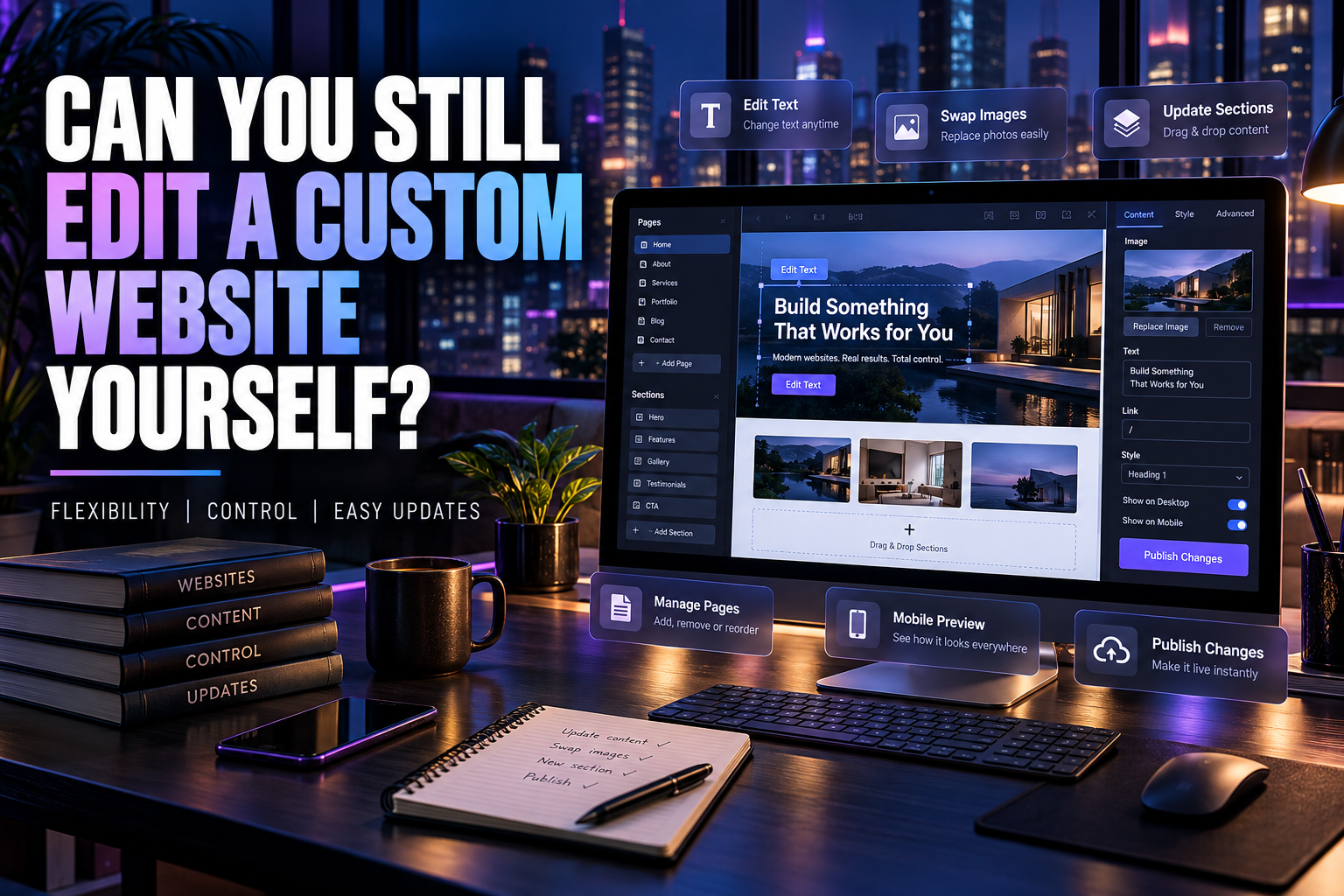
A template gives you someone else’s structure with your logo dropped in. A custom build starts from your business processes and designs the site around them. That sounds abstract until you see it in practice. A trades business might need a quoting flow that captures job details before a form is submitted. A clinic might need different booking rules for new versus returning patients. A retailer might need a product filter that matches how customers actually shop, not a generic category list.
Speed Is Usually Part of the Deal
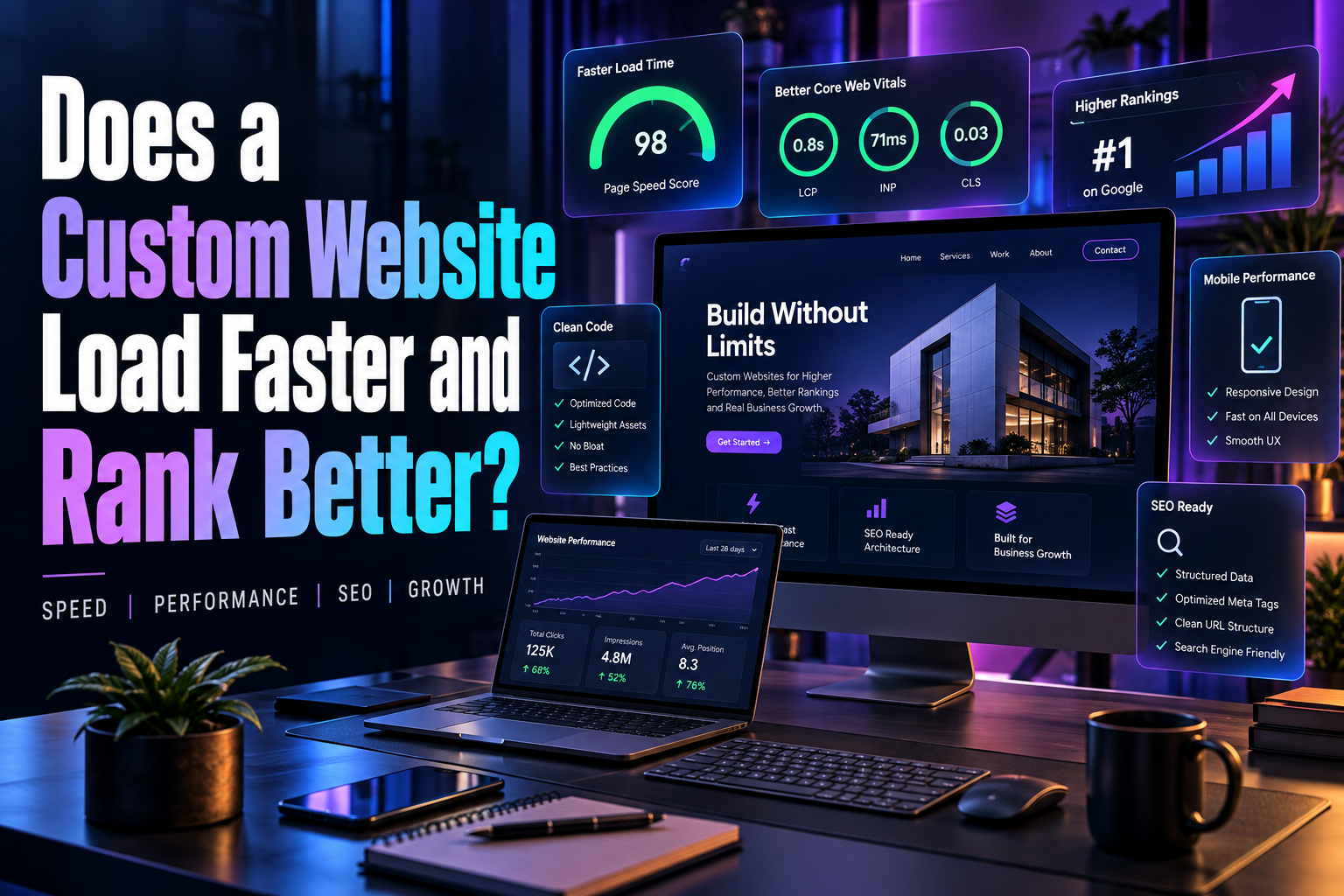
Templates often carry unused code for features you never use, which quietly slows every page down. A custom build only ships the code your site actually needs. Google’s own performance research, published through web.dev’s analysis of speed and business metrics, documented a case where Vodafone improved a key loading metric by 31 per cent and saw an 8 per cent increase in sales as a direct result. Speed is not just a technical detail, it is a measurable part of revenue.
| Factor | Template Website | Custom Website |
|---|---|---|
| Launch speed | Fast, often days | Longer, planned around your workflow |
| Page speed out of the box | Often weighed down by unused code | Built lean around your actual pages |
| Unique layouts and features | Limited to what the theme allows | Built exactly to your specification |
| Long term flexibility | Can hit a ceiling as the business grows | Scales with new features as needed |
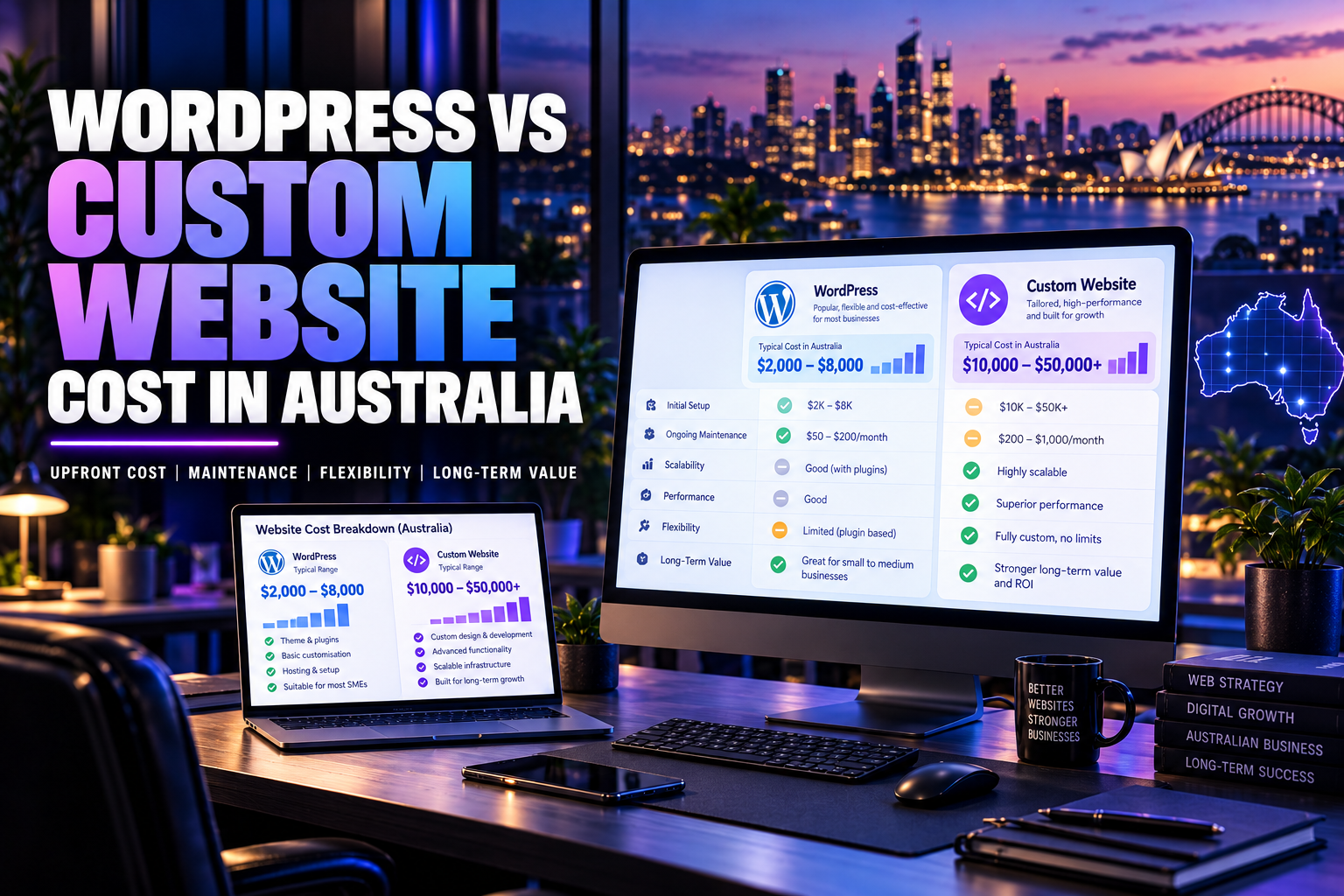
| Upfront investment | Lower | Higher, offset by fewer workarounds later |
Swipe to scroll the table on mobile
Curious what a custom build would actually cost for your business?
Signs Your Business Has Outgrown a Template
A few patterns show up again and again in businesses ready for a custom build. Every new feature needs three plugins stacked together to half work. Page speed keeps dropping no matter how many images get compressed. The design cannot be changed without a developer wrestling with theme limitations. Staff waste time working around the site instead of the site working for them.
If none of that sounds familiar yet, a well built template is still a perfectly sensible choice, and there is no need to rush into a rebuild before it is actually justified. We cover this decision in more depth in our guide on the seven signs your business has outgrown WordPress, which applies just as well to any template platform.
Discovery
We map your actual workflows, not a generic business template.
Build
Design and development happen together, so nothing gets lost in translation.
Launch and Test
Speed, forms and tracking are tested properly before the site goes live.
How a DigiFix custom build actually runs, start to finish.
What a Real Project Looks Like, Industry by Industry
Trades and home services businesses typically need a quoting flow that captures the right job details upfront, clear service area pages, and a design that loads quickly on a phone while standing on a job site. Retailers usually need a product catalogue that can grow without the site slowing down, plus filtering that matches how customers actually browse rather than a generic category tree.
Professional services firms, think accountants, lawyers and consultants, tend to need credibility built into the design itself, clear service breakdowns, and a booking or enquiry flow that reduces friction for a cautious buyer. Healthcare and allied health practices usually need appointment booking rules that differ for new versus returning patients, plus a layout that stays calm and easy to navigate under stress. Each of these needs looks small in isolation, but stacked together they are exactly the kind of requirements a template struggles to handle gracefully.
E-commerce businesses face their own version of this problem. A growing catalogue, seasonal promotions and checkout customisation all push against the limits of an off the shelf store theme. Our work on custom e-commerce website design in Melbourne goes into this specific scenario in more detail, including how checkout flow changes alone can move conversion rates.
Content and Structure Matter as Much as Visual Design
A beautiful layout with poorly organised content still underperforms. Part of a proper custom build is working out what information visitors actually need, in what order, before a single pixel is designed. Pages that bury the call to action below three screens of generic copy tend to perform worse than a simpler page that gets to the point quickly, regardless of how polished either one looks.
Mistakes Businesses Make When Commissioning a Custom Site
The most common mistake is skipping discovery and jumping straight to design. Without understanding how the business actually operates, even a beautifully designed site can miss the workflows that matter most, leaving staff to work around the new site instead of with it.
The second mistake is treating SEO as an afterthought bolted on after launch. Redirects, metadata and page structure need planning from day one, otherwise a beautiful new site can quietly lose the search rankings the old one had built up. Our piece on whether a custom site loads faster and ranks better goes into this in more detail.
The third mistake is picking a developer based purely on price without checking who can actually edit the site once it is live. A custom build should hand you a system your team can update confidently, not a black box that requires a developer for every small change. If you would like us to look honestly at whether a custom build fits your situation, you can book a short, no pressure consultation and we will tell you straight.
Is Your Website Ready for a Custom Rebuild?
Tick what applies to your current website right now.
We see this pattern often in businesses that started small and simply grew past their original website, much like the work behind our Melbourne Refrigeration and Catering Equipment case study, where a more capable site became necessary as the catalogue and enquiries grew.
What Makes Custom Website Design and Development in Melbourne Worth It
The honest answer is that it is not worth it for every business. A simple, low traffic site with no complex processes may never need a custom build. But once a business depends on its website for bookings, enquiries, product sales or lead generation, the flexibility of a custom build tends to pay for itself through fewer workarounds, faster pages and a design that matches how customers actually behave rather than how a theme assumes they behave.
DigiFix pairs custom web development with ongoing SEO support, so a new site is not just well built, it is also set up to be found. You can browse more examples on our web development blog for a closer look at how different industries approach this decision.
Ready to find out whether a custom build is the right move for your business?
The consultation is free and there is no obligation to commit to anything.
DigiFix is a Melbourne based digital marketing and web development team, and you can read more about how we approach projects on our About Us page. We treat a website as one part of a wider growth plan rather than a one off project, which is why design, development and SEO are considered together from the start.