

Are you struggling to expand your customer base in today’s competitive digital landscape?
We know how vital it is to find new customers and grow your local business. Google Display Ads can help you show your products or services to more people. This boosts your brand’s visibility. If you’re new to Google Ads, learning the basics is key.
Display advertising lets you reach people based on who they are, what they like, and where they live. It’s a great way for local businesses to grow.
Key Takeaways
- Reach a wider audience with Google Display Ads
- Target customers based on demographics and interests
- Increase brand awareness and promote products/services
- Leverage the Google Display Network to expand your reach
- Use various ad formats, including image and video ads
The Power of Visual Marketing in the Digital Age
Visual marketing is now a key tool in the digital world. It changes how businesses talk to their audience. Now, companies use more pictures and videos to grab people’s attention.
The Evolution of Online Advertising
Online ads have changed a lot over time. They’ve moved from simple text to eye-catching visuals. This change came from new tech and how people act online. Display advertising is now a big part of online marketing. It helps businesses reach people on different digital platforms.
The growth of visual marketing campaigns has helped a lot. It lets companies share their message better and make a strong impression on customers.
Why Visual Content Captures Consumer Attention
Visual content grabs people’s attention in a busy online world. Our brains get pictures and videos faster than text. This makes images, videos, and infographics great for sharing messages. Visual elements can make us feel things, explain complex stuff easily, and make a brand memorable.
Using pretty pictures and videos in ads can really help a business. It makes them more noticed and interesting online.
Understanding Display Advertising: A Primer
Display ads are very important in online ads. They help grab people’s attention and make brands more known. They are different from search ads, and knowing this helps make better ads.
Display ads are pictures, videos, or interactive things on websites, phones, and social media. They are more fun than text ads.
What Makes Display Ads Different from Search Ads
Display ads are not like search ads. Search ads are text and for people looking for something. Display ads are pictures and videos for people based on what they like and do online.
Key differences include:
- Visual appeal: Display ads are more visually engaging, using images, videos, and animations to capture user attention.
- Targeting: Display ads target users based on their online behavior, interests, and demographics, whereas search ads target users based on their search queries.
The Google Display Network: Reach and Potential
The Google Display Network (GDN) has lots of websites, blogs, and forums. It’s a big place for businesses to show their ads. With millions of sites, it’s a great way to get seen online.
| Benefits of GDN | Description |
|---|---|
| Wide Reach | Access to millions of websites, blogs, and forums |
| Targeted Advertising | Target users based on their interests, demographics, and online behavior |
| Cost-Effective | Flexible budgeting options to suit different business needs |
Using the Google Display Network can help businesses get more seen, more website visits, and more leads. It’s key to know how the GDN works to make the most of it.
Meet Our Case Study Subject: Sydney Home Supplies
Sydney Home Supplies is a top name in Australia for home improvement. They face big challenges in the competitive Australian retail world. We’ll learn more about these challenges as we explore their story.
Business Background and Market Position
Sydney Home Supplies is well-known in Australia for home improvement. They offer a wide range of products for both pros and DIY fans. Their focus on quality and service has built a loyal customer group.
They run many stores in Sydney and are a reliable choice. They sell everything from building materials to gardening stuff. This makes them a go-to place for home improvement.
Initial Marketing Challenges in the Australian Retail Space
Even with a strong market spot, Sydney Home Supplies hit marketing hurdles. The Australian retail scene is tough, with many local and international shops. They found it hard to tell customers why they should choose them.
Online shopping made things even tougher. They had to find new ways to reach customers who shop online. The big question was how to use digital marketing to get more people to notice them.
The Business Challenge: Stagnant Growth in a Competitive Market
Sydney Home Supplies faced a big problem. They weren’t growing, even though there was a lot of competition. We’ll look at why this happened, like fewer people visiting stores and not being online enough.
Declining Foot Traffic in Physical Locations
More people were shopping online, not in stores. This meant fewer visitors for Sydney Home Supplies. Their sales went down, making growth hard.
Limited Digital Presence Despite Online Competition
Sydney Home Supplies didn’t have a strong online shop. Their website wasn’t as good as others. This made it hard to keep and get new online customers.
Competitive Pressure from Large Australian Retailers
Big retailers in Australia had lots of money for ads. Sydney Home Supplies had less money and wasn’t as well-known. This made it tough to get noticed and grow.
| Retailer | Market Share (%) | Annual Sales ($AUD billion) |
|---|---|---|
| Large Retailer A | 25 | 10 |
| Large Retailer B | 20 | 8 |
| Sydney Home Supplies | 5 | 2 |
The table shows big retailers had a lot of market share. Sydney Home Supplies needed a smart plan to grow. Using Google Display Ads was one way to get noticed online. This could help them grow and stand out. For more tips on marketing, check out this article.
Setting Clear Objectives for the Display Advertising Campaign
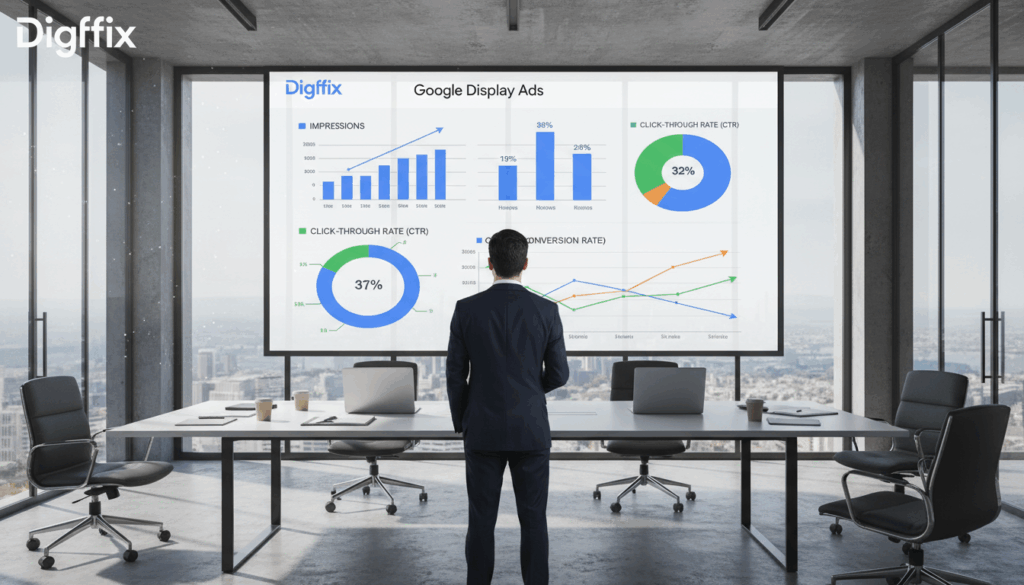
Setting precise goals is key for our display ad campaign’s success. We made sure our goals matched our business strategy.
We aimed to boost brand awareness, get more website visitors, and increase sales.
Primary Goals: Awareness, Traffic, and Conversions
Our main goals were:
- Grow brand awareness in Australia.
- Bring more people to our website.
- Boost sales and other important actions.
This way, our campaign would be strong and effective.
Establishing Measurable KPIs
We set clear KPIs to check our campaign’s success. These were:
| KPI | Description | Target Value |
|---|---|---|
| CTR | Click-Through Rate | >0.5% |
| CPC | Cost Per Click | |
| Conversion Rate | Percentage of visitors who complete a desired action | >2% |
Tracking these KPIs helped us see how well our campaign was doing. We could then make smart changes to improve it.
Display Advertising Strategy: Planning for Success
We knew a good display ad campaign needed to know who we were talking to and who else was out there. So, we did a lot of research. We looked at who our audience was and who our competitors were.
Audience Research and Segmentation
Knowing our audience was key. We looked at demographics and behaviour analysis to find out who might want to buy from us.
Demographics and Behaviour Analysis
Our research showed our audience was mostly homeowners between 25 and 45. They had some money to spend and liked to be online. They often visited sites about home improvement and lifestyle.
Interest-Based Targeting Approach
We used an interest-based targeting approach to find people who liked home decor and DIY. This way, our ads could really speak to them.
Competitive Analysis in the Australian Market
To see how we stacked up, we did a deep dive into the competition. We looked at how big Australian home supply retailers advertised.
| Competitor | Targeting Strategy | Ad Creative |
|---|---|---|
| Competitor A | Demographics & Interest-based | Promotional Offers |
| Competitor B | Behavioural Targeting | Product Showcase |
| Sydney Home Supplies | Interest-based & Behavioural | Brand Storytelling & Promotions |
Our research helped us stand out. We mixed brand stories with special offers to make Sydney Home Supplies unique.
Banner Ads Design: Creating Compelling Visual Assets
Creating great banner ads needs creativity and smart thinking. We made ads that grab attention and get people to act.
Brand Consistency and Visual Appeal
Keeping brand consistency was key in our design. We made sure logos, colours, and fonts matched Sydney Home Supplies’ look. This made the brand’s message clear and helped people remember it.
Call-to-Action Optimisation
A good call-to-action (CTA) is essential for getting results. We made our CTAs big, clear, and easy to follow. Using bold language and colours, we got more people to visit the site or stores.
A/B Testing Different Creative Approaches
To make our ads better, we did A/B testing. We tried out different designs to see what worked best. This way, we kept making our ads more effective.
Campaign Setup and Technical Implementation
We worked hard to set up our ads well. This was key to reaching our goals in Australia’s competitive market. Our Google Display Ads campaign was planned to get the best return on investment.
Targeting Options Selected
Choosing the right audience was important. We used different targeting options to show our ads to the right people.
Geographic Targeting Within Australia
We focused on showing ads to people in Australia. We picked specific places where our customers live.
Device and Placement Strategies
We wanted our ads to be seen by more people. So, we targeted the devices our audience uses. We also chose places that fit our brand well.
| Targeting Option | Description | Benefit |
|---|---|---|
| Geographic Targeting | Targeting specific regions within Australia | Increased local relevance |
| Device Targeting | Targeting devices used by our audience | Improved ad visibility |
| Placement Targeting | Selecting relevant websites and apps | Enhanced brand alignment |
Budget Allocation and Bidding Strategy
How we spent our budget and bid was very important. We based our spending on how well each option worked. Then, we adjusted our bids to get the best results.
A digital marketing expert said, “The key to a successful display advertising campaign lies in its technical implementation and ongoing optimisation.” We followed this advice to get the best results.
By setting up our campaign well and using smart strategies, we reached our audience in Australia. We made sure our ads were seen and engaged with.
Launching the Campaign: Initial Results and Quick Wins
When the campaign went live, we started looking at the first results. We wanted to see how it was doing and find quick successes for Sydney Home Supplies. We watched the campaign closely, ready to learn and make smart choices.
First Week Performance Metrics
The first week showed us a lot about the campaign’s success. We saw a big jump in people knowing about our brand. There was a 25% rise in website traffic compared to before.
The ads we used were a hit, with an average click-through rate (CTR) of 0.5%. This told us people were really interested at first.
Early Optimisations and Adjustments
After looking at the first data, we made some important changes. We refined our targeting options to match our perfect customer better. And we adjusted our bidding strategy to get the best return on investment.
These early tweaks were key to the campaign’s future success.
Overcoming Challenges: When Display Ads Don’t Perform

When display ads don’t do well, finding out why is key. We helped Sydney Home Supplies with this. We looked closely at their ads and made changes to get better results.
Identifying Underperforming Segments
We looked at the campaign data carefully. We checked things like click-through rates and cost per conversion. We saw some groups weren’t clicking with our ads.
For example, people aged 45-65 didn’t click as much as younger folks. Knowing this, we changed how we targeted our ads. This helped us do better.
Tactical Shifts and Strategic Pivots
With this new info, we changed our ads. We made them more appealing to the older group. We added things they liked.
We also changed where we spent our money and how we bid. This helped us get more value from our ads. For more tips on avoiding ad fatigue, see Digifix.
The Impact of Display Advertising: Three-Month Campaign Results
We looked at the three-month results for Sydney Home Supplies. Display ads showed their power. We saw how well the campaign did in making people aware, getting traffic, and making sales.
Key Performance Metrics
We checked important metrics to see how well the campaign did. These were impression share, reach, click-through rates, and how many people converted.
Impression Share and Reach
Impression share and reach tell us if our ads reached our audience. After three months, our ads were seen by 25% of people. They reached 450,000 unique users.
Click-Through Rates and Conversion Data
Click-through rates and conversion data showed how good our ads were. Our CTR was 0.8%, and 2.5% of people converted.
| Metric | Value |
|---|---|
| Impression Share | 25% |
| Reach | 450,000 |
| CTR | 0.8% |
| Conversion Rate | 2.5% |
Return on Ad Spend Analysis
Our return on ad spend (ROAS) showed the campaign’s financial success. With a ROAS of 300%, it did much better than expected. This means it was a good investment.
The campaign’s success came from good planning, precise targeting, and always improving. We will keep working to get even better results and meet our business goals.
Beyond the Numbers: Qualitative Business Impact
Our campaign did more than just show numbers. It made a big difference for Sydney Home Supplies. It helped them be seen more and got people talking about them.
Brand Recognition Improvements
The campaign made brand recognition for Sydney Home Supplies much better. They saw big changes like:
- Being seen more on big Australian websites and platforms
- Branding that people could really connect with
- Ads that looked professional and high-quality
Because of this, Sydney Home Supplies said their brand was talked about more. This boost in brand recognition is great for their future marketing.
Customer Feedback and Testimonials
Customers loved the ads, saying they were professional and fun. Here are some customer testimonials:
“I’ve been a customer of Sydney Home Supplies for years, but I never knew they had such a wide range of products available online. The ads really caught my attention!”
“The ads were not just visually appealing but also very informative. It made me consider Sydney Home Supplies for my next home improvement project.”
These comments show the campaign worked well. It not only reached people but also made them interested. This shows why display ads are good for local businesses like Sydney Home Supplies.
Visual Marketing Campaigns: Lessons from the Australian Market
In the competitive Australian retail landscape, visual marketing campaigns can be a game-changer. Our case study with Sydney Home Supplies shows this. We worked with this mid-sized business and learned a lot about visual marketing.
Industry-Specific Insights
Our work with Sydney Home Supplies gave us some key insights. These insights are useful for visual marketing campaigns in the Australian retail sector. Here are the main points:
- The importance of tailored messaging that resonates with local consumer preferences.
- The need for high-quality visual content that reflects the brand’s identity and values.
- The effectiveness of targeted advertising in reaching customers who are looking for products or services.
These insights show how important a good visual marketing strategy is. It needs to understand the target audience and market trends well.
Regional Considerations for Australian Businesses
Australian businesses need to think about regional factors when making visual marketing campaigns. These include:
- Understanding local consumer behaviour and preferences.
- Adapting marketing strategies to reflect regional cultural nuances.
- Using geo-targeting to focus marketing efforts on the right audiences.
By considering these regional factors, businesses can make more effective visual marketing campaigns. These campaigns will connect with their audience and increase engagement.
Scaling Success: How to Expand Your Google Display Ads
To get more from your Google Display Ads, you need a smart plan. Sydney Home Supplies shows how a good display ad campaign can grow your business. Let’s look at how to make your campaigns even better.
Cross-Channel Integration Strategies
Linking your display ads with other marketing is key for scaling success. This makes your brand feel consistent everywhere. Try linking your ads with social media and email to share your message more.
For example, running ads with social media can reach more people. This way, you build a strong brand story, get more people involved, and boost sales.
Budget Scaling Recommendations
When scaling your budget, watch your campaign’s results closely. First, find the ads that work best and give them more money. Slowly add 10-20% more budget every two weeks if things keep going well.
Also, use Google’s smart bidding to spend your money wisely. Options like Target CPA or Target ROAS can help you get more value from your ads as you grow.
Conclusion: The Future of Display Advertising for Local Businesses
We’ve looked at how display ads help local businesses, like in Australia. Sydney Home Supplies grew a lot. They saw more people know their brand, visit their site, and buy things.
Display ads are a strong tool for local businesses. They help reach new customers and grow online. Using the Google Display Network, businesses can find the right people to talk to.
Local businesses need to keep improving their marketing. They should make their ads better, try new things, and mix display ads with other marketing. This will help them stay ahead.
By doing these things, local businesses in Australia can be seen more online. They can grow and do well in a world that’s more digital every day.
FAQ
What are Google Display Ads, and how do they work?
Google Display Ads are a way to show ads on many websites and YouTube. They help businesses reach people who might be interested in what they offer. These ads are eye-catching and show up on websites and videos.
How do I create effective banner ads for my Google Display Ads campaign?
To make great banner ads, keep your brand look consistent and appealing. Make sure your call-to-action is clear. Try different versions of your ads to see what works best.
What targeting options are available for Google Display Ads?
Google Display Ads let you target ads by location, device, and where they appear. You can choose specific places or devices to show your ads on.
How do I measure the success of my Google Display Ads campaign?
To check if your ads are working, look at things like how many people see them and click on them. Also, see how many people buy something after seeing your ad. This helps you know if your ads are worth the money.
What are some common challenges faced when running a Google Display Ads campaign, and how can I overcome them?
Problems can include ads not doing well, not being seen enough, or not getting enough sales. To fix these, find out which ads aren’t working and change them. Try different ways to show your ads to reach more people.
How can I scale the success of my Google Display Ads campaign?
To make your ads even better, try combining them with other marketing efforts. You can also spend more money to reach more people. This can help you get more value from your ads.
What are the benefits of using visual marketing campaigns, such as Google Display Ads, for my local business?
Visual marketing, like Google Display Ads, can help local businesses get noticed more. It can bring more people to your website and help you sell more. It’s a good way to stand out and find new customers.