
A website full of pages is not the same as a website full of content that actually ranks. DigiFix Content Writing Services in Clayton exist for exactly that gap, turning thin, generic pages into copy that search engines understand and local customers actually read to the end.
Key Takeaways
- DigiFix Content Writing Services in Clayton pair keyword research with a genuine understanding of local search intent.
- Word count matters less than structure, clarity and whether the content actually answers the question.
- Every piece is built around a primary keyword plus natural variants, not repeated phrases.
- Well structured content with clear headings helps both Google rankings and AI answer engines cite the page.
- Content works best when paired with the technical and local SEO foundations underneath it.
Clayton businesses compete in a crowded local market, from Monash University adjacent services to trades and clinics scattered across the suburb. Ranking in that environment takes more than a page with a business name and a phone number. It takes content written with a clear purpose, structured so Google understands it and written so a real customer keeps reading past the first paragraph.
Not sure what your site is missing?
A short content review shows exactly which pages are thin, outdated or missing entirely.
Why Clayton Businesses Need Content Built for Local Search
Search intent in Clayton is often hyper local. Someone searching for a service does not just want a category, they want a business that clearly serves their suburb, understands their situation and can be trusted with the job. Generic template copy rarely signals any of that.
Research from HubSpot suggests blog posts sitting around 2,100 to 2,400 words tend to perform best for organic search, though Google itself evaluates whether content actually satisfies the person searching rather than rewarding length on its own, according to HubSpot’s blog SEO research. That means structure and clarity matter just as much as depth.
What Thin Content Actually Costs a Business
A page with two hundred words and no real detail rarely ranks for anything competitive, and it does little to convince a visitor to enquire. Thin content is often worse than no page at all, since it signals to both Google and the reader that the business has not invested in explaining what it actually offers.
What DigiFix Content Writing Services in Clayton Include
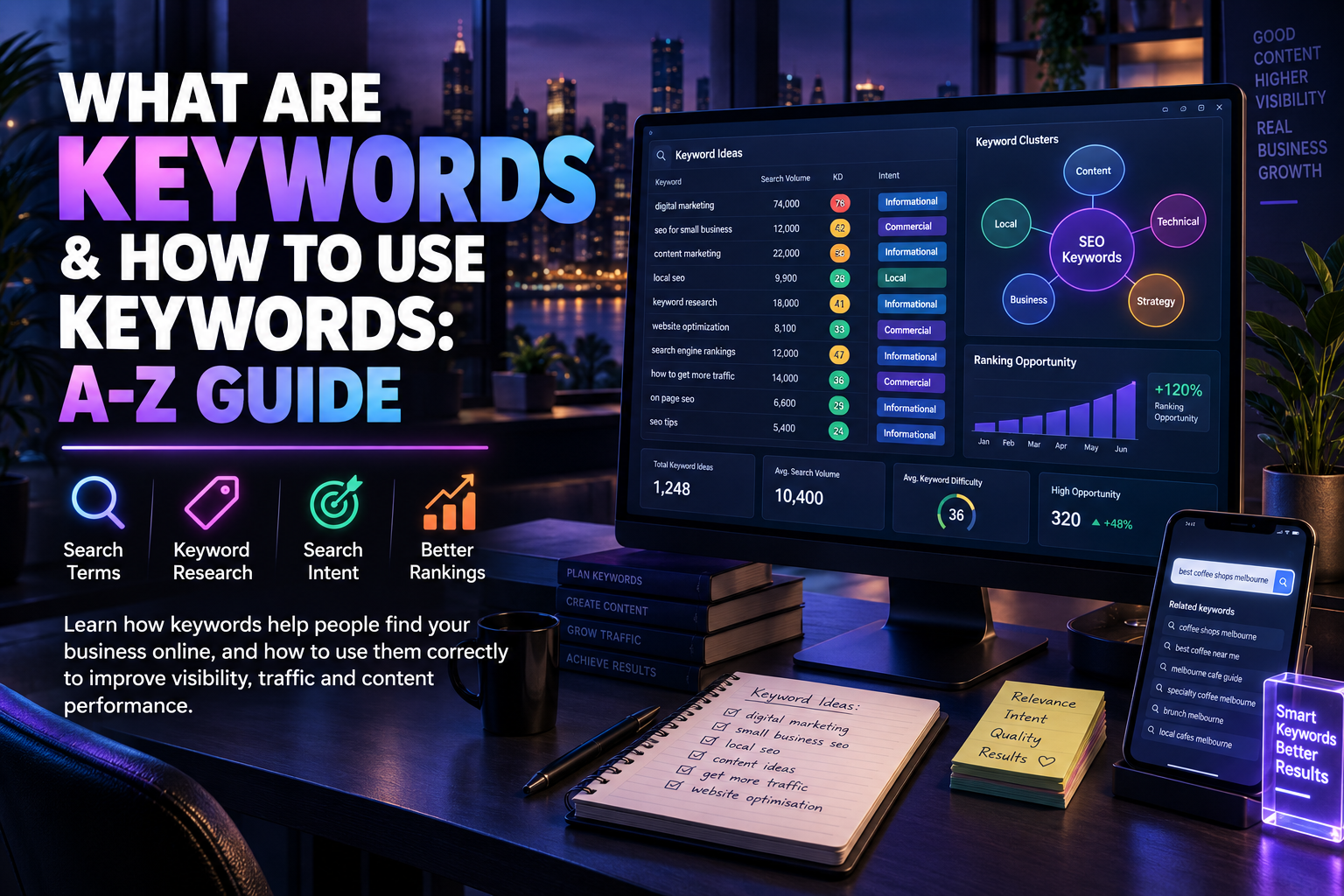
Every project starts with keyword research specific to the service and suburb, followed by a content brief, a first draft and a review pass before anything goes live. Nothing is published without a clear target keyword and a genuine answer to the question a searcher is asking.
Keyword Research That Reflects Real Search Behaviour
Rather than guessing which phrases matter, research starts with what people in Clayton and the surrounding suburbs are actually typing into Google. That includes long tail phrases with genuine buying intent, not just broad, high competition terms that are difficult to rank for and often less valuable regardless.
Writing for the Reader First, the Algorithm Second
Keyword stuffing stopped working years ago. Content is written in plain, clear language that happens to include the right terms naturally, because that is also what search engines increasingly reward. A page that reads well to a human tends to perform well in search too.
Structure That Supports Both Google and AI Answer Engines
Clear headings, short paragraphs and a logical flow help traditional search rankings and also make it easier for AI tools like ChatGPT and Google’s AI overviews to cite a page accurately. That structure is planned before writing begins, not bolted on afterwards.
Content is usually built alongside a wider SEO services strategy, since even excellent writing struggles to rank on a site with technical issues underneath it. If you want a clear picture of where your content stands today, it is worth booking a short chat with the team before deciding what to prioritise.
Get a free content gap review
We will show you which pages are underperforming and what to prioritise first.
Why Clayton Businesses Choose a Local Content Team
DigiFix works with businesses across Clayton and the wider south east Melbourne region, which means the content written for a client actually reflects how people in that area search and speak, rather than sounding like it was written for a generic national audience.
A clinic near Monash University and a trades business in an industrial pocket of Clayton need very different tones and structures, even if both are technically the same type of local business. Local knowledge shapes those decisions in a way that a template writer working from a brief alone simply cannot replicate.
Consistency Across Every Page
One strong page rarely moves the needle on its own. Content written consistently across service pages, blog posts and location pages builds a much stronger overall picture for Google, since it signals a genuinely active, well maintained website rather than a handful of isolated updates. That consistency also makes it easier for a returning visitor to trust the business, since every page reads like it came from the same team with the same standards.
Editing and Fact Checking Before Anything Goes Live
Every draft is checked against the brief, the keyword target and basic factual accuracy before publishing. Rushed content with errors damages trust quickly, and it is far cheaper to catch that at the drafting stage than to fix it after a customer has already noticed.
How Content Writing and Reviews Reinforce Each Other
Strong written content rarely works in isolation. A well written service page combined with a healthy stream of genuine customer reviews gives a much stronger trust signal than either one on its own. Content explains what a business does, while reviews confirm it actually delivers on that promise.
Businesses that treat content, reviews and Google Business Profile management as separate, disconnected tasks often end up with a disjointed online presence. Bringing them together under one plan, with one team coordinating the messaging, tends to produce a far more coherent result across the entire customer journey.
Pulling Real Customer Language Into Copy
The exact words customers use in reviews and enquiries often reveal the phrases they actually search for, which can be far more accurate than a keyword tool alone. Feeding that real customer language back into service page copy helps content sound authentic rather than written from a generic template. This is one of the small details that often separates content that genuinely converts from content that merely fills space on a page, and it costs nothing extra to apply once the habit is in place.
How DigiFix Tracks Whether Content Is Actually Working
Publishing a page is only half the job. Every piece of content is tracked against its target keyword, organic traffic and, where relevant, the number of enquiries it generates. Without that tracking it is impossible to know whether a page is genuinely pulling its weight or just sitting quietly on the site doing nothing.
Reporting is kept simple and focused on the numbers that actually matter to a business owner, rather than vanity metrics that look impressive but do not translate into new customers. A page climbing steadily in rankings but generating no enquiries usually points to a mismatch between the keyword and the offer, which gets flagged and adjusted rather than ignored.
Updating Older Content Instead of Abandoning It
A page that once ranked well but has since slipped is often cheaper to refresh than to replace. Updating statistics, tightening the structure and adding a section that addresses a newer customer question can restore lost rankings without starting from scratch. A content audit every six to twelve months is usually enough to catch this before rankings drop too far to recover quickly.
Comparing Content Approaches
| Approach | Typical Word Count | Local Relevance | Ranking Potential |
|---|---|---|---|
| DIY, written quickly | 200 to 400 | Low | Weak |
| Generic freelance writer | 600 to 900 | Medium | Moderate |
| DigiFix Content Writing Services in Clayton | 1,200 to 2,400 | High | Strong |
Swipe to scroll the table on mobile

The Content Writing Process, Step by Step
Research
Keywords and search intent mapped for the page.
Draft
Written for the reader, structured for search.
Publish and Track
Reviewed, published, then watched for ranking movement.
Rankings rarely move overnight, so this process runs on a steady schedule rather than a single burst of effort followed by silence.
Does your website content need a refresh?
Tick anything that applies to your site.
You can browse more examples of how this approach comes together on the SEO blog hub, or learn more about the team behind DigiFix and how the agency works with businesses across Melbourne’s south east.
Common Content Mistakes Clayton Businesses Make
The most common mistake is publishing once and never revisiting the page again. Search rankings shift constantly, and a page that ranked well a year ago can slide if competitors publish stronger, more current content in the meantime.
The second mistake is writing for every keyword on one page instead of giving each service or suburb its own dedicated content. Spreading too many topics across a single page dilutes relevance and makes it harder for Google to understand exactly what the page is about.
Ignoring Search Intent Entirely
A page written to sell, when the searcher is still researching, tends to underperform. Matching content to the stage of the buying journey, whether that is early research or ready to book, changes both the structure and the tone of what gets written.
Copying Competitor Content Almost Word for Word
It is tempting to look at a competitor ranking well and mirror their page structure closely, but search engines are generally better than businesses assume at recognising near duplicate content across a market. Original detail, specific to the business, tends to hold up far better over time than copied structure with the names swapped out.
A more useful approach is to study what competitors cover, then go further, adding detail, examples or answers to questions their pages leave out entirely. That gap is usually where the easiest ranking opportunities sit, since it takes genuine effort to fill rather than a quick rewrite.

Ready to see what stronger content could do for your rankings?
The consultation is free and there is no obligation to move forward. We simply show you where the opportunity is.