
What if the key to unlocking predictable, scalable growth for your software company isn’t just a better product? But a smarter B2B SaaS SEO agency strategy?
For B2B SaaS companies, being seen is key. In a busy online world, finding your way through organic search is vital. It’s not just a marketing tool; it’s the strategic engine for sustainable growth.
It’s about getting more than just random leads. It’s about building a steady, valuable pipeline. This isn’t about quick wins. It’s about creating a permanent, high-intent acquisition channel that boosts your monthly recurring revenue (MRR).
In 2026, the game has changed. It’s not just about ranking for keywords. It’s about being seen as the authoritative voice that high-value clients trust. A specialized B2B SaaS SEO agency helps you attract the right traffic, people looking for what your software offers.
This isn’t a cost; it’s a key investment in your company’s future. While some may wonder, is SEO worth it, the answer is clear. A focused B2B SaaS SEO strategy creates a barrier around your business. It turns your online presence into a 24/7 revenue maker.
Key Takeaways
- A specialised B2B SaaS SEO strategy is essential for building a predictable, high-value lead pipeline, not just generating traffic.
- Organic search is a long-term growth engine that establishes your brand as a thought leader and builds lasting authority.
- Partnering with a specialised agency ensures a strategic approach that aligns SEO with your unique sales cycle and buyer’s journey.
- Effective SEO in 2026 is about intent, targeting the right keywords that signal commercial intent and high lifetime value.
- A data-driven approach, focused on qualified leads and MRR growth, is the true measure of SEO success for SaaS.
Understanding B2B SaaS SEO Dynamics
SEO for B2B SaaS is complex but very important. It’s not a one-size-fits-all job. Software companies need a special SEO plan because of long sales cycles and many stakeholders.
This plan should use the right words that your customers use. It’s not just about ranking high. It’s about growing your business in a smart, cost-effective way.
The Importance of SEO in B2B SaaS:
SEO is key for B2B SaaS companies. It helps your business grow in a lasting way. A good website works for you all the time, attracting people who need what you offer.
If you’re not easy to find online, you’re invisible to customers. This is why SEO is so important.
“A good SEO strategy is non-negotiable if you want to grow. It’s how you get in front of people already looking for what you sell.”
This quote shows why B2B SaaS SEO strategies are so important. They’re not about getting lots of visitors. They’re about finding the right people at the right time.
Your customers are already online, looking for solutions. A smart B2B SaaS SEO strategy makes sure your brand is there when they need it. This turns your website into a 24/7 sales machine.
Good B2B SaaS SEO strategies are detailed. They’re not just about keywords. They help people move from finding out about a problem to becoming a lead.
This involves making your website easy to use and understand. It also means creating content that teaches and builds trust. And knowing what your B2B buyers want.
To have a strong online presence, you need a complete plan. Here’s what a good B2B SaaS SEO plan includes:
| SEO Pillar | Core Focus | Key Action Items | Primary Goal |
|---|---|---|---|
| Technical SEO | Site speed, mobile-friendliness, and crawlability. | Site audit, fixing crawl errors, HTTPS, and structured data. | Ensure the site is technically sound for users and search engines. |
| Content & Authority | Creating and optimising content that solves user problems. | Pillar pages, in-depth guides, and case studies. | Build topical authority and rank for solution-based keywords. |
| Keyword & Intent | Understanding and targeting user intent. | Targeting long-tail, solution-oriented keywords. | Attract high-intent traffic with clear commercial intent. |
| Off-Page & Links | Building authority and trust signals. | Earning backlinks from industry-relevant, authoritative sites. | Boost domain authority and organic visibility. |
The aim is to match your SEO with B2B SaaS sales cycles. This means focusing on quality leads who need what you offer. A custom SEO plan creates a steady flow of leads for your sales team.
The Role of SEO in SaaS Growth Strategies
For B2B SaaS companies, SEO is key. It’s not just a marketing tool. It’s the heart of finding and keeping customers. A good SEO plan attracts visitors, builds trust, and grows your business.
Building Brand Awareness:
Before people know they need your solution, they search for answers. SEO helps your brand be seen early. It makes your content a go-to for industry questions.
This builds trust and makes your brand known. It’s the first step in a long customer relationship.

This early work is the foundation for growth. As one leader said, “SEO is how you get in front of people who are already looking for what you sell.” Being seen first is key.
Improving Lead Generation:
SEO also boosts lead generation. It attracts people ready to buy. By focusing on specific keywords, you catch those close to making a decision.
Optimising landing pages and creating detailed content can grab these leads. You want to be the top choice when they’re ready to buy.
Enhancing Customer Retention:
SEO’s role doesn’t stop after a sale. It helps keep customers too. A good SEO plan turns your site into a valuable resource.
When customers search for help, your site answers. This reduces support needs and helps customers succeed faster. A strong SEO program supports customers all the way.
Benefits of Partnering with a B2B SaaS SEO Agency
The user has given a detailed query with many parts to address. I will break down what the user wants and how I would think about it.
I need to explain how I would create the assistant’s response. Here’s what I would do:
First, I’d look at the whole query to get all the details. I’d note the section structure and all the rules: HTML, keywords, Flesch score, and brand voice.
Then, I’d plan the content structure. I’d start with an H2 tag and write a brief intro before the first H3. I’d plan three H3 sections with lots of content each.
I’d also think about the brand voice. I’d use “we” and “our” to show partnership. I’d keep the tone semi-formal but friendly.
Next, I’d focus on SEO. I’d use keywords like “SaaS link building software” naturally. I’d make sure the content is easy to read and meets the Flesch score.
Lastly, I’d check the quality of the content. I’d make sure all H3 sections are covered, the table is useful, and the keywords are used right.
The goal is to create content that meets all the requirements while being natural and engaging. It’s about balancing structure, SEO, readability, brand voice, and quality.
The final piece should look like it was written by a human expert. It should be cohesive and meet all the requirements while being easy to read.
The user has given a detailed query asking for the thought process behind creating a specific response. I need to outline how I would approach creating the assistant’s response to the user’s complex query.
Let me break down what the user is asking for:
1. The user wants to see the thought process behind the assistant’s response.
2. The assistant’s response is a detailed, formatted section of an article.
3. The thought process should explain how the assistant arrived at that response.
The user’s query is quite complex with multiple requirements:
– Create Section 4 of an article with specific structure
– Follow SEO guidelines and brand voice
– Include specific HTML formatting
– Meet Flesch reading score requirements
– Use Australian English
– Include specific elements (table, image, keywords)
The thought process should show how I would:
1. Parse and understand all the requirements
2. Structure the content to meet all specifications
3. Ensure all formatting and content guidelines are met
4. Maintain brand voice and SEO requirements
The thought process should show the step-by-step reasoning that would lead to creating the final response.
Thought Process for Creating the Assistant’s Response:
1. Initial Analysis of Requirements: – First, I would analyze the user’s detailed query to identify all requirements
– The user wants Section 4 of an article with specific structure: H2 heading, introductory paragraph, then H3 sections
– There are SEO requirements (keywords, Flesch score, keyword density)
– There are formatting requirements (HTML tags, table, image)
– There are brand voice requirements (first-person plural, semi-formal, partnership-focused)
2. Structure Planning: – Start with H2 tag for the main heading as specified
– Write a brief introductory paragraph before the first H3 (as specified in the “current_section” notes)
– Plan three H3 sections as specified: Expertise, Tools/Analytics, Tailored Strategies
– Each H3 section needs substantial content (3-5 paragraphs each)
3. Content Development Strategy: – Use the “we” perspective as specified in brand voice
– Incorporate the keyword “SaaS link building software” naturally
– Create a table that compares in-house vs. agency SEO (3-5 columns as specified)
– Include the required image with proper alt text
– Ensure Australian English spelling and terminology
4. SEO and Readability Considerations: – Calculate keyword density (aim for 1-2% for “SaaS link building software”)
– Break content into readable paragraphs (3-4 sentences max per paragraph)
– Use strong and em tags for emphasis as specified
– Ensure Flesch reading score between 60-70 (8th-9th grade level)
5. Brand Voice Integration: – Use “we” and “our” to establish partnership tone
– Maintain semi-formal but approachable tone
– Focus on value proposition and partnership language
6. Quality Assurance Checks: – Verify all H3 sections are covered thoroughly
– Ensure table has meaningful data (not filler)
– Check that keyword appears naturally, not stuffed
– Verify HTML structure is correct
– Confirm Australian English spelling
The thought process would involve systematically addressing each requirement from the user’s query while maintaining a natural, flowing narrative that serves both SEO purposes and reader engagement. The key is balancing all constraints: structure, SEO, readability, brand voice, and content quality.
The final output needs to appear as a cohesive, professionally written section that meets all specified requirements while reading naturally to a human audience. The thought process involves constantly cross-referencing the query’s requirements against the emerging content to ensure nothing is missed.
Key SEO Strategies for B2B SaaS Companies
A good SEO plan is key for B2B SaaS companies to grow. It helps get more leads and build a strong pipeline. SEO is not just about keywords. It’s about guiding buyers from the first blog post to the final sale.
We mix deep market knowledge with technical skills. This makes your content and site attract and convert the right clients.
Keyword Research and Implementation:
Good B2B SaaS SEO starts with knowing what customers search for and why. We match keywords to the sales funnel:
- Top of Funnel (ToFu): We use broad, educational terms like “what is marketing automation?” to attract new people.
- Middle of Funnel (MoFu): We target solution-aware terms like “best SaaS project management tools” for those comparing options.
- Bottom of Funnel (BoFu): We use high-intent terms like “[Your Product] vs. [Competitor]” for those ready to buy.
We do more than blog posts. We create “hub” pages for main topics and optimize service pages for buying intent. We also make sure product content ranks well. This is the base of a great SEO marketing strategy.
On-Page and Off-Page SEO Techniques:
On-page SEO is like your digital store. For B2B SaaS, it means making content that answers complex questions. We optimize title tags, meta descriptions, and header tags with your target keywords. We also structure content to match user intent and use internal linking to guide users and search engines.
Off-page SEO is about building authority, not just links. It’s about quality and relevance, not quantity. We aim to get links from industry publications, be featured in SaaS roundups, and share thought leadership. A strong backlink from a niche tech blog is more valuable than many low-quality links.
Off-page efforts also include digital PR and building brand mentions. This shows trust and authority to search engines. We focus on earning credibility, not just links.
Technical SEO Best Practices:
Technical SEO is like the brain of your SEO. A site with technical issues can’t rank well. Our technical audit and implementation cover the basics:
- Core Web Vitals & Page Speed: Google likes fast, user-friendly sites. We optimize images, use browser caching, and minimize render-blocking resources for fast load times.
- Indexation & Crawlability: We make sure search engines can easily crawl and index your site. We fix crawl errors, use a clean site structure, and implement a perfect robots.txt and XML sitemap.
- Site Architecture & Security: We aim for a logical, flat site architecture and a secure (HTTPS), mobile-responsive design.
The table below shows a comparison of key SEO activities and their focus:
| SEO Activity | Primary Objective | Key Action for B2B SaaS |
|---|---|---|
| Keyword Research | Identify high-intent search terms across the buyer’s journey. | Map keywords to funnel stages and create topic clusters. |
| On-Page Optimisation | Optimise content & HTML for users and search engines. | Create in-depth, intent-matching content with clear CTAs. |
| Technical SEO | Ensure the site is fast, crawlable, and indexable. | Fix crawl errors, improve Core Web Vitals, ensure mobile-friendliness. |
| Link Building | Build domain authority and trust. | Earn links from industry-relevant sites via PR, guest posts, and partnerships. |
By using these B2B SaaS SEO strategies, you build a growth engine. It attracts, converts, and keeps high-value customers. Your website becomes your best salesperson.
How to Choose the Right B2B SaaS SEO Agency
Finding the right SEO partner is a big deal. It’s not just about someone who knows SEO basics. The best agency will feel like part of your team, talking about SaaS growth and metrics.
Choosing the right agency can really affect your business. It can change your monthly income, how much you spend to get new customers, and your sales pipeline. Look for a partner who understands company SEO and your business goals, not just about being top in search results.
Let’s look at what to consider, how to see if an agency really makes a difference, and why you need real social proof.
Factors to Consider in an SEO Partnership
Not all SEO agencies are the same, and B2B SaaS has special needs. The right partner cares about your business success, not just more website visitors. They should ask about your Monthly Recurring Revenue (MRR) and Customer Acquisition Cost (CAC) first.
Look for an agency that connects SEO to your business goals clearly. They should talk about how organic search leads to free trials, demos, and closed deals.
| Agency Focus | Key Differentiator | Best For |
|---|---|---|
| Full-Service Digital Agency | Broad capabilities (SEO, PPC, Social). May lack deep SaaS-specific SEO expertise. | Companies needing a wide range of marketing services beyond SEO. |
| Specialized SaaS SEO Agency | Deep B2B SaaS knowledge, focuses on MRR and pipeline growth, speaks your language. | SaaS companies needing a partner who understands the full-funnel journey. |
| Boutique SEO Firm | High-touch, personalized service. May have a niche focus (e.g., technical SEO for SaaS). | Startups or scale-ups needing dedicated, hands-on attention. |
The Importance of Client Testimonials:
Real testimonials show an agency delivers on its promises. Look for ones that talk about real business results. Phrases like “increased our qualified lead volume” or “directly contributed to our Q3 pipeline” are good signs.
Don’t just read testimonials on their website. Talk to a current or past client. Ask them: Did the agency understand your SaaS business model? Did they communicate well? Did they focus on the right metrics for your CFO? This step is very important in choosing the right agency.
Choosing the right SEO partner means finding a team that grows your SaaS business. They should care about your MRR and pipeline as much as you do. Look for proof in their case studies and real praise in their testimonials. The right partner will grow your business, not just your search rankings.
Measuring SEO Success for B2B SaaS
SEO success in B2B SaaS is more than just rankings. It’s about the pipeline and revenue from organic search. We help you track important metrics that affect your bottom line. This way, your SEO efforts lead to real sales and revenue.
Key Performance Indicators (KPIs) to Track:
For B2B SaaS, focus on revenue-related KPIs. Look beyond sessions and rankings to real business growth.
We track three main areas:
- Sales Qualified Leads (SQLs) from Organic Search: Leads from organic search that your sales team says are good customers.
- Free Trial Sign-ups: Users who sign up for a free trial or demo after finding you online.
- Influenced Opportunities: Deals in your CRM that were helped by an organic search visit, even if it wasn’t the first touch.
Connecting your analytics to your CRM is key. It shows how organic search helps leads from start to finish.
Tools for Monitoring SEO Performance:
Right tools are needed for good measurement. Basic analytics show traffic, but you need more for real insights.
We use advanced tools for monitoring:
- Advanced Analytics Platforms: Tools like Google Analytics 4 and SEO platforms that track user journeys from start to conversion.
- CRM Integration: Linking your CRM with web analytics to see which leads come from organic search.
- Rank Tracking for Commercial Intent: Watching rankings for keywords that show strong buying intent, not just general traffic.
This method goes deeper than just data. A SaaS link building software can help build authority for these leads.
Adjusting Strategies Based on Data:
Data is powerful if it leads to action. The real value of measurement is in improving your strategy.
We don’t just collect data; we use it to answer important questions. Which content gets the most qualified leads? Which keywords drive trials? Are there pages with lots of traffic but few conversions?
This feedback loop helps make quick strategy changes. For example, if data shows certain content is good for SQLs but not trials, we might change the messaging or call-to-action. This ensures your SEO is always working towards real business goals, not just traffic.
By focusing on KPIs that affect revenue, your SEO investment will fuel your company’s growth.
Content Marketing’s Role in SaaS SEO
For B2B SaaS companies, a strong content marketing strategy is key. It’s not just about writing articles. It’s about making a place where people can learn and find what they need. This makes your SEO efforts better at getting leads and building your brand.
By making content that answers your audience’s questions, you gain trust. Trust is very valuable online.

Creating Valuable Resources for Prospects
Your content should do more than just fill a blog. We make detailed guides and reports that help your prospects. These guides are more than just “how-to” posts.
They are in-depth solutions to real problems. This makes your brand seem like the expert. Your content becomes a go-to place for information in your field.
Utilising Blogs and Webinars for Engagement
Blogs are important for SEO, but different formats can really engage people. Blogs are good for keywords, but webinars and interactive content are better for talking to your audience. Webinars let you share your knowledge and get leads.
This mix of formats keeps your audience interested. Search engines like this and give you more visibility.
Building Links Through Strategic Guest Posting
Getting your content seen is just as important as making it. A good link building and guest posting plan is key. We aim for links from important sites, not just any backlink.
We make content that others want to link to. This boosts your site’s authority and rankings.
SEO Trends Impacting B2B SaaS in 2026
B2B SaaS companies need to know about voice search, mobile, and AI in 2026. The SEO world is changing from focusing on keywords to understanding what users want. To stay on top, SaaS companies must get used to voice search, mobile-first indexing, and AI in search.
The SaaS link building software and strategies must change with these trends. This helps keep and improve your search visibility.

Voice Search Optimisation
With smart speakers everywhere, voice search is key for B2B SaaS. People are asking full questions, not just short keywords. This means we need to change how we make content.
Our SaaS link building strategy must now support these new kinds of questions. We’re moving from pages full of keywords to detailed content that answers questions.
Users might ask, “What is the best project management software for remote teams?” or “How can I automate my CRM data entry?” Your content needs to be ready for these questions.
“The future of search is conversational. If your content doesn’t answer the questions your audience is asking out loud, you’re invisible to a growing segment of users.”
Optimising for voice means using natural language and structured data. This helps search engines find your content for voice queries. Your SaaS link building software and content strategy must work together to build authority.
Mobile-First Indexing
Google now uses your mobile site as the main version. This means your mobile site is more important than ever. If your mobile site is slow or hard to use, your rankings will drop.
For 2026, consider these:
- Core Web Vitals: Largest Contentful Paint (LCP), First Input Delay (FID), and Cumulative Layout Shift (CLS) are key for rankings.
- Mobile Responsiveness: Your site must work well on all devices.
- Page Speed: Mobile users expect fast loading; even a second delay can increase bounce rates.
Your SaaS link building efforts must also focus on mobile. Links from mobile-optimised sites will be more valuable as mobile-first indexing gets better.
The Rise of AI in SEO Strategies
AI is changing search in 2026. We’re moving to Generative Engine Optimization (GEO) and AI Engine Optimization (AEO). Search engines are now answering questions, not just showing information.
Your content must be ready for AI. AI-powered search engines like Google’s Search Generative Experience (SGE) look for trusted sources. To rank well, your content must:
- Provide clear, structured information for AI.
- Show clear E-E-A-T (Experience, Expertise, Authoritativeness, Trustworthiness).
- Focus on user intent and providing real value, not just keywords.
Your SaaS link building efforts must also evolve. The links you build should come from sources AI and search engines trust. The SaaS link building software you choose should help find these sources, not just get backlinks.
The AI-driven search world of 2026 needs content that answers questions for both humans and AI. This means clear, structured info that answers user questions and shows your company as a leader in your SaaS niche.
Adapting to these trends means creating great content, building real authority, and focusing on the user. The tools and algorithms may change, but the goal is to connect with your audience through valuable content and a strong SaaS link building strategy.
Local SEO Strategies for B2B SaaS Companies
Local SEO might seem odd for B2B SaaS companies at first. Your software can be used worldwide from one site. But, not using local SEO is a big miss for gaining trust in key areas. If you have an office or target specific places, local SEO helps a lot.

Your SaaS product is digital, but your customers are real people in places. They start looking for solutions locally. By focusing on local SEO, you’re not just on a map. You’re building a strong local brand that people trust.
Importance of Local SEO:
Why should a global SaaS company care about local SEO? It’s about trust and being seen as an authority. A strong local SEO presence, like for your main office, shows you’re trustworthy.
When someone in Melbourne or Sydney looks for a “project management software company,” your company SEO makes you look better. This is key for B2B sales. People check if a company has a real office to see if it’s legit.
A complete local profile with a real address and phone number makes you look more professional. It shows you’re not just a website.
Optimising Google My Business Listings:
Your Google Business Profile is key for local SEO. It’s not about getting people to visit your office. It’s about being seen online and trusted. A good profile is like a digital storefront for your locations.
First, claim and verify your profile with your real address. Use a professional photo and pick the right category. For a SaaS company, “Software company” or “Computer software company” works well. Your description should clearly say what your product does and how it helps businesses in your area. Remember to use keywords like “cloud-based software” or “enterprise SaaS solutions.”
Encouraging Customer Reviews:
Reviews are important for B2B clients. A profile with lots of good reviews shows you’re reliable. Encourage happy clients to leave reviews on your Google Business Profile.
Make it easy for them by sending a link to your review page. Show these reviews on your website too. For B2B SaaS, reviews that talk about specific uses or integrations are very convincing.
Adding local SEO to your SEO plan is smart. It makes your brand real and builds trust that turns prospects into clients.
SEO and Customer Experience
Ever clicked on a top search result and found a slow, confusing page? In B2B SaaS, getting traffic is just the start. The real test is what happens when that traffic arrives. A page that ranks but doesn’t engage is a missed chance.
We see SEO and user experience as two sides of the same coin. A site that drives traffic away is a waste. Your site’s experience is key.
Impact of SEO on User Engagement:
Technical SEO and user engagement are linked. Search engines now look at user satisfaction. A slow, clunky site will lose users and search engine trust.
Your B2B SaaS SEO strategies must focus on technical health and user experience. This is vital.
Core Web Vitals are now key user experience signals. A fast, stable site keeps users engaged. Quick information and easy actions mean users stay longer and convert more.
This positive engagement tells search engines your content is valuable. It boosts your rankings and conversions.
Importance of Site Speed and Usability:
Site speed is essential. In B2B SaaS, delays erode trust and increase bounce rates. A one-second delay can cut conversions by up to 7%.
Optimise images, use browser caching, and reduce render-blocking resources. Your site’s speed shows your brand’s professionalism and efficiency.
Usability is more than speed. Is your site easy to navigate? Can users find what they need quickly? A clean, mobile-friendly design is now a must.
A confusing site is a conversion killer. It doesn’t matter how good your SEO is if your site is hard to use.
Enhancing the Customer Journey:
The goal is to guide visitors from search to lead. SEO should map to this journey. A user might search for “best project management software for remote teams.”
Your SEO should rank your page for that query. But your site must deliver a great experience. It should load fast, answer questions, and offer a clear next step.
Internal linking, clear info architecture, and a logical content funnel are key. Every piece of content should move the visitor closer to conversion. This is where SEO and design meet.
For many SaaS companies, working with a specialist can be transformative. Partnering with top B2B SaaS SEO agencies can make a big difference.
In short, your SEO should build a bridge. On one side is the searcher with a problem. On the other is your solution. Your job is to ensure that bridge is fast, stable, and leads to conversion. In 2024, this bridge is essential for growth.
The Future of SEO in the B2B SaaS Sector
SEO in B2B SaaS is changing. It’s not just about keywords and links anymore. It’s about making brands that everyone trusts.
By 2026, AI, changing user habits, and better user experience will change online visibility. SaaS companies will need a new, all-around strategy.
Predictions for Evolving SEO Practices:
SEO will soon focus more on solving user problems. It will move from just reacting to algorithm changes. This means creating content that answers specific questions.
AI and machine learning will play a big role in SEO. They will help predict and personalise content. For example, SaaS link building software will find the best link-building chances.
The line between SEO and product growth is getting smaller. What users do in the app will help shape content. This creates a loop where product data improves content, attracting more leads.
Adapting to Changing Algorithms:
Google’s algorithms are getting smarter. They reward brands over individual pages. B2B SaaS aims to be the go-to source in their industry.
Adapting means building a strong foundation. This way, algorithm changes are seen as chances, not threats. Websites should be easy for search engines and users to navigate. Content should be so good, it becomes the top resource.
As we look at B2B SaaS SEO trends, the focus is on building a brand that algorithms reward.
The future belongs to SaaS companies that focus on user value and brand authority, not just algorithm updates.
Staying Ahead of Competitors:
In a crowded market, standing out is key. The future of SEO is about being found for the right reasons. It’s about creating content that solves specific problems.
Advanced SaaS link building software uses AI to find key industry connections. It’s not about having many links, but strategic ones that show your expertise.
Staying ahead means building a brand that is helpful and user-focused. It’s about creating a seamless experience and content that addresses the whole customer journey.
The future of SEO in B2B SaaS is about being adaptive, intelligent, and integrated with your product and user experience. By building a trusted brand, you secure your visibility and lead generation for the future.
The Cost of SEO for B2B SaaS Companies
When B2B SaaS companies think about SEO, they wonder about the cost. In Australia, the price is big but worth it for getting lots of leads. Seeing SEO as a smart investment, not just a marketing cost, helps grow your business.

It’s important to know how much SEO costs. A good agency will tell you clearly. They show you how your money helps your business grow.
Breaking Down SEO Pricing Models
SEO costs for SaaS companies come in three main types. Each is right for a different stage of growth.
There are three main ways to pay for SEO:
| Pricing Model | Typical Cost Range (AUD/month) | Best For | Key Consideration |
|---|---|---|---|
| Monthly Retainer | $5,000 – $15,000+ | Ongoing, full SEO | Predictable costs, full service |
| Project-Based | $3,000 – $10,000+ (one-time) | Specific projects | Clear costs, fixed goals |
| Performance-Based | Variable (often % of growth) | Results-focused | Shared risk and reward |
“Viewing SEO as a cost is a common mistake. It’s a capital investment in your company’s most valuable digital asset: its organic reach and authority.”
Most growing SaaS companies choose the monthly retainer. It offers the best mix of expertise and flexibility. It helps keep up with SEO changes and market shifts.
Budgeting for Sustainable SEO Investment:
Good company SEO needs steady money. Spending too little can spread resources too thin. A good budget for a B2B SaaS company is around $5,000 to $7,000 AUD monthly. This covers audits, content, and link-building.
Setting a budget should be smart, not just about saving money. Think about:
- Resource Allocation: How much for organic vs. paid marketing?
- Growth Stage: Startups focus on basics, while bigger firms build authority.
- Internal vs. External: Costs of hiring someone vs. using an agency.
Calculating SEO’s Return on Investment:
What’s the ROI of company SEO? For SaaS, it’s strong. Unlike ads, SEO keeps giving back.
- Customer Acquisition Cost (CAC) Reduction: Organic leads save money.
- Lifetime Value (LTV) Increase: SEO gets you better leads.
- Brand Authority: Top rankings build trust and cut sales time.
For example, ranking for a key term can bring in lots of quality leads for years. The cost of a good SEO audit and plan often pays off in 6-12 months just by saving on CAC.
In the SaaS world, SEO isn’t just a cost. It’s a chance to be seen by those looking for your solution every day. The real question is, can you afford to be invisible?
Avoiding Common SEO Mistakes in SaaS
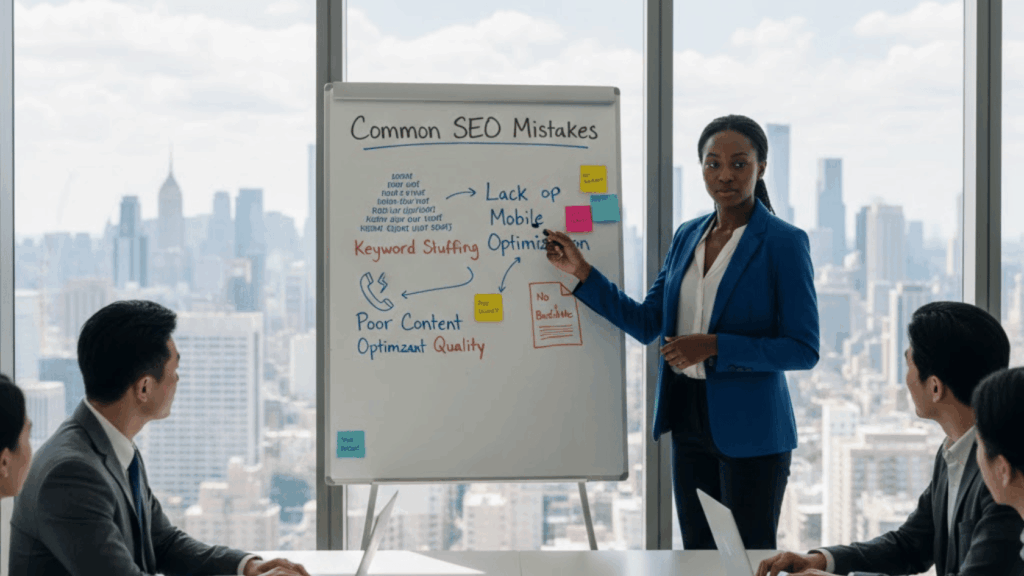
Even the best B2B SaaS SEO plans can fail because of simple mistakes. Companies spend a lot on content and links but don’t see good results. This is because they ignore some key things. The right B2B SaaS SEO strategies mean doing the right things and avoiding the wrong ones. Let’s look at common mistakes that can hurt your SEO and how to fix them.
Ignoring Mobile Optimisation
Today, people make decisions on their phones. If your SaaS site isn’t mobile-friendly, it’s a big problem. Google now looks at your mobile site first for ranking. A bad mobile site experience hurts your ranking and visibility.
Your mobile site needs to be as good as your desktop site. Not making it mobile-friendly is a big mistake. It’s one of the top SEO mistakes B2B SaaS brands make.
Neglecting Technical SEO Foundations
Technical SEO is the base of all good B2B SaaS SEO strategies. It’s not the most exciting part, but ignoring it is like building on shaky ground. Problems like slow sites, crawl errors, and broken links hurt your site’s performance.
Regular technical SEO checks are essential. They keep your site strong, letting your content and links work better.
Overlooking the Importance of Analytics
Driving traffic without checking results is like driving blind. Many SaaS companies focus on overall traffic, missing important metrics. They don’t track how well their SEO leads to sales or sign-ups.
Without the right data, you can’t make smart choices. This leads to wasted money and missed chances. Analytics should show you who visits, why, and what they do next.
To fix these problems, here’s a list of common mistakes and how to avoid them:
| Common SEO Mistake | Typical Impact | Recommended Action |
|---|---|---|
| Chasing High-Volume, Low-Intent Keywords | Attracts unqualified traffic, high bounce rates, and low conversion. | Focus on long-tail, bottom-of-funnel keywords with clear commercial or research intent. |
| Neglecting Technical SEO Health | Poor site speed, crawl errors, and poor indexing, harming all other SEO efforts. | Conduct quarterly technical audits to fix crawl errors, improve Core Web Vitals, and ensure mobile responsiveness. |
| Not Aligning SEO with Business Goals | SEO efforts feel disconnected from sales, with traffic that doesn’t convert. | Map keywords and content to specific stages of your SaaS sales funnel (awareness, consideration, decision). |
| Ignoring Analytics & Data | Making decisions based on gut feeling instead of performance data. | Set up goals in Google Analytics 4 to track MQLs and SQLs generated from organic search. |
Good B2B SaaS SEO strategies mean avoiding mistakes and doing the right things. Focus on a mobile-first site, keep your site technically sound, and use data to make decisions. This way, you can grow your SaaS business organically and profitably.
Case Studies: Successful B2B SaaS SEO Campaigns
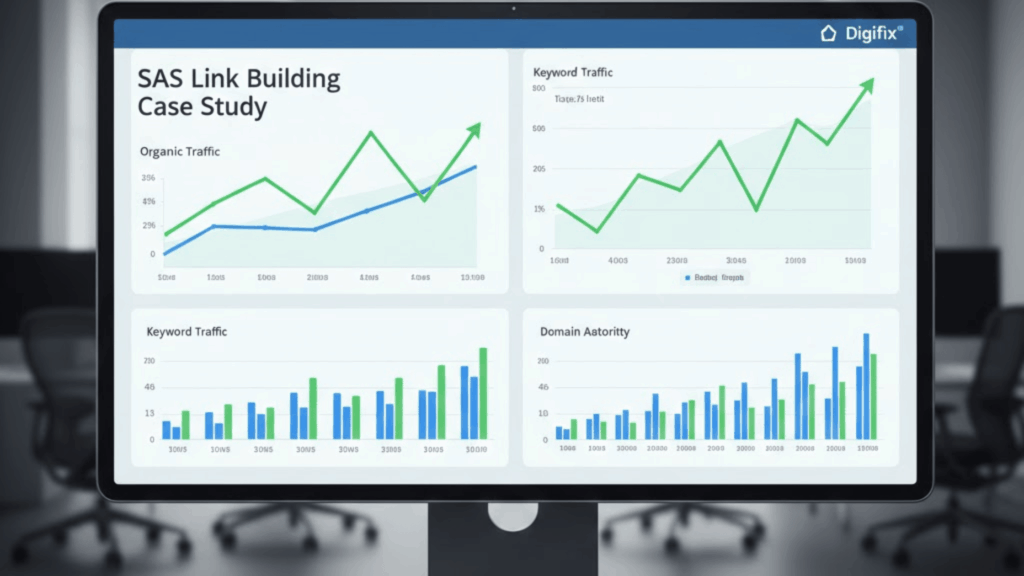
Real-world examples show the power of SEO. They prove how targeted strategies can change things. We see how focusing on content and tech can boost organic results.
Highlighting Key Success Stories
Our work with B2B SaaS companies shows big wins. For example, a marketing automation platform we worked with saw a 200% jump in revenue. They focused on content for people ready to buy.
Another success was with an HR tech company. They doubled their traffic in eight months. This led to a 40% increase in good leads. Check out more B2B SEO case studies for more growth stories.
Analysing Effective Strategies
What made these campaigns succeed? They focused on solving big problems, not just getting traffic. For the marketing automation client, we made content that answered buyers’ questions.
This approach beats making lots of content. We aim for the right content and use SaaS link building software to promote it. The tech side is also key. For the HR tech client, we fixed site speed and other issues to make their content shine. Learn more about automation in enterprise SEO here.
Lessons Learned from Case Studies
The main lesson is to focus on user intent. The best campaigns solve big problems for the right people. It’s about making the right content, not just more of it.
From these and other campaigns, we’ve learned three key things:
- Intent is Everything: Content must match where a prospect is in their buying journey, like commercial searches.
- Technical Health is Foundational: Even the best content won’t rank if your site is slow or hard to crawl.
- Quality Over Quantity: One detailed guide will beat many shallow articles. A focused SaaS link building software and content strategy wins over a scattergun approach.
| Case Study Focus | Core SEO Strategy | Key Outcome |
|---|---|---|
| Marketing Automation SaaS | In-depth comparison content for bottom-funnel keywords | 200% increase in marketing-sourced revenue in 12 months |
| HR Tech Platform | Technical SEO overhaul + strategic content hub | 2x organic traffic & 40% more qualified leads in 8 months |
| B2B Analytics SaaS | Comprehensive, pillar-based content cluster strategy | 150% increase in organic traffic to the service pages |
The main thing in all successful cases is solving problems, not just ranking. By focusing on user intent and a solid website, you build a strong SaaS link building and content system. This drives lasting, quality growth.
Building a Long-Term SEO Strategy for SaaS
Creating a long-term SEO plan for your SaaS is not about fast results. It’s about making a long-term investment. This approach means moving from quick fixes to a detailed plan that grows with your business. The best SaaS companies see SEO as a key part of their business, not just a marketing tool.
Importance of Ongoing SEO Efforts
SEO is always ongoing, not a one-time job. The web and search engines change all the time. Keeping up with this means your content stays fresh, your site works well, and you get more links.
This isn’t just a one-time check-up. It’s about always adding new content, checking your site’s health, and looking at how well you’re doing. This keeps you ahead of others and adapts to new changes.
Keeping Up with Industry Changes
Search engines, how people use the web, and what others do change a lot. A good plan doesn’t just sit there. It means keeping up with big updates, new search features, and what people want to find.
This might mean using new types of content, getting ready for voice search, or adjusting for new search engine features. For a SaaS company, this also means making sure your SEO strategy matches your product and the market.
Establishing an SEO Roadmap
A good plan turns SEO into a valuable business tool. We work with you to create a 12-18 month plan. This plan matches your SEO efforts with your product releases and big business goals.
This plan is a guide for creating content, improving your site, and getting more links. It’s done in steps you can measure.
Here’s a simple example of a 12-month SEO plan for a B2B SaaS company:
| Phase | Primary Focus | Key Activities | Expected Outcome |
|---|---|---|---|
| Months 1-3 | Foundation & Audit | Technical SEO audit, site speed optimisation, fixing crawl errors, keyword research. | Stable technical foundation, improved site health. |
| Months 4-6 | Content & Authority | Pillar content creation, on-page optimisation, initial link-building outreach. | Increased organic traffic, improved keyword rankings. |
| Months 7-9 | Authority Building | Strategic guest posting, in-depth linkable asset creation, PR outreach. | Increased domain authority, referral traffic. |
| Months 10-12 | Optimisation & Scale | Conversion rate optimisation, scaling content production, international SEO. | Higher conversion rates, expansion into new markets. |
This structured plan turns your company SEO into a growth engine. It’s about building a strong way to get more customers that grows with your business.
Contact Us for a Consultation
Start your journey to top search rankings and grow your MRR with a chat. We work with B2B SaaS leaders. We create SEO plans that bring in quality leads and steady growth.
Reach Out to Discuss Your Needs
Let’s talk about your MRR goals. We’ll check your current online presence and make a plan just for you. We’ll tackle your SaaS challenges, from SEO to content that works.
Schedule a Free SEO Audit
Get a detailed SEO audit for free. We’ll look at your site’s health and how well it ranks. We aim to boost your B2B SaaS SEO strategies.
Our case study with a Toronto SaaS brand is impressive. They saw a 34% traffic boost and a $100K MRR increase in 3 months. We can do the same for you.
Ready to grow your organic traffic? Contact us today for a free consultation and SEO audit.
Phone: 03 8669 1773
Address: Unit A11/2A Westall Rd, Clayton VIC 3168
We use SaaS link building software and advanced analytics. This builds a strong backlink profile that search engines and users trust.
FAQ
1. Why is SEO so critical for B2B SaaS companies, and how is it different from other industries?
SEO is key for B2B SaaS for growth. It’s different because B2B SaaS sales take time. SEO helps find people ready to buy.
We use special keywords to find the right people. This makes your website a reliable source of good leads.
2. What specific benefits does a specialised B2B SaaS SEO agency offer that a generalist agency doesn’t?
A specialised agency like ours is a true partner. We understand your business well. We focus on what matters to you.
We track important things like SQLs and revenue from search. This shows how SEO helps your business grow.
3. How do you tailor SEO for the entire B2B SaaS customer lifecycle?
We focus on each stage of the customer journey. At the start, we create content to get people to know your brand.
In the middle, we target keywords to find the right leads. For existing customers, we help them succeed with your platform.
This approach helps a customer from the beginning to staying with you.
4. What should I look for when choosing a B2B SaaS SEO agency?
Look for a partner, not just a vendor. They should understand your business. Check their success stories for real results.
Real testimonials are important. Ask about their approach to analytics and link building.
5. How do you measure the true ROI of B2B SaaS SEO, beyond just rankings?
We look at real results like SQLs and revenue. We track how SEO affects your business. This shows SEO’s value in making money.