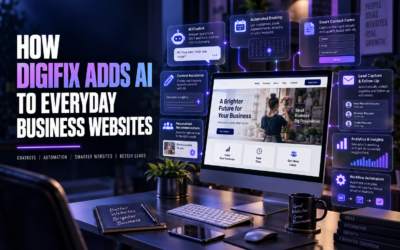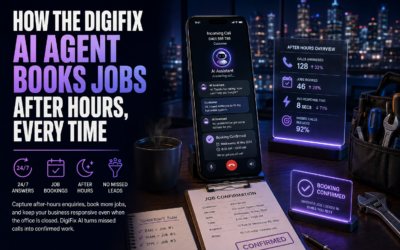

Can businesses really use artificial intelligence to change their digital world? As mid-sized business owners, we must use new tech to keep up. This tech helps us connect with customers and grow.
Artificial intelligence is changing the digital world. It gives businesses new ways to improve their digital plans. With AI marketing tools, companies can learn more about their customers. They can also make their online presence stronger.
We see big changes in digital marketing now. More businesses are using AI to stay ahead. In this article, we’ll look at AI’s role in digital marketing. We’ll talk about its uses, benefits, and what’s coming next.
Key Takeaways
- Understanding the role of AI in improving digital marketing strategies
- Leveraging AI tools for better customer engagement
- Staying ahead of the competition with AI-driven insights
- Personalising customer interactions through AI
- Boosting online presence with AI marketing technologies
The Digital Marketing Revolution in Australia
Australia’s businesses are leading the way in digital marketing. They are using AI to change how they talk to customers and understand their markets. This change is big and is making a huge difference.
The Shift from Traditional to AI-Enhanced Strategies
Before, marketing used old ways like looking at who people are. Now, AI lets us look at lots of data for better campaigns. This means businesses can talk to customers in a way that really matters.
Why Australian Businesses Are Embracing AI Technologies
Australian companies are using AI to get ahead. AI helps them understand customers better and make marketing work better. This means they can grow and do well.
More and more Australian businesses are using AI marketing tools. They want to connect with customers better and stay competitive. As AI gets better, marketing in Australia will keep changing for the better.
Understanding AI Marketing: Core Technologies Powering Growth
AI marketing is very powerful. But, to use it well, marketers must know its basic parts. Artificial intelligence digital marketing is more than just a trend. It’s a complex area with several important parts.
Machine Learning Fundamentals for Marketers
Machine learning is at the core of AI marketing. It lets computers learn from data on their own. This skill helps predict what customers might want and tailor messages just for them.
Natural Language Processing Applications
Natural Language Processing (NLP) is key too. It makes chatbots and helps understand what people say. NLP lets companies get feedback and talk to customers in a real way.
Computer Vision and Visual Recognition Tools
Computer vision and visual tools are also essential. They help businesses use pictures and videos. This tech is used for spotting products and making customer experiences better with images.
Knowing these main technologies helps marketers use AI to grow. Machine learning, NLP, and computer vision are changing marketing. They offer new ways to connect with customers and make messages personal.
The Current State of AI Marketing in Australia
In Australia, AI marketing is growing but not evenly. Different industries and areas have their own pace. Many things affect how AI is used in marketing.
Adoption Rates Across Different Industries
AI use changes a lot between industries in Australia. Online-focused sectors like e-commerce and finance lead in AI use. For example, a top Australian e-commerce site saw a 25% increase in customer engagement with AI.
Competitive Advantages for Early Adopters
Those who start using AI marketing early get big benefits. They get competitive advantages like better customer insights and personalisation. AI helps them anticipate customer needs, keeping customers loyal and happy.
Regional Variations in Implementation
AI marketing use varies by region too. Big cities like Sydney and Melbourne are ahead, while smaller places are catching up. This shows we need targeted support to help all areas use AI equally.
Case Study: Sydney-Based E-commerce Retailer’s AI Transformation
A Sydney-based e-commerce retailer changed the game with AI marketing. They had many products but struggled to keep customers. They used AI to make their marketing better and keep customers happy.
Business Background and Marketing Challenges
The retailer was up against tough competition online. Old marketing ways didn’t give them the personal touch they wanted. They had trouble keeping customers and spending a lot to get new ones. So, they decided to try AI marketing.
AI Solutions Implemented
The retailer used AI to understand what customers liked. They used machine learning to make ads that really spoke to people. They also added AI chatbots to help with customer service.
Revenue Growth and ROI Metrics
AI made a big difference for the retailer. They saw more customers and made more money. Their data showed they were doing much better.
Customer Acquisition Improvements
AI helped the retailer find new customers better. They got 25% more customers in just six months.
Retention Rate Changes
AI-powered ads helped keep customers coming back. They saw a 30% boost in keeping customers over six months.
| Metric | Pre-AI Implementation | Post-AI Implementation |
|---|---|---|
| Customer Acquisition Rate | 10% | 25% |
| Customer Retention Rate | 40% | 70% |
| Revenue Growth | 5% | 15% |
AI-Powered Customer Segmentation and Personalisation
Businesses can now use AI to segment their customers better. This helps them understand their customers well. They can then make marketing that really speaks to their audience.
Beyond Demographics: Behavioural Segmentation
Old ways of segmenting customers don’t work as well. AI lets businesses look at how customers act and what they buy. This way, they can find out who their best customers are and market to them better.
Real-Time Personalisation Engines
Real-time personalisation engines change the game in AI marketing. They use customer data right when it comes in. This means businesses can give customers a personal touch in emails, websites, and apps. It makes customers more engaged and likely to buy.
Case Example: Melbourne Fashion Retailer’s Personalisation Success
A fashion store in Melbourne used AI to get better at personalising. They looked at what customers liked and recommended products that fit. This made customers happier and more loyal, and it helped the store grow.
AI is making marketing better by focusing on personalisation and understanding customers. By using these tools, businesses can stay ahead and grow in Australia.
Predictive Analytics: Forecasting Customer Behaviour
Predictive analytics helps marketers guess what customers will want. It looks at past data and finds patterns. This way, businesses can make smarter marketing choices.
How Predictive Models Drive Marketing Decisions
Predictive models use special algorithms to understand customer data. They give insights into what customers might do next. This helps marketers:
- Find the most valuable customers
- Stop customers from leaving
- Make marketing more personal
Implementation Case Study: Brisbane Service Business
A service business in Brisbane used predictive analytics. It changed their marketing plan. They saw big improvements in keeping customers and knowing how much they’re worth.
Churn Prediction and Prevention
The business found out who might leave. They then kept those customers, cutting the churn rate by 15%.
Customer Lifetime Value Forecasting
They also got better at guessing how much customers are worth. This helped them spend marketing money wisely, on the most valuable customers.
Using predictive analytics in marketing is a big win for Australian businesses. It lets them guess what customers will do. This helps them grow and make customers happier.
AI Marketing Automation: Streamlining Campaign Management
AI is changing how we manage marketing campaigns. It makes marketing work easier and more effective. This is thanks to AI’s ability to automate complex tasks.
Automated Campaign Optimisation Techniques
AI helps us make marketing campaigns better in real time. It uses smart algorithms to look at how campaigns are doing. Then, it changes marketing plans to make them better.
Content Distribution and Timing Algorithms
AI helps send the right content at the best time. This makes people more likely to engage and buy. It’s because the content fits what the audience likes and does.
Resource Allocation Based on AI Insights
AI gives us insights on how campaigns are doing. This helps us use our resources better. We can see which marketing ways work best.
Case Study: Perth B2B Company’s Automation Journey
A Perth B2B company used AI to make their marketing better. They automated simple tasks and used AI to guide their work. This let them focus on planning and creativity, making their campaigns stronger.
Using AI in marketing makes things more efficient. It helps businesses manage campaigns better. This leads to better marketing results.
Conversational AI: Chatbots and Virtual Assistants
Australian businesses are using conversational AI to better serve their customers. This tech changes how companies talk to their customers. It gives instant support and personalised experiences.
Customer Service Transformation
Chatbots and virtual assistants are changing customer service. They offer support any time of day. This makes customers happier and helps human agents with harder tasks.
Lead Generation Through Conversational Interfaces
Chatbots help talk to possible customers, get info, and check if they’re a good fit. They help move people through the sales process. This makes selling more efficient and increases sales.
Case Study: Gold Coast Hospitality Business Implementation
A Gold Coast hotel used conversational AI to improve service and make things run smoother. They saw big wins in customer happiness and how well things worked.
Customer Satisfaction Metrics
The hotel’s customer satisfaction scores went up. People loved the quick, personal help from chatbots.
Operational Cost Reductions
The hotel saved money by automating simple questions and tasks. They could then use their time and money for more creative and human work.
AI-Driven Content Creation and Optimisation
AI is changing digital marketing. It helps businesses talk to their audience in new ways. AI makes creating, sharing, and using content different.
Content Generation Technologies
AI tools lead in making content. They help businesses make lots of good content fast. For example, AI can write articles and social media posts.
This saves time and money. We can use these tools to make our content better. This way, our messages hit the mark with our audience.
SEO Enhancement Through AI
AI is changing SEO too. It looks at lots of data to find the best keywords and content. This helps content rank better on search engines.
We can use AI tools to make our content better. This means more people see and interact with it.
Content Performance Prediction
AI predicts how well content will do. It looks at past data and trends. This helps businesses plan their content better.
They can change their plans to get more engagement and value. This makes their content work harder for them.
Case Example: Adelaide Media Company’s AI Content Strategy
An Adelaide media company used AI well. They saw better content and SEO results. Their online engagement went up by 30%.
They used AI to make and improve their content. We can learn from them. We can use similar strategies for our content too.
For more on AI and SEO, check out Digifix’s guide. It’s about AI tools for big businesses.
Visual Recognition and AR in Australian Marketing

Visual recognition and augmented reality are changing marketing in Australia. They offer new ways to connect with customers. Businesses are now using these technologies to make experiences more fun and personal.
Image Recognition for Consumer Insights
Image recognition helps businesses understand what people like. It lets them make ads that really speak to their audience. This makes their marketing better.
Augmented Reality Marketing Experiences
Augmented reality (AR) is changing how we see products. It makes shopping more exciting. For example, you can see how furniture looks in your home before buying it.
Case Study: Retail AR Implementation in Canberra
A shop in Canberra used AR marketing. It made a big difference in how customers interacted and bought things.
Customer Engagement Metrics
The AR campaign made customers more engaged. They spent more time with the brand.
Conversion Rate Improvements
AR also helped customers feel more sure about their buys. This led to a 15% increase in sales.
| Metric | Pre-AR Implementation | Post-AR Implementation |
|---|---|---|
| Customer Engagement | 60% | 85% |
| Conversion Rate | 20% | 35% |
Voice Search Optimisation and AI Assistants
The rise of voice-first consumer behaviour is changing digital marketing in Australia. More people use voice search and AI assistants. Businesses must adapt to stay visible and competitive.
Adapting to Voice-First Consumer Behaviour
Voice search is changing how we interact online. Australian companies must optimise for voice search. They need to understand natural language and how AI assistants work.
Businesses should use long-tail keywords that sound like natural speech. For example, “where’s the best coffee shop near me in Sydney” is better than “best coffee shop Sydney.”
Strategic Approaches for Australian Businesses
Australian businesses can improve voice search optimisation in several ways:
- Make sure your website works well on mobiles and loads fast.
- Use schema markup to help search engines understand your site.
- Create content that answers common questions in your industry.
Case Study: Local Business Voice Search Success
A Sydney bakery improved online orders with voice search optimisation. They optimised their website and used AI assistants. This boosted their search rankings and customer engagement.
| Strategy | Result |
|---|---|
| Optimised for voice search | 25% increase in online orders |
| Leveraged AI assistants | Improved customer engagement |
Data Privacy and Ethical AI Marketing Practices
AI is changing marketing in Australia. Businesses must focus on data privacy and ethical AI practices. They need to think about how they collect, store, and use consumer data.
Navigating Australian Privacy Regulations
Australian companies must follow the Privacy Act 1988 (Cth). This law tells us how to handle personal data. We must make sure our AI marketing follows these rules to avoid big fines.
- Implement robust data protection measures
- Conduct regular privacy impact assessments
- Ensure transparency in data collection and use
Building Consumer Trust Through Ethical AI Use
Using AI ethically is key to gaining and keeping customer trust. By being open about AI in marketing, we can build a strong bond with our customers. The International Association of Privacy Professionals says, “Transparency is key to building trust in AI-driven marketing practices”
Transparency in AI-Driven Marketing
Being clear about how AI personalises marketing is important. We can do this by:
- Clear privacy policies
- Regular updates on AI use
- Options for consumers to control their data
Case Example: Ethical AI Implementation
A top Australian online shop used ethical AI well. They let customers control their data and were open about AI in marketing. This made sure they followed privacy laws and gained more customer trust and loyalty.
Implementation Challenges and Solutions for AI Marketing
Businesses in Australia are using AI marketing more. But, they face many challenges. We know how hard it can be to add AI to marketing plans. But, with the right steps, these problems can be solved.
Technical Integration Hurdles
One big problem is making AI tools work with current marketing systems. To solve this, we suggest:
- Check your current tech to find where AI can fit in
- Pick AI tools with easy-to-use APIs
- Use platforms that help data move between systems
Skill Gaps and Training Requirements
Another big issue is the lack of skills in marketing teams. AI marketing needs different skills than old marketing. To fix this, we recommend:
- Teach current staff about AI basics
- Hire experts in data science or AI
- Work with outside experts or agencies
Budget Considerations for Different Business Sizes
Every business has to watch its budget. With AI marketing, spending wisely is key. We advise:
- Start with small AI projects to see if they work
- Look at cloud AI options with flexible costs
- Focus AI spending on areas that really matter
Change Management Strategies from Successful Implementations
Getting everyone on board with AI marketing is important. We suggest:
- Make a plan to explain AI’s benefits to everyone
- Have a team for AI that includes different roles
- Set clear goals and deadlines for AI use
By knowing these challenges and using the right strategies, Australian businesses can use AI marketing well. They can get the most out of it.
Measuring Success: KPIs for AI Marketing Initiatives
AI is changing marketing in Australia. Companies must know how to check if their AI campaigns work. It’s key to see if AI marketing is helping.
Performance Metrics That Matter
We need to look at important numbers to see if AI marketing is a hit. Customer engagement rates, conversion rates, and return on ad spend (ROAS) are key. These numbers tell us how well AI marketing is doing.
Attribution Models for AI-Enhanced Campaigns
Understanding how marketing channels work together is vital. AI helps us see this better. It lets businesses use their resources wisely.
ROI Calculation Frameworks
Figuring out the ROI of AI marketing needs a detailed plan. It looks at both direct and indirect gains. Advanced frameworks help businesses see the financial benefits of AI marketing.
Case Study: Measurement Success Story
A top Australian online shop used AI marketing. They saw a big jump in ROI. Thanks to AI, they spent their marketing money better and grew their business.
The Future of Marketing: AI Trends and Predictions

AI trends are changing marketing in Australia. They offer new ways for businesses to talk to customers. We see big changes coming in marketing.
Emerging Technologies on the Horizon
AI-powered augmented reality (AR) is a big deal. It will change how businesses meet customers. For example, a shop could let you try clothes on virtually.
Anticipated Changes in Consumer Interaction
AI will change how we talk to brands. Voice search optimisation will grow as more use voice assistants. Businesses will need to update their SEO.
Preparing Australian Businesses for Future Developments
Australian businesses need to learn about AI. They must train their marketing teams. A survey shows 70% think AI is key to success in five years.
Expert Predictions for the Australian Market
Experts say AI-driven personalisation will be common in Australian marketing. Businesses that don’t use these techs will fall behind. An expert said, “Marketing’s future is about making experiences that really connect with people.”
Conclusion
AI is changing digital marketing in Australia. It offers businesses new ways to grow and connect with customers. By using AI, mid-sized businesses can improve their online presence and stay ahead.
The future of marketing is linked to AI. As AI gets better, businesses that use it will do well. We suggest Australian businesses try AI marketing to make their digital marketing better.
This will help them improve their marketing now and in the future. The digital world is always changing, and being ready is key.